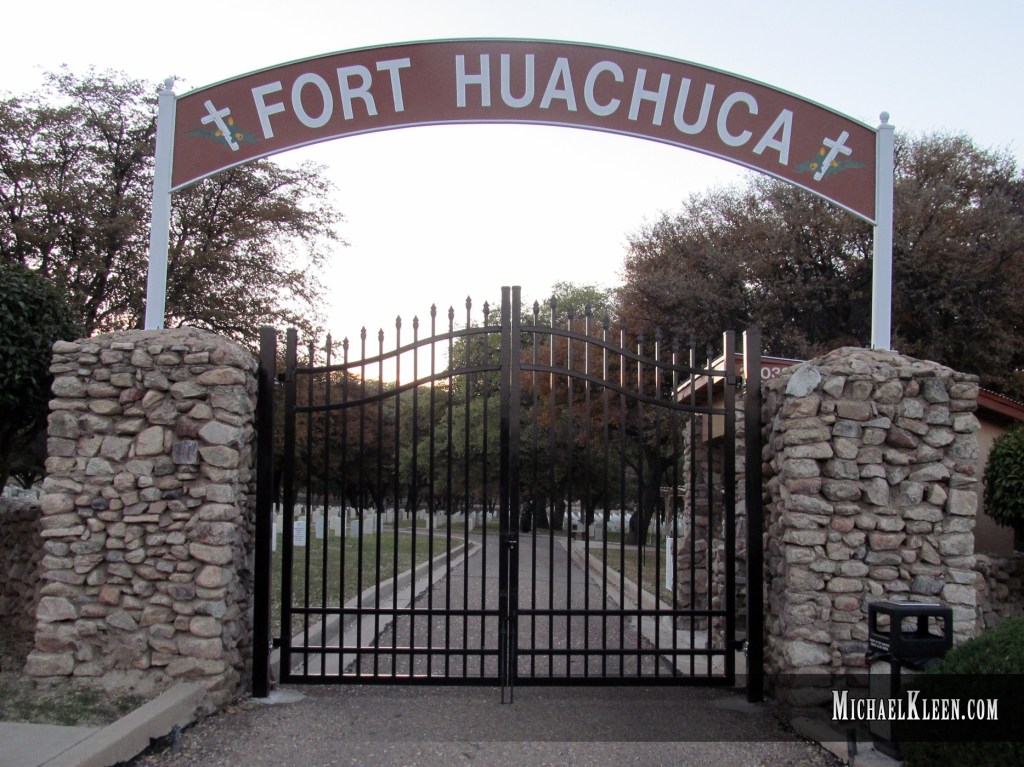
From the Apache Wars and the era of the Buffalo Soldiers to modern military intelligence operations, Fort Huachuca has stood at the center of more than a century of American military history. Yet beneath the desert sun and mountain shadows linger stories of restless spirits, haunted buildings, ghostly footsteps, and unexplained apparitions tied to the fort’s violent and often lonely past.
- Established in 1877 during the Apache Wars, Fort Huachuca later became home to the famed 10th Cavalry Regiment, the African American “Buffalo Soldiers.”
- The Carleton House, originally built as the post hospital in 1880, is said to be haunted by “Charlotte,” a young woman believed to have died there after delivering a stillborn child.
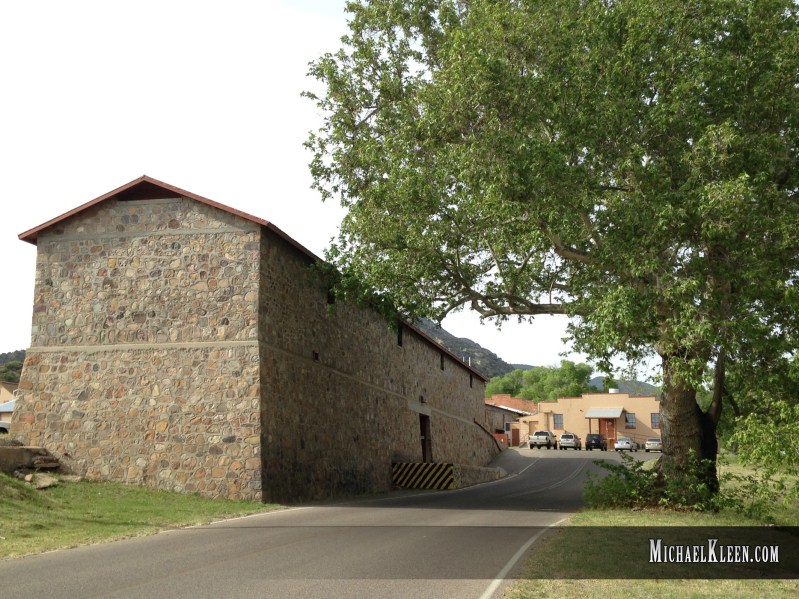
- Hangman’s Warehouse earned its grim reputation after two convicted murderers were executed there in the 1940s; visitors later reported faces in the windows, cigar smoke, and ghostly cries.
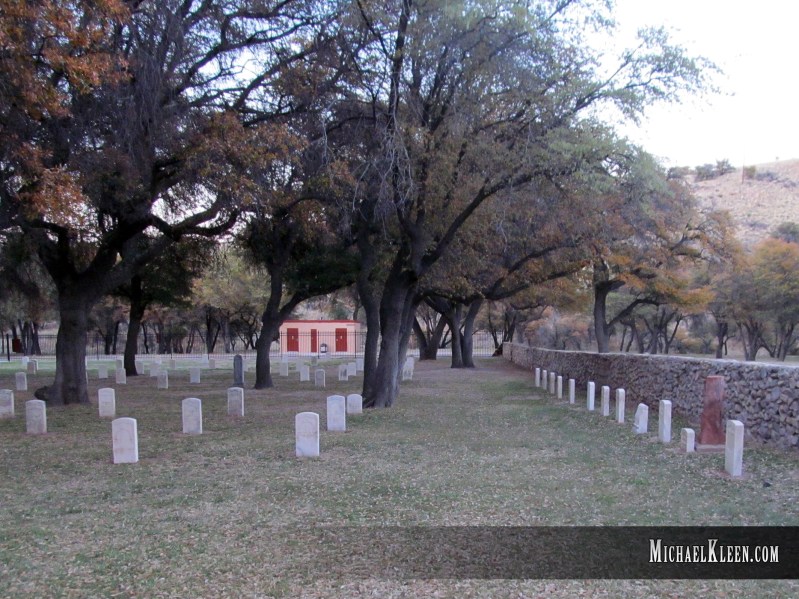
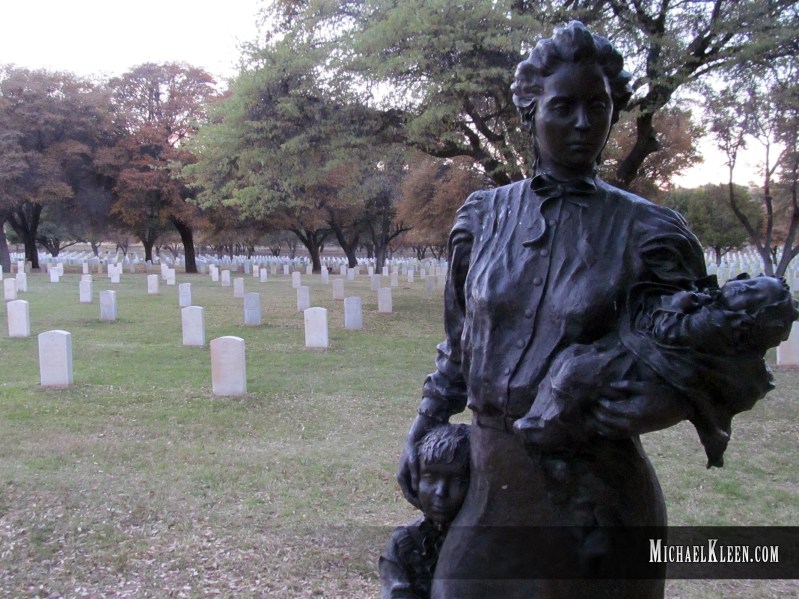
- Fort Huachuca Cemetery contains the graves of soldiers, Indian scouts, and seventy-six unidentified individuals reinterred from Camp San Carlos in 1928, and is associated with reports of ghost lights and apparitions.
Fort Huachuca, nestled at the base of the Huachuca Mountains near Sierra Vista in southwestern Arizona, has a long and storied history as a military outpost. In March 1877, Captain Samuel M. Whitside and two companies of the 6th Cavalry established Camp Huachuca during the U.S. Army’s campaign against the Apache. Since then, the fort has played an important role in American military history.
With that history has come a collection of ghost stories and local legends. The Carleton House is the best known of the fort’s allegedly haunted sites, but “Hangman’s Warehouse” and the old Fort Huachuca Cemetery have their own grim reputations. Even the Equal Employment Opportunity Office, once used as the post jail, is said to be haunted.
Fort Huachuca became a permanent military installation in 1882 as part of the campaign against the Bedonkohe Apache leader Geronimo. Famous for resisting both Mexican and American authorities, Geronimo finally surrendered at Skeleton Canyon, Arizona, on September 4, 1886. From 1913 to 1933, the fort also served as the home of the 10th Cavalry Regiment.
The 10th Cavalry Regiment was an African American unit that served with distinction in the Western Indian Wars, the Spanish-American War, and the Philippine Insurrection. Its soldiers were known as “Buffalo Soldiers,” a name said to have been given to them by Cheyenne warriors, who believed their curly hair resembled a buffalo’s coat. Today, Fort Huachuca is home to the U.S. Army Military Intelligence Corps and serves as a training center for military intelligence and unmanned aerial systems operations.
The Carleton House, also known as Quarters No. 9, stands at 2133 Cushing Street. Built in 1880 as the post hospital, it has served many purposes over the years, most recently as an officer’s residence. It is widely believed to be haunted by “Charlotte,” the ghost of a young woman said to have died there shortly after delivering a stillborn child.
Joan Strom, wife of Col. Roy Strom, deputy commander of the U.S. Army Intelligence Center from 1980 to 1982, gave the ghost her name after reportedly experiencing several encounters in the house. “Charlotte” is said to linger in one corner of the living room, where the air always seemed colder than the rest of the room. A rocking chair placed there reportedly moved on its own. While living in the house, the Stroms also experienced electrical disturbances, shifting wall fixtures, and other strange activity.
Located on Old Post at the corner of Clarkson Street and Shipp Avenue, Hangman’s Warehouse is a rectangular stone building remembered primarily for the executions of two convicted murderers during the 1940s. In 1942, Pvt. James Rowe stabbed another soldier to death during an argument over stolen cigarettes.
The following year, Staff Sgt. Jerry Sykes murdered a woman with whom he had been carrying on an affair. Both men were hanged for their crimes beneath the warehouse’s side windows, within sight of the post jail. A historical marker still commemorates the executions. Visitors have since reported seeing faces staring from the windows, smelling cigar smoke, and hearing agonized cries echoing around the old structure.
The former jail now houses the Equal Employment Opportunity Office and is also rumored to be haunted. Employees have described radios and microwaves switching on by themselves, along with the unmistakable sound of cowboy boots and jangling spurs walking down the hallway late at night.
In 2011, EEO Director and AEP Program Manager Beth Ford told the Sierra Vista Herald, “You could tell someone was walking, the footsteps were that clear. We all thought it was our co-worker’s son coming to visit his mother, but he wasn’t in the building—nobody else was wearing cowboy boots.”
Located at the end of Burt Road behind Old Post, the Fort Huachuca Cemetery is also known for reports of ghostly activity. Despite the legends, it remains a solemn and sacred place where visitors come to honor the men and women who served their country. The cemetery is carefully maintained, and many graves of historical significance are marked with small plaques. Indian scouts, along with their wives and children, are buried there as well.
The first burial at Fort Huachuca Cemetery was Pvt. F. P. Kelly of the 6th U.S. Cavalry, who died on December 22, 1877. In 1928, the remains of seventy-six unidentified individuals were disinterred from the old cemetery at Camp San Carlos to make way for Coolidge Dam and reburied at Fort Huachuca. Given that history, it is perhaps unsurprising that visitors have reported sudden chills, ghostly lights, and other unexplained apparitions among the graves.
Beyond its haunted reputation, Fort Huachuca offers visitors much to explore, including scenic hiking trails and two museums. Although it remains an active U.S. Army installation, the fort is open to the public. Visitors must present a driver’s license, proof of insurance, and vehicle registration before entering the base.
Donate
Enjoy what you read? Please consider making a one-time donation to support my research.
Enjoy what you read? Please consider making a monthly donation to support my research.
Enjoy what you read? Please consider making a yearly donation to support my research.
Choose an amount
Or enter a custom amount
Your contribution is appreciated.
Your contribution is appreciated.
Your contribution is appreciated.


What are your thoughts?