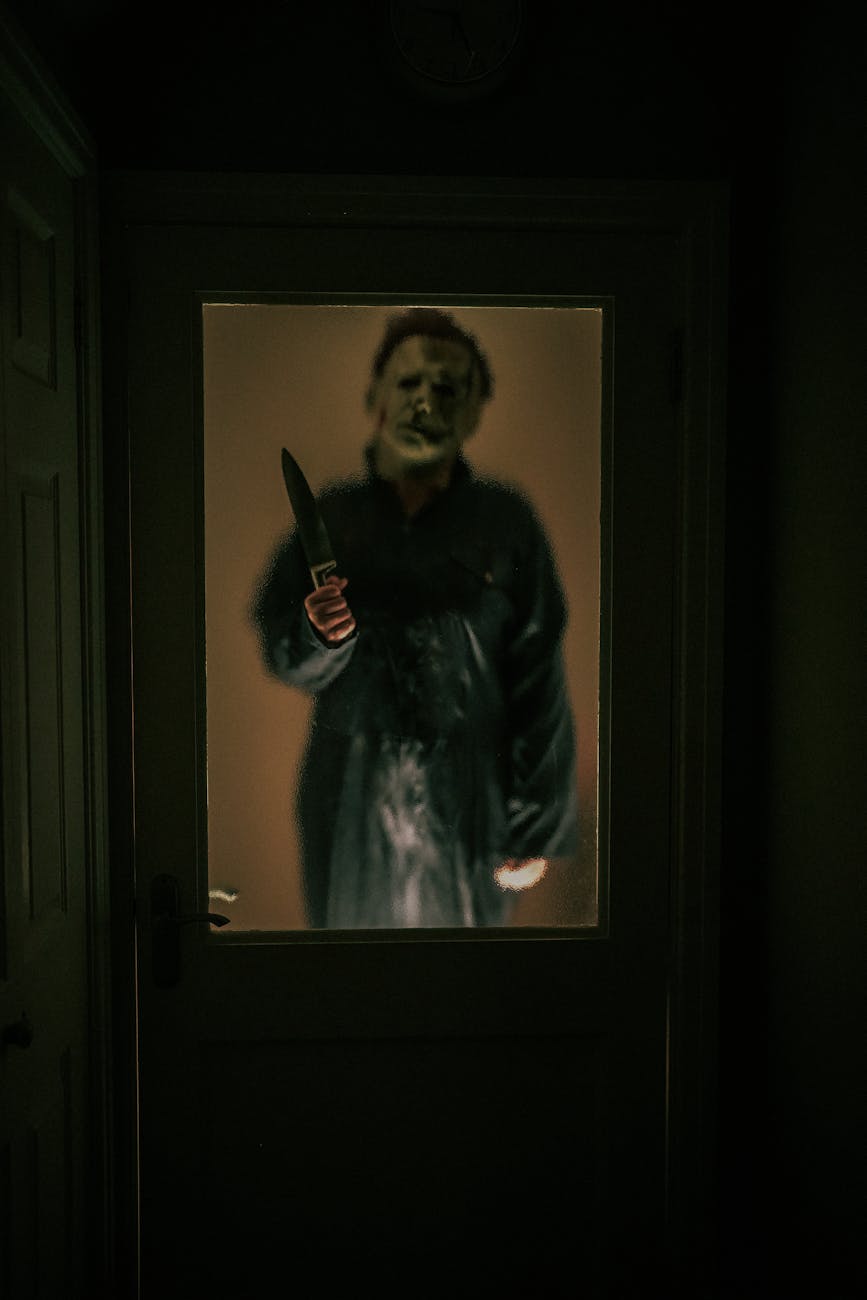
Beyond the cornfields, quiet suburbs, and dying industrial towns of the Midwest lies the setting for some of America’s most unsettling horror films. From dream-stalking killers and cursed children to urban legends lurking in crumbling housing projects, these movies transformed ordinary Midwestern landscapes into places of terror. Here are ten of the scariest horror films ever set in the American heartland.
Leprechaun (1993) Set in: North Dakota
This campy horror-comedy was filmed on a modest $900,000 budget and went on to gross $8,556,940 at the box office. Directed by Mark Jones and starring Warwick Davis as the leprechaun and Jennifer Aniston as Tory Redding, the film centers on a remote North Dakota farmhouse where a murderous leprechaun has been trapped in the basement after losing his pot of gold. Ten years after the farmer who stole the treasure dies, the Redding family rents the farmhouse for the summer and accidentally sets the creature free.
What follows is a strange mix of dark humor and low-budget horror as the leprechaun stalks and torments the family through the lonely old house and surrounding countryside. In the end, the monster is destroyed through the power of a four-leaf clover. Despite developing a cult following over the years, Leprechaun currently holds a 33% audience score on RottenTomatoes.com and was widely panned by critics upon release.
Near Dark (1987) Set in: Kansas & Oklahoma
Near Dark is a Western-inspired vampire film set against the lonely backroads of Kansas and Oklahoma, starring Adrian Pasdar and Jenny Wright. Filmed on a $5 million budget, it grossed just $3,369,307 at the box office. The movie offers a grim, dust-covered look at a nomadic pack of vampires who reluctantly take in Caleb Colton after Mae, one of their own, transforms him into a creature of the night.
As Caleb struggles against his growing bloodlust, he becomes trapped between his humanity and the violent world of his new companions. When the vampires abduct his younger sister, Caleb is forced to confront both the gang and the darkness spreading inside him. Unlike many vampire films of the era, Near Dark ends on an unexpectedly hopeful note, with Caleb and Mae cured through blood transfusions. Together they watch the sunrise as the credits roll.
Although Near Dark performed poorly upon release, it gradually developed a devoted cult following and is now regarded as a unique blend of horror, crime film, and modern Western. It currently holds a 74% audience score on RottenTomatoes.com.
Red Dragon (2002) Set in: St. Louis, Missouri
Based on the novel by Thomas Harris, Red Dragon is a prequel to The Silence of the Lambs (1991). Like that film, it features the imprisoned Dr. Hannibal Lecter helping an FBI agent hunt another serial killer. Starring Edward Norton as FBI profiler Will Graham and Anthony Hopkins as Lecter, Red Dragon cost $78 million to make and grossed $209,196,298 at the box office.
The killer, nicknamed “The Tooth Fairy,” works for a film-processing company in St. Louis and believes he is possessed by “The Great Red Dragon.” Each murder, in his mind, brings him closer to transforming into the beast. In the end, Graham survives by confronting the monster at his own doorstep, and the Tooth Fairy is shot and killed while trying to murder Graham’s family. Red Dragon currently holds a 74% audience score on RottenTomatoes.com.
Child’s Play (1988) Set in: Chicago, Illinois
Child’s Play, the original film that launched a massive horror franchise, was set and filmed in Chicago, making strong use of the city’s cold streets, aging apartments, and uneasy urban atmosphere. The movie starred Catherine Hicks, Chris Sarandon, Alex Vincent, and Brad Dourif, and was produced on a $9 million budget before grossing $44,196,684 at the box office. Critic Roger Ebert uncharacteristically praised the film, calling it a “cheerfully energetic horror film.”
Its premise is deceptively simple. Mortally wounded during a police shootout, serial killer and voodoo practitioner Charles Lee Ray transfers his soul into a Good Guy doll before dying. The possessed toy eventually lands in the hands of a lonely young boy named Andy Barclay, and strange, violent incidents soon follow. As the body count rises, Andy’s family realizes the doll is not only alive, but determined to continue Ray’s murderous existence in plastic form.
In the end, Andy and his mother survive only with the help of Detective Mike Norris, who helps destroy the doll after a brutal confrontation inside the apartment. Inspired in part by the popularity of Cabbage Patch Kids, Chucky quickly became one of the most recognizable horror icons of the late twentieth century. Child’s Play currently holds a 66% audience score on RottenTomatoes.com.
The Crazies (2010) Set in: Iowa
A remake of George A. Romero’s 1973 film, this version of The Crazies was far better received by both critics and audiences. While the basic premise remained largely unchanged, the 2010 remake benefited from a much larger budget, costing $20 million compared to the original film’s modest $275,000. Starring Timothy Olyphant and Radha Mitchell, the movie takes place in the fictional farming town of Ogden Marsh, Iowa.
The quiet Midwestern community descends into chaos after its water supply becomes contaminated with the “Trixie” virus, a biological weapon that slowly drives people insane and turns them violently homicidal. As paranoia spreads and neighbors begin slaughtering one another, the U.S. military seals off the town under strict quarantine orders. Soldiers are instructed to shoot anyone suspected of infection, whether they are sick or not.
Caught between the infected townspeople and an increasingly ruthless military response, Sheriff David Dutton and his wife Judy struggle to escape before Ogden Marsh is erased completely. Much of the film’s tension comes from its bleak rural setting, where empty roads, abandoned farmhouses, and flickering streetlights create a constant sense of dread. Boston Globe critic Ty Burr described The Crazies as “extremely solid stuff — about as good as you could hope from a B-movie retread.” It currently holds a 57% audience score on RottenTomatoes.com.
Candyman (1992) Set in: Chicago, Illinois
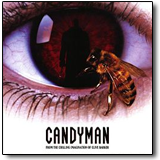
Based on a short story by Clive Barker, Candyman stars Virginia Madsen, Tony Todd, and Xander Berkeley. Produced on an $8 million budget, the film grossed $25,792,310 at the box office. Set and filmed on Chicago’s North Side, including the infamous Cabrini–Green housing project, Candyman possesses a gritty sense of realism that many horror films lack. The filmmakers reportedly even negotiated with local gang members in order to shoot on location.
The story follows Helen Lyle, a graduate student researching urban legends for her thesis. Her investigation leads her into Cabrini–Green and toward the legend of Candyman, a hook-handed killer said to appear when his name is spoken five times into a mirror. What begins as folklore and superstition slowly turns into something far more disturbing. Candyman is real, and he feeds on fear, grief, and the stories people whisper to one another in darkened rooms and empty hallways.
As Helen becomes consumed by the legend, the line between myth and reality begins to dissolve around her. In the end, she sacrifices herself in a desperate attempt to destroy Candyman in a towering bonfire, only to become an urban legend herself. Candyman currently holds a 64% audience score on RottenTomatoes.com.
Children of the Corn (2009) Set in: Nebraska
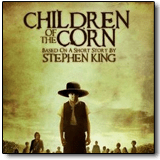
This version of Children of the Corn aired on the Syfy Channel as a made-for-television adaptation of Stephen King’s short story. Produced on a budget of $4.5 million, it stayed much closer to King’s original tale than the 1984 film starring Peter Horton and Linda Hamilton.
The story follows Burt and Vicky as they become lost along the lonely back roads of Nebraska and stumble upon the isolated village of Gatlin. There they discover a community ruled entirely by children who worship an ancient fertility god lurking beyond the endless cornfields. Years earlier, under the influence of a fanatical boy preacher, the children murdered the town’s adults during a devastating drought. Since then, anyone who reaches the age of nineteen is sacrificed to the entity they call “He Who Walks Behind the Rows.”
Trapped in a dying town filled with silent fields, abandoned churches, and children driven by religious zealotry, Burt and Vicky must fight their way out before becoming sacrifices themselves. With its heavy themes of paganism, isolation, and fundamentalism buried deep within the rural Midwest, the Syfy Channel’s Children of the Corn feels darker, stranger, and far more unsettling than many of its often unintentionally campy predecessors.
Halloween (1978) Set in: Illinois
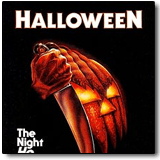
Produced on a shoestring budget of just $325,000, Halloween helped ignite a new wave of horror films and launched Jamie Lee Curtis to stardom. Set in the fictional town of Haddonfield, Illinois, the film went on to gross more than $70 million worldwide and became the blueprint for the modern slasher movie.
The story follows Michael Myers, a deeply disturbed killer who has spent more than a decade confined to a mental institution after murdering his older sister as a child. On Halloween night, he escapes and returns to Haddonfield, where he silently stalks a group of teenage girls through quiet suburban streets and darkened houses. Much of the film’s power comes from its simplicity. Myers rarely speaks, rarely runs, and often appears only as a pale shape standing in the shadows or watching from a distance.
Laurie Strode eventually manages to survive his attacks, but Michael himself is never truly defeated. After being shot and falling from a second-story balcony, he disappears into the night, leaving only the sound of his breathing behind. That ending helped set Halloween apart from many horror films of its era and paved the way for numerous sequels. Widely regarded as one of the greatest horror films ever made, Halloween currently holds an 89% audience score on RottenTomatoes.com.
The Crow (1994) Set in: Detroit, Michigan
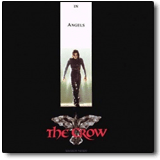
Based on the graphic novel by James O’Barr, The Crow stars Brandon Lee in his final performance before his tragic death during filming. Lee was killed on set when a .44 Magnum accidentally discharged a round that had become lodged in the barrel during an earlier scene. That real-life tragedy hangs heavily over the finished film and adds to its dark, mournful atmosphere.
Set in a decaying, crime-ridden Detroit, the movie uses the city’s infamous Devil’s Night arson spree as its backdrop. On the eve of Halloween, musician Eric Draven and his fiancée are brutally murdered by a gang led by the ruthless Top Dollar. One year later, a supernatural crow resurrects Draven and grants him the power to hunt down those responsible. Moving through rain-soaked streets, abandoned buildings, and flames lighting the night sky, he becomes something between an avenging spirit and an urban ghost story.
Produced on a budget of $23 million, The Crow became a major commercial success, earning $144,693,129 at the box office and developing a devoted cult following. Detroit’s bleak urban landscape proved the perfect setting for the film’s Gothic tale of grief, vengeance, and lost love. The Crow currently holds a 90% audience score on RottenTomatoes.com.
A Nightmare on Elm Street (1984) Set in: Ohio
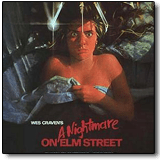
Few horror villains are as recognizable as Freddy Krueger, the scarred child murderer in the filthy red-and-green sweater and leather glove fitted with razor blades. Since his debut, the character has appeared in no fewer than nine slasher films, but it all began with Wes Craven’s 1984 classic A Nightmare on Elm Street.
Set in the quiet Midwestern suburb of Springwood, Ohio, the film follows a group of ordinary teenagers stalked by a killer who attacks them in the one place they should be safe: their dreams. That premise gives the movie much of its lasting power. Freddy cannot simply be locked out of a house or hunted down by the police. Once his victims fall asleep, they are completely vulnerable, and the adults around them are powerless to help.
Teenager Nancy Thompson eventually realizes she may be able to fight Freddy by pulling him from the dream world into reality. Yet even when it seems she has defeated him, the film’s unsettling ending suggests otherwise. A Nightmare on Elm Street constantly blurs the line between dreams and waking life, leaving both its characters and audience uncertain where reality truly ends. It currently holds an 84% audience score on RottenTomatoes.com.
Donate
Enjoy what you read? Please consider making a one-time donation to support my research.
Enjoy what you read? Please consider making a monthly donation to support my research.
Enjoy what you read? Please consider making a yearly donation to support my research.
Choose an amount
Or enter a custom amount
Your contribution is appreciated.
Your contribution is appreciated.
Your contribution is appreciated.
Sources
González, Andrés Emil. “Death and Decay in the Suburban Midwest: On John Carpenter’s ‘Halloween’.” Cleveland Review of Books, January 27, 2020. https://clereviewofbooks.com/2020-01-27-2020-1-27-death-and-decay-in-midwestern-suburbia-on-michael-carpenters-halloween/
Newman, Kim. Nightmare Movies: A Critical Guide to Contemporary Horror Films. Harmony Books, 1989.
Ochonicky, Adam R. The American Midwest in Film and Literature: Nostalgia, Violence, and Regionalism. Indiana University Press, 2020.
Reick, Bill. Windy City Screams: Chicago’s Horror Movie History. Arcadia Publishing, 2026.
Towlson, Jon. Candyman. Liverpool University Press, 2018.


What are your thoughts?