Traversing a necropolis’ winding paths can be an unnerving experience, especially when the light begins to fade and fog rises among the crooked tombstones. Is that a mournful figure in the distance, or are you alone? For many Virginians, cemeteries are a place to visit loved ones long past, but an adventurous few hope to encounter something otherworldly. If you are brave enough to visit any of the following haunted cemeteries, please be respectful, and of course, don’t go alone.
Hollywood Cemetery
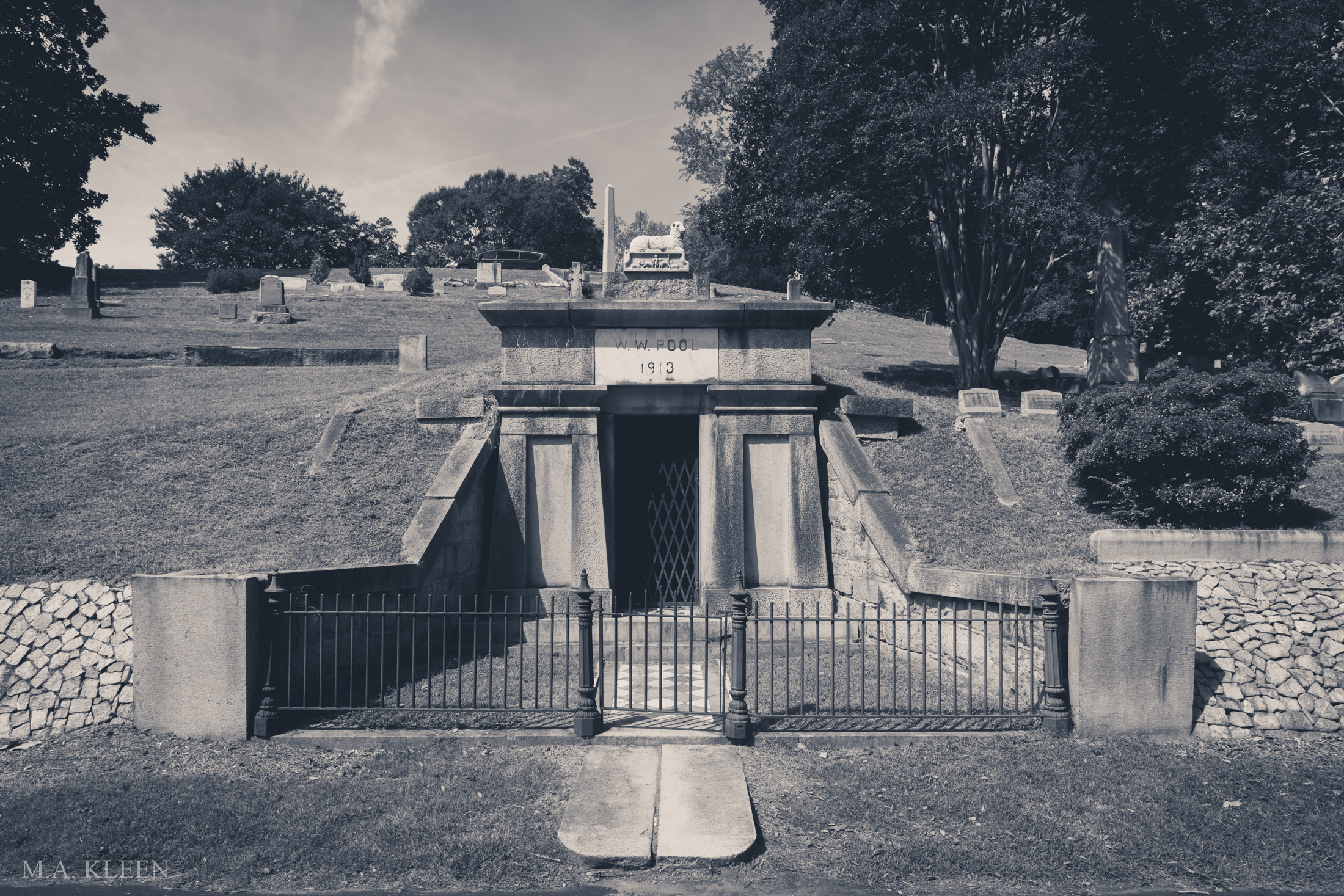
Hollywood Cemetery is a historic cemetery located in Richmond, Virginia. It was founded in 1847 and is the final resting place for many notable figures in Virginia’s history, including presidents, generals, and politicians. It is known for its beautiful grounds and landscaping, and it is a popular tourist destination in Richmond. Hollywood Cemetery has a dark side, however. Icy chills, low whispers and moans, and gray figures bearing battle scars send shivers up the spine of even the bravest visitor.
Wander down the wrong path and you might encounter the “Richmond Vampire” hiding among the mausoleums. There is also a faithful, cast-iron dog standing vigil over the grave of Florence Rees, who died of scarlet fever during the Civil War. Hollywood Cemetery is filled with fine funerary art, history, and sculpture. It is a must-see for any visitor to Virginia’s state capitol. Just don’t go at night.
Fotheringay Cemetery
Colonel George Hancock lorded over Fotheringay Plantation in Montgomery County, southwest of Roanoke, Virginia for many years. Hancock, who served as a colonel in the Continental Army during the Revolutionary War and later as a U.S. Congressman, was a tall, imposing man. It is said that he was present when Casimir Pulaski fell mortally wounded during the Second Battle of Savannah in 1779. He died in 1820.
According to a widely-known legend, Hancock was entombed on his plantation sitting upright either so he could look out over his land or keep an eye on his slaves. The tomb is set into a wooded hillside and made of granite blocks like a step-pyramid. Many people have broken into the tomb over the years, trying to see if the story is true. Fotheringay owners Robert and Sarah Nutt once called it “rubbish.” They report Col. Hancock’s remains are in a niche in the wall alongside the other burials. This hasn’t stopped curious trespassers’ macabre pilgrimage.
Ball’s Bluff National Cemetery
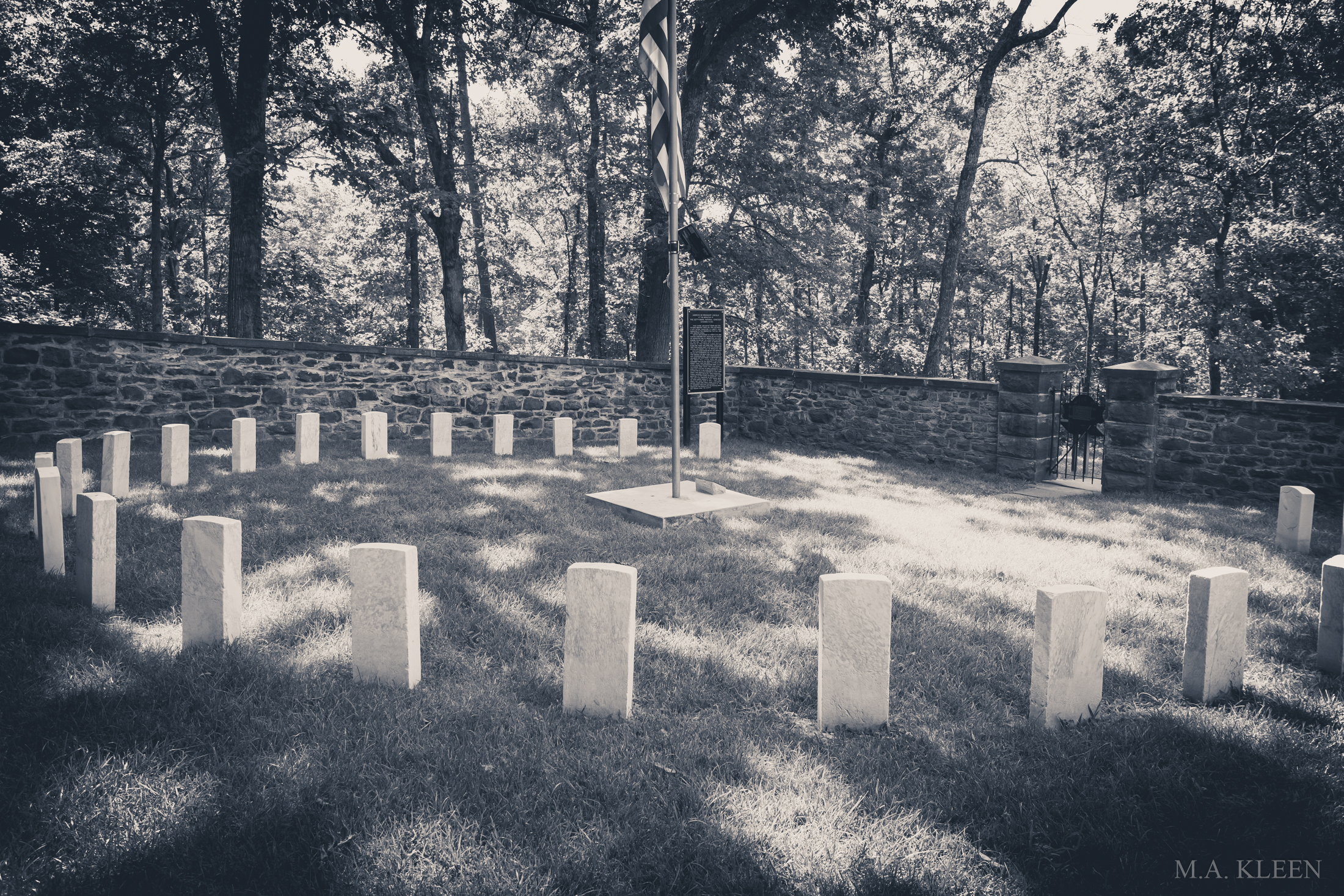
The Battle of Ball’s Bluff was fought on October 21, 1861 near Leesburg, Virginia during the American Civil War. The battle was a humiliating defeat for Union forces, including the loss of Colonel and U.S. Senator Edward Dickinson Baker, a close friend of Abraham Lincoln. Americans moved quickly to memorialize the battle, and Ball’s Bluff National Cemetery was established in 1865 to commemorate a mass grave of 54 Union soldiers killed during the battle. There are 25 headstones marking the remains, although only one soldier, James Allen of Company H, 15th Massachusetts Infantry, has been identified. Ever since, visitors have reportedly heard screams coming from the vicinity of the cemetery, seen tree branches shake violently and experienced unexplained car trouble.
Arlington National Cemetery
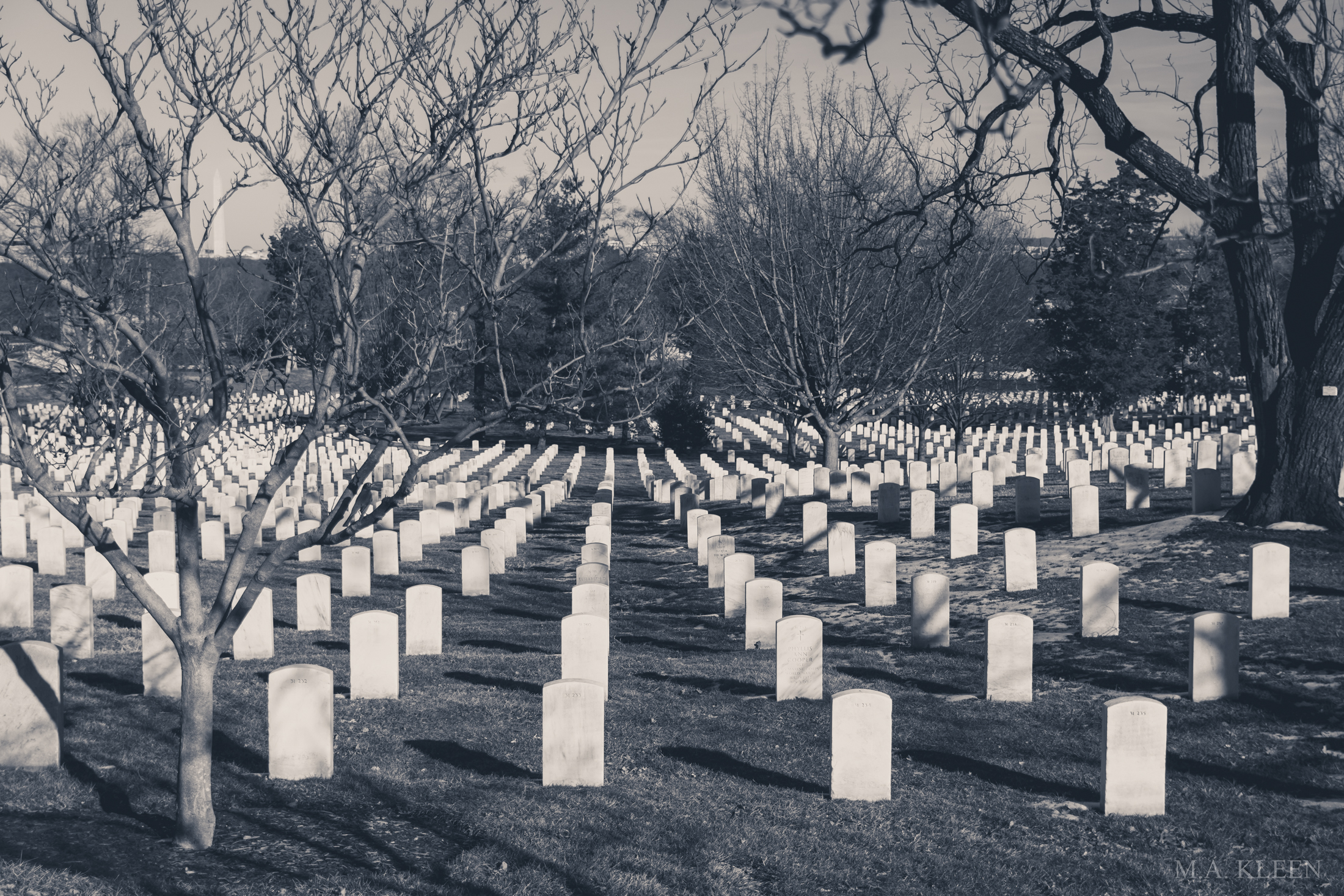
Arlington National Cemetery along the Potomac River in northern Virginia is the premier burial ground for select U.S. military members and their families. Over 400,000 people are interred within its sloping 639 acres, including President John F. Kennedy, astronaut John Glenn, Major General Philip Kearny, and Associate Supreme Court Justice Ruth Bader Ginsburg. Its origin dates to the American Civil War, when federal troops seized Arlington House from Robert E. Lee and his wife Mary Custis. Tens of thousands of war dead needed a place to be buried, and the estate of a Confederate general seemed like a fitting place.
Today, Arlington National Cemetery stands as a sacred memorial to our fallen soldiers from every war, and it is visited by millions of tourists every year. There is a dark side to the cemetery, however. Strange activity has long been reported at Old Post Chapel, including disembodied footsteps and voices, doors opening on their own, lights turning on and off, and mournful apparitions. The ghost of Mary Custis Lee herself is believed to haunt her former home. And, among the perfectly-aligned rows of granite headstones, visitors have reported icy chills, unexplained voices, and translucent figures.
Blandford Church and Cemetery
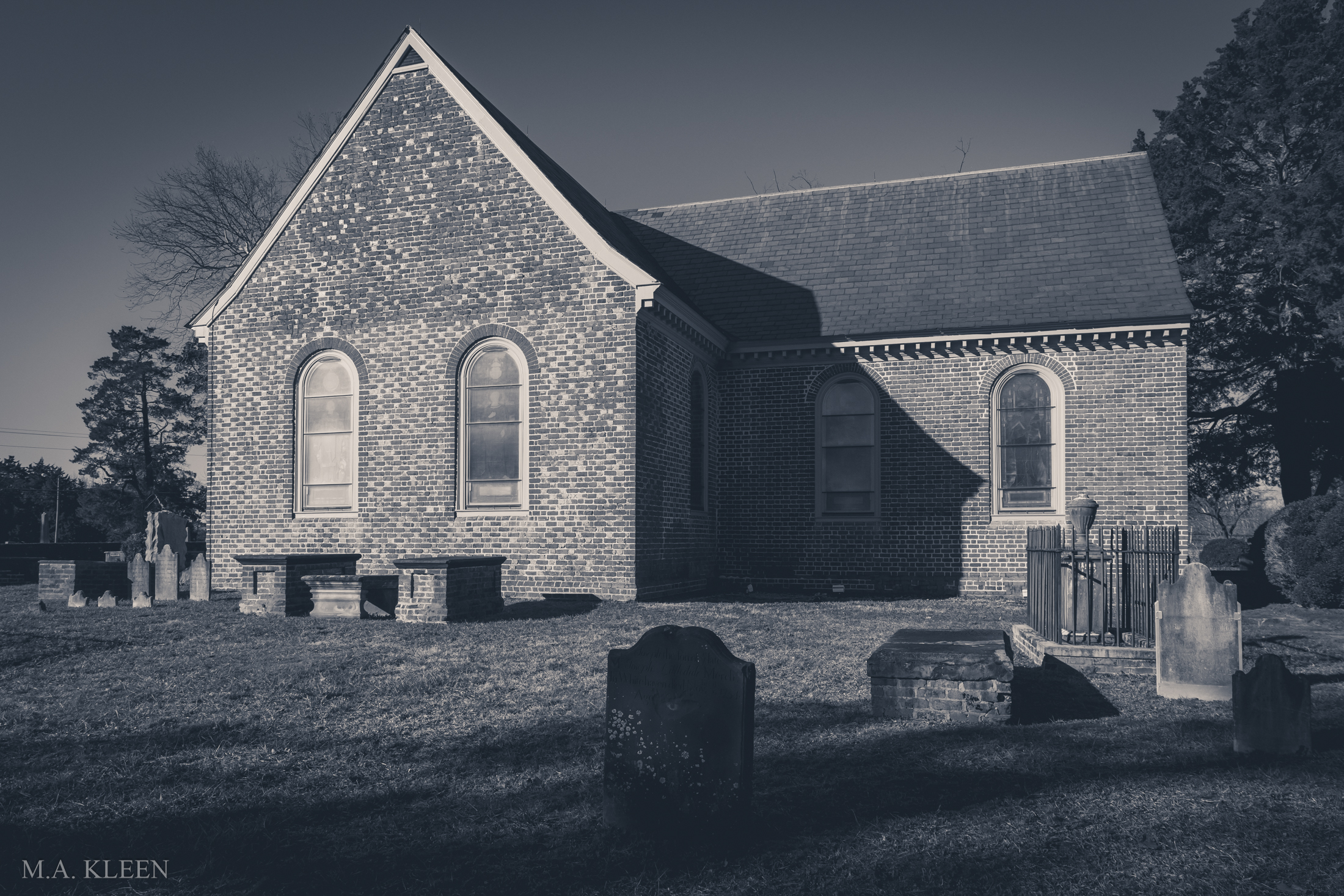
Blandford Church was erected on Well’s Hill in 1736, making it the oldest building in Petersburg, Virginia. It sat abandoned for 76 years between 1806 and 1882, when restoration efforts began in earnest. Revolutionary War-Era British Maj. Gen. William Phillips is buried somewhere on the grounds. The church itself is believed to be haunted by the ghost of Francis Antomatti, who shot himself inside in 1844 due to unrequited love. His headstone reads “Honour was his only vice.”
Veterans of six wars are interred in the cemetery. But its most famous legend is that of Major William H. Jarvis, a fire department engineer who died in 1877. Storytellers say that he was buried in a glass coffin and his grave was left open so his wife could visit him. In time, she remarried, and had a heavy granite slab cover up the grave. No matter how many times cemetery workers would slide the stone into place, however, the next morning it would be ajar.
McDowell Cemetery
An unassuming family cemetery sits along U.S. Route 11 in Rockbridge County, Virginia. This graveyard hides an interesting piece of colonial history, a piece that may have been forgotten entirely if not for the strange tales told in its vicinity. During the mid-1730s, Sir William Gooch, colonial governor of Virginia, negotiated a treaty between the Iroquois Confederacy and their southern enemies, which opened up the Shenandoah Valley to European settlement. The new settlers and the Iroquois did not always get along, however, and in 1742 open conflict erupted.
Capt. John McDowell and over a dozen others were killed in what became known as the “Massacre of Balcony Downs.” McDowell’s remains now lie in this graveyard surrounded by a low brick wall. Visitors to the otherwise lovely spot report feelings of dread and of being watched by unseen eyes. An old legend states that the headless ghosts of Capt. McDowell and his men appear in the graveyard, lamenting their grisly fates.
Roanoke City Cemetery
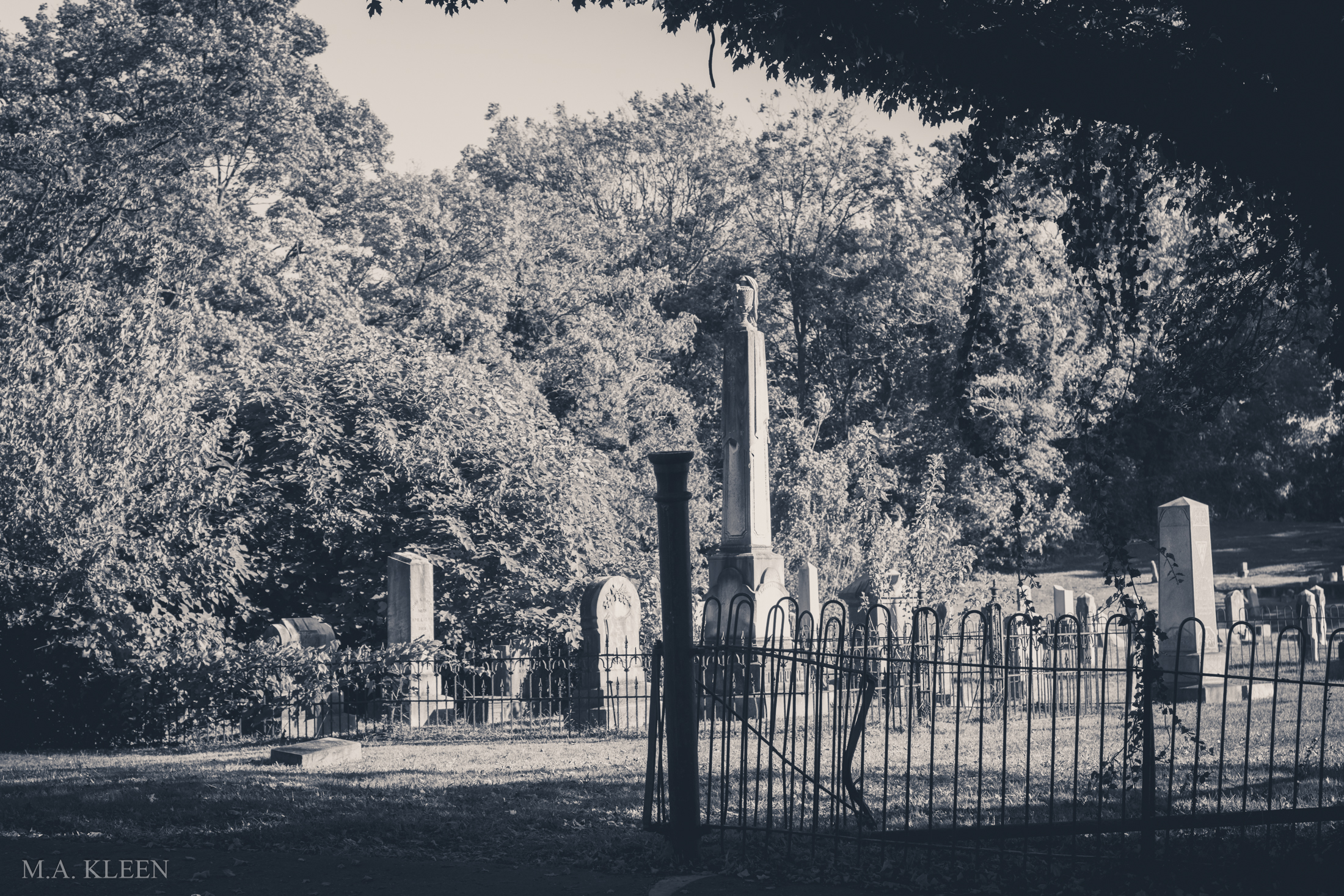
Roanoke, Virginia’s City Cemetery, off Tazewell Road in the Belmont Neighborhood, was established in 1876. It is a small cemetery, but contains a few notable interments, including Patrick Henry’s granddaughter, Maria Antoinette Hambrick. It is also home to one sorrowful ghost. It’s said on certain nights passersby can see the apparition of a sobbing woman sitting on the low wall surrounding her family plot. She is said to have died in a flu epidemic in the early 1900s and is sad to have left her family at such a young age.
Brent Family Cemetery
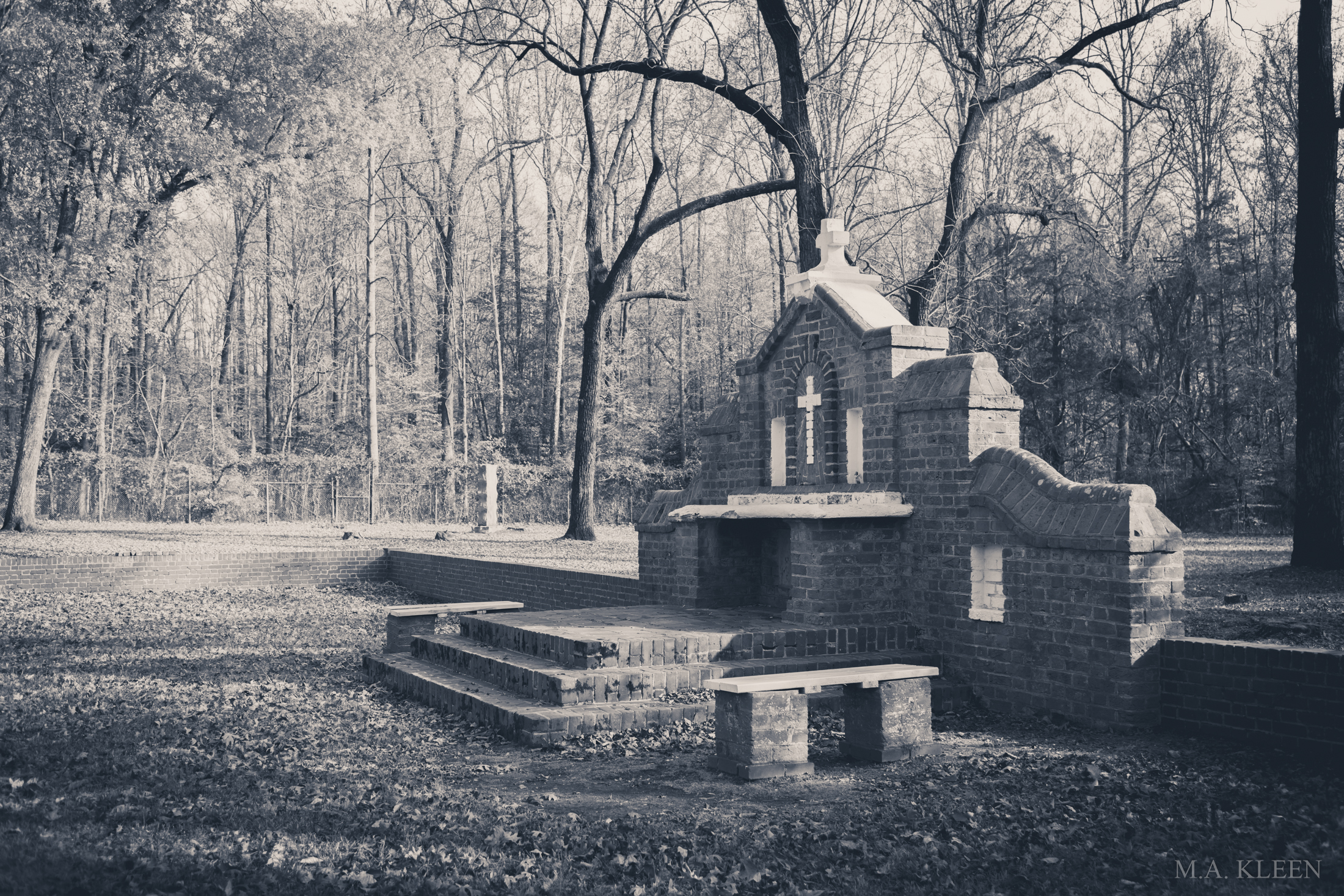
Hidden in the woods along Telegraph Road in Stafford County sits the Brent Family Cemetery, the last remaining vestige of the first English Catholic settlement in Virginia. The Brent family came to Colonial Virginia in 1647 and thrived for over a century before moving on. In the 1930s, the Catholic Archdiocese of Richmond built a brick and stone altar in the cemetery in their honor. But with its isolated location, and discovery of a woman’s remains along the trail in 1998, rumors swirled that Satanists used it for darker purposes.
A local legend tells of a witch named Edith who was executed and thrown into a nearby pond. Since then, visitors come back with stories of strange sounds and shrieks from that vicinity. Storytellers say the water turns red in the spring, and some visitors have described seeing Edith’s spectral form flickering around the pond and in the nearby cemetery.
References
- Hauck, Dennis William. National Directory of Haunted Places. New York: Penguin Books, 2002.
- Taylor, Jr., L.B. The Ghosts of Charlottesville and Lynchburg … and Nearby Environs. Lynchburg: Progress Printing Co., 1992.
- Taylor, Jr., L.B. Ghosts of Virginia, I. Lynchburg: Progress Printing Co., 1993.
- Taylor, Jr., L.B. Ghosts of Virginia, II. Lynchburg: Progress Printing Co., 1994.
- Taylor, Jr., L.B. Ghosts of Virginia, III. Lynchburg: Progress Printing Co., 1996.
- Taylor, Jr., L.B. Ghosts of Virginia, IV. Lynchburg: Progress Printing Co., 1998.
- Varhola, Michael J. Ghosthunting Virginia. Cincinnati: Clerisy Press, 2008.


What are your thoughts?