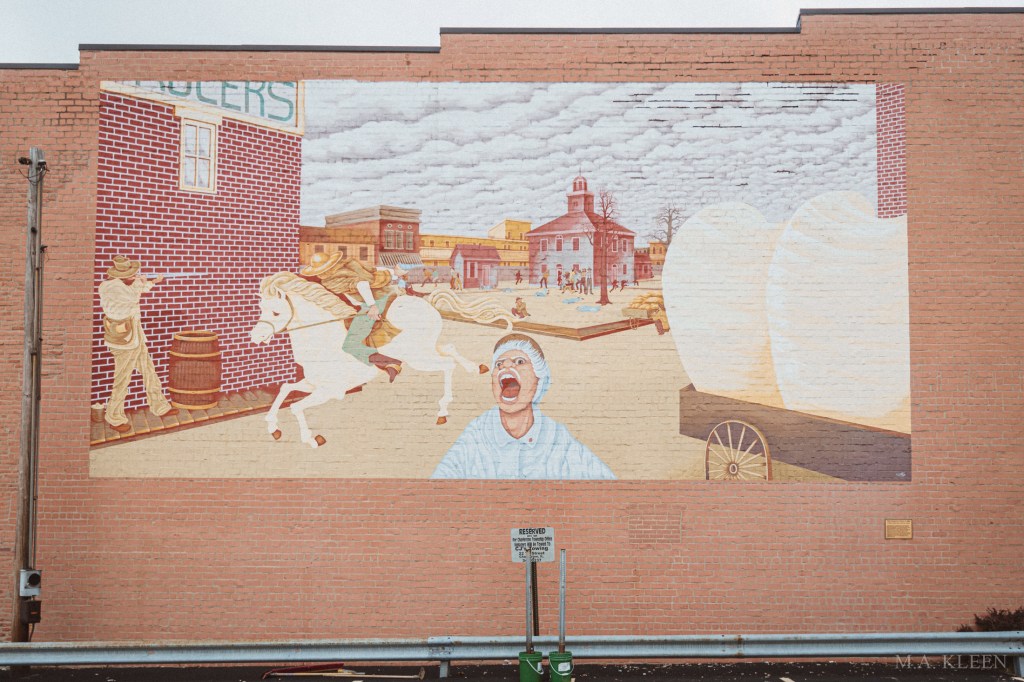
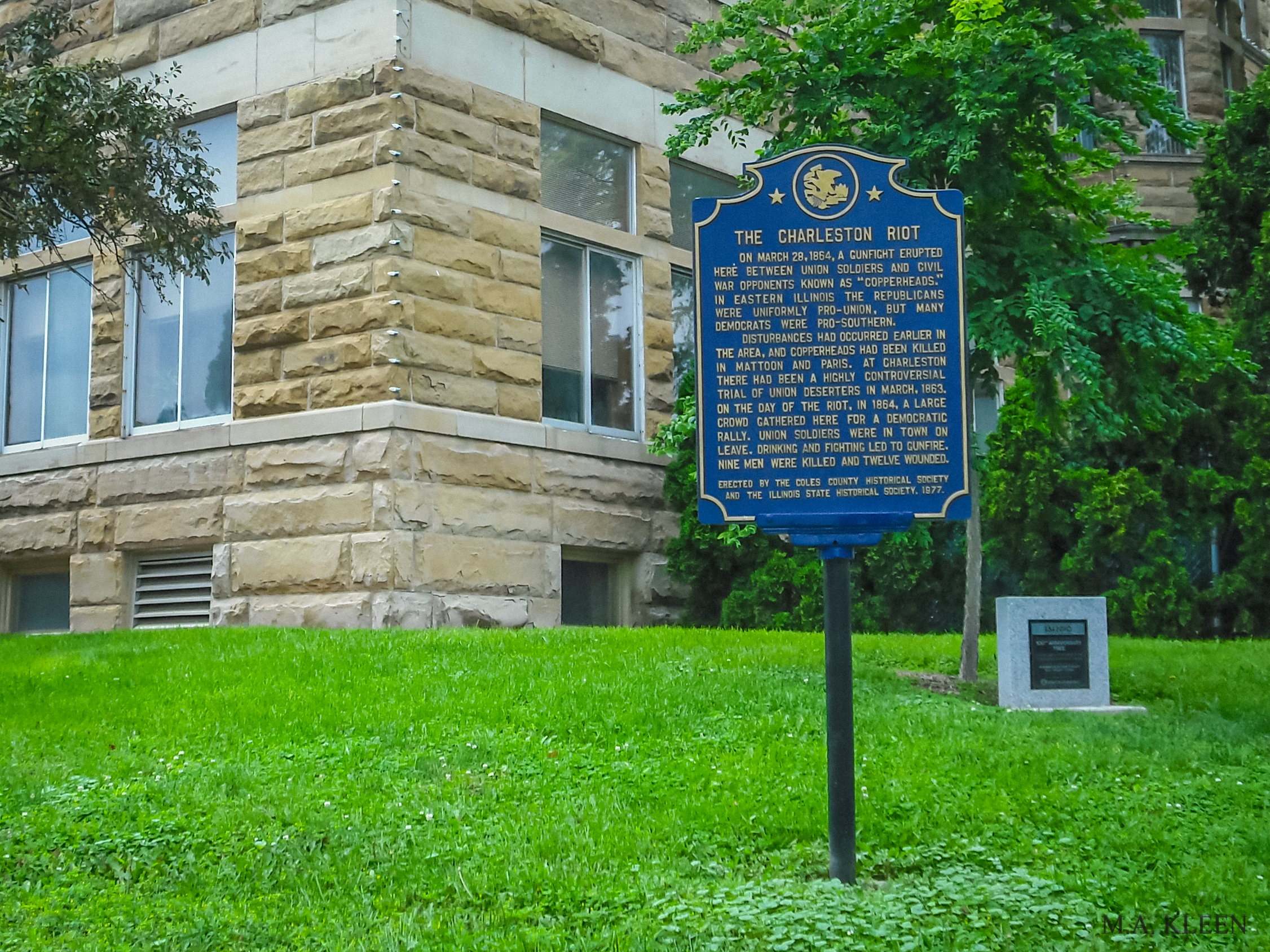
In March 1864, one of the deadliest home-front riots of the American Civil War erupted in an unlikely place: Charleston, Illinois, the site of a Lincoln-Douglas debate and home to some of President Abraham Lincoln’s own relatives. When the smoke cleared, nine people lay dead and twelve were wounded, shattering the peace and tranquility of this east-central Illinois community. What followed was just as explosive, as arrests, military imprisonment, and presidential intervention exposed how complicated justice could be when war came home.
The riot, an armed confrontation between Union soldiers home on furlough and antiwar Democrats known as “Copperheads,” was neither a spontaneous outburst nor a drunken brawl. It was the culmination of months of escalating political tension, driven to a boiling point by the pressures of civil war.
In the 1860 presidential election, Abraham Lincoln carried his home state of Illinois by a narrow margin, particularly in central Illinois, where the results were razor-thin and left lingering resentment. As patriotic citizens rushed to enlist, those who opposed the war stayed behind and continued to agitate against the Lincoln Administration’s domestic and military policies, what Lincoln famously called the “fire in the rear.”[1]
On Monday, March 28, 1864, a large crowd gathered around the Coles County Courthouse in Charleston for the opening of the circuit court’s spring session, presided over by Judge Charles H. Constable of the Illinois 4th Circuit, and to hear a speech by Democratic Congressman John Rice Eden.
The previous year, Colonel Henry B. Carrington, leading a force of more than 200 Union soldiers, arrested Judge Constable in Clark County while he presided over the trial of two Union soldiers accused of “kidnapping” Union Army deserters. Although a federal court later dismissed the charges against him, Constable continued to face harassment from Union soldiers home on leave. In January 1864, troops on furlough in Mattoon, Charleston’s sister city in Coles County, forced him to kneel in the mud and swear a loyalty oath.[2]
Also present in the courtroom that day were Colonel Greenville McNeel Mitchell, a Charleston native and commander of the 54th Illinois Infantry Regiment, and Major Shubal York, the regiment’s surgeon. The 54th Illinois was composed of men from across central and southeastern Illinois, including Coles County. Many had recently re-enlisted and were home on veteran furlough. They were scheduled to assemble later that day in nearby Mattoon before returning to the front lines.
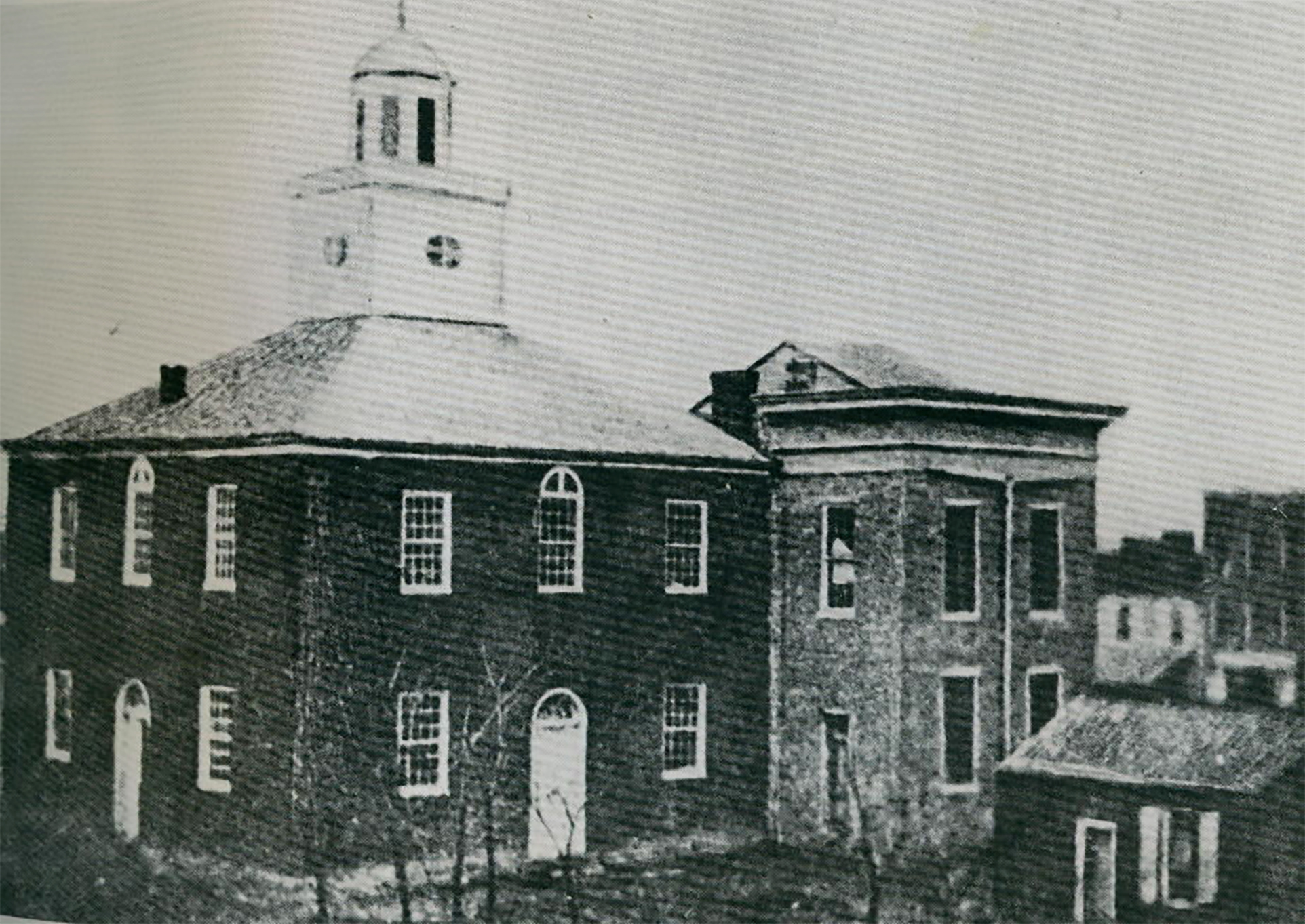
Congressman Eden nervously debated whether to cancel his speech amid the palpable tension in the air. Alcohol was being passed freely outside among both soldiers and civilians, some of whom were armed. Eden conferred with Orlando Bell Ficklin, a lawyer and former U.S. representative, and Judge Constable. Together, they agreed to cancel the speech and urged the crowd to disperse.[3]
By mid-afternoon, around 3 o’clock, Coles County Sheriff John H. O’Hair, a prominent leader among the local Copperheads, was preparing for the trial of an accused hog thief. Unfounded rumors had circulated that Union soldiers might attack the courthouse, so O’Hair arrived with reinforcements: two deputies, John Elsberry Hanks, his cousin, and Kesse Swango, along with two of his brothers. Hanks, notably, was a matrilineal relative of Abraham Lincoln.[4]
Just weeks earlier, in February, William S. O’Hair, John’s cousin and sheriff of neighboring Edgar County, had been involved in a violent altercation with soldiers from the 12th and 66th Illinois Regiments.[5]
Outside the courthouse, most of the crowd had dispersed, but Nelson Wells and seven associates, all from Edgar County, remained. Preparing to leave for California to prospect for gold, they had brought a wagon loaded with rifles and shotguns concealed beneath straw.
A local man named Robert Leitch attempted to mediate between the soldiers and Wells’s group. “[I] told them,” Leitch later recalled, “that I had conversed with the soldiers and knew that they intended to leave town and would not molest any person if left alone.” Nelson Wells and Frank Tolen, however, were unmoved. They replied that they had been badly treated by the soldiers and were “going to have revenge.”[6]
It remains unclear who fired the first shot. According to one account, shortly after 3:30 p.m., Private Oliver Sallee accidentally bumped into Nelson Wells. Not recognizing him, Sallee tapped Wells on the shoulder and asked, “Are any of those damned Copperheads around here?”
“Yes, damn you,” Wells replied, drawing his pistol. “I am one!” Before anyone could react, Wells pulled the trigger, and smoke erupted from the barrel. The lead ball struck Sallee in the chest, and he staggered backward. As he fell, Sallee managed to fire his own pistol, hitting Wells, who groaned and stumbled past the circuit clerk’s office. He made it as far as Chambers and McCrory’s General Store before collapsing in a pool of blood.[7]
Gunfire quickly became general. Perhaps a dozen Union soldiers were around the courthouse, but they were badly outnumbered and outgunned. At the sound of the first shots, Colonel Mitchell and Major Shubal York headed for the exit. York was a prominent Republican and abolitionist from Paris, Illinois. Just a month earlier, his son, John Milton York, had killed a local Copperhead in Paris. Inside the courthouse, as chaos erupted, someone shot Major York in the back at point-blank range, mortally wounding him.[8]
Colonel Mitchell later described what happened in those first few moments. “Immediately on the report of Wells’ pistol I stepped out of the west door of the court-room, when 3 men with revolvers drawn, apparently expecting me, commenced firing, 2 of them running by me into the room. I caught one named Robert Winkler by the wrist as he was attempting to shoot me, turning his revolver down until he discharged all his loads.”[9] A bullet struck Mitchell’s watch and ricocheted painfully into his stomach, but the wound proved superficial.
Out in the street, John Gilbreath stopped Marcus Hill as he led his horses toward the safety of a nearby alley. “Hill, what in the hell do you think of this?” he asked, breathless.
“It’s pretty damned warm times!” Hill replied sharply.[10]
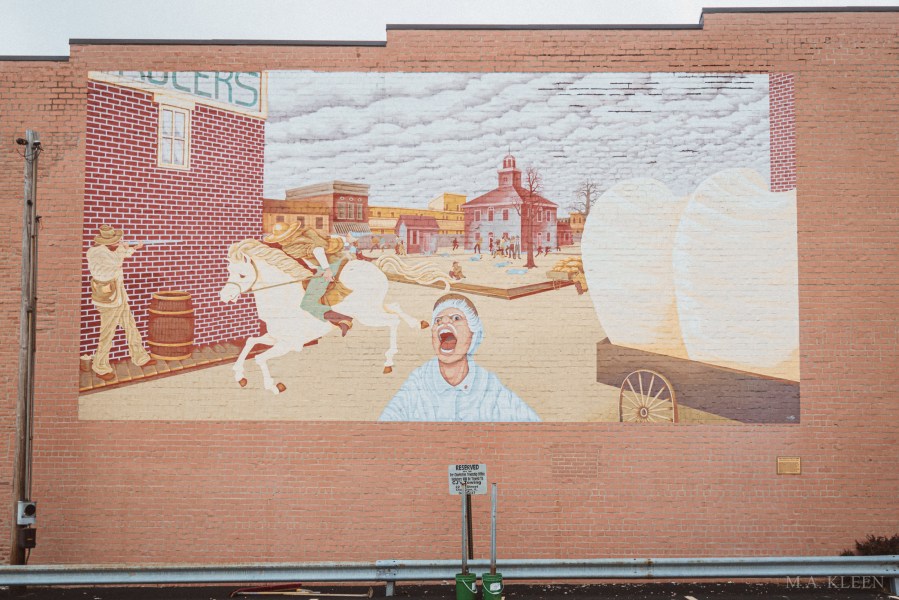
Some townspeople stepped in to defend the soldiers, and the fighting grew so intense that one soldier reportedly struck his attacker in the head with a brick.
As Judge Constable fled the courthouse, Sheriff O’Hair attempted to restore order by taking charge of the rioters. They formed a loose firing line at the southeast corner of the town square and continued to exchange gunfire. Most of the Union soldiers lay dead or wounded. As the chaos subsided, Colonel Mitchell managed to telegraph Mattoon for reinforcements. Soon, 250 soldiers were on their way, and the Copperheads were riding out of town.
Though the riot had ended, the killing had not. A soldier and a civilian, W. A. Noe, apprehended John Cooper and brought him in front of E. A. Jenkins Dry Goods Store. Cooper broke free and drew a concealed pistol from his belt. Noe fired a warning shot over his head, but it was too late. Panicked, Cooper returned fire and was immediately gunned down from three directions. In the crossfire, young John Jenkins was struck by a stray bullet and soon bled to death.[11]
All told, six Union soldiers were killed and four wounded; one Republican civilian was killed and three others were wounded; and two Copperheads were killed with five wounded. Although the Copperheads had surprised and overwhelmed the soldiers during the riot, their organization quickly unraveled in its aftermath.
Still nursing his wound, Colonel Mitchell set out with 75 mounted men in pursuit of the attackers as soon as Lieutenant Colonel Augustus H. Chapman arrived with reinforcements from nearby Mattoon.[12]
As they retreated from town, Sheriff O’Hair and the Copperheads captured a Union private named Levi Freesner, who had no idea what had just occurred. O’Hair persuaded the group to spare Freesner’s life. After cutting a telegraph wire and stopping for supper, they brought him to a farmhouse owned by Miles Murphy and left him there under guard. The rest of the group then disbanded, agreeing to regroup the following morning.
Meanwhile, Colonel Mitchell’s patrol was rounding up stragglers. Shortly after midnight, they freed Private Freesner and captured his guards. Over the following days, they arrested nearly fifty men. When the Copperheads later regrouped to plan their next move, their numbers had noticeably dwindled. Hotheads proposed returning to “clean out” Charleston, but they were overruled. Sheriff O’Hair was nowhere to be found; he was already en route to Canada as local Republicans ransacked his home.[13]
Rumors swirled that hundreds of Copperheads were arming and gathering in the area, preparing to launch an attack. The 41st Illinois and 47th Indiana infantry regiments were dispatched to Coles County as reinforcements. From the night of April 2 through April 4, Colonel Mitchell once again led a mounted patrol, this time taking a circuitous route through east-central Illinois. “I found bodies of men from 25 to 100 had been seen, but had dispersed,” he later reported. “One squad of 16 I arrested but released. At present all is quiet.”[14]
Following interrogations, 29 prisoners were held and sent to Camp Yates in Springfield, Illinois, under the authority of Lieutenant Colonel James Oakes of the 4th U.S. Cavalry, assistant provost marshal general for Illinois. Oakes released thirteen of them, and one, Miles Murphy, died of illness on April 17. That left fifteen men in federal custody.
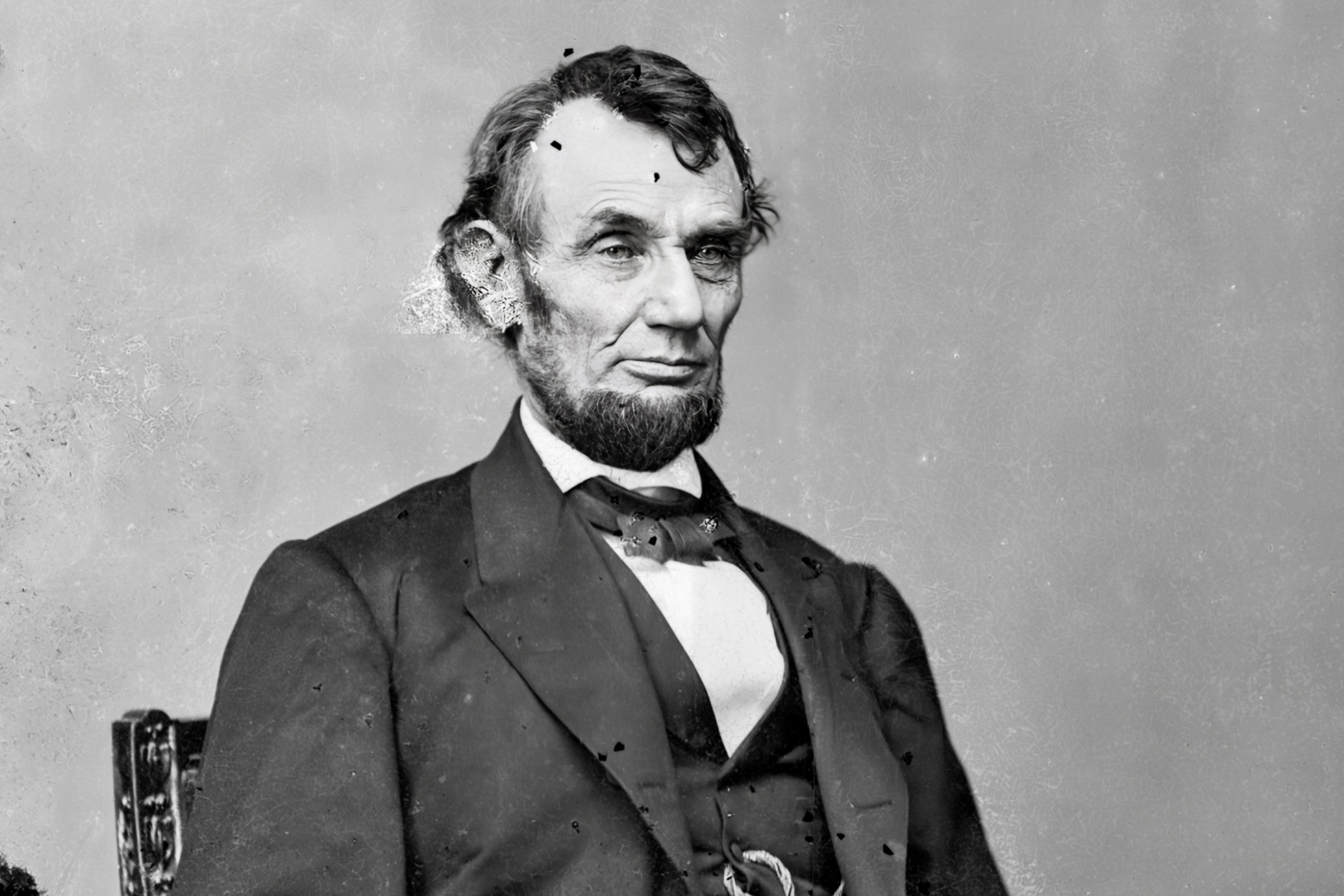
In early May, Dennis F. Hanks, a childhood friend and second cousin of Abraham Lincoln, traveled to Washington, D.C., to meet with the president. When he arrived, he carried more than letters from home. He came to speak on behalf of the “Coles County Fifteen,” delivering the pleas of their friends and families, who urged that the men be tried in civilian court or released entirely.
Edwin Stanton, the bespectacled U.S. secretary of war, joined Hanks and Lincoln in the cramped, dusty second-floor office of the White House. His opinion was as sharp as his white-streaked beard, which forked down over a black waistcoat. “Every damn one of them should be hung.”
According to Lincoln’s former law partner, William H. Herndon, who later interviewed Hanks, Lincoln replied, “If these men should return home and become good citizens, who would be hurt?”[15]
Stanton, wearing a bobtail coat, scoffed. Union soldiers had been killed and wounded. Someone, Stanton argued, had to “take hard punishment.”[16]
Outside, the late spring heat had settled in. Grant and Lee’s armies were locked in brutal combat around Spotsylvania Court House. In Georgia, Sherman was driving toward Atlanta. The weight of these events hung heavily on the minds of both Lincoln and Stanton.
At an impasse, Stanton brusquely left the office, pushing past the crowd of petitioners waiting to see the president.
“Abe,” Hanks said, visibly annoyed, “if I’s as big as you, I would take that little feller over my knee and spank him.”
The president laughed. “It is not easy to keep my cabinet all in good humor,” he reportedly said, before presenting his old friend with a silver watch.[17]
Shortly after Hanks returned from Washington, D.C., a special grand jury convened in Coles County to examine the evidence and issue indictments, which were handed down in early June. The grand jury indicted fourteen participants in the riot, but only four, George Washington Rardin, John F. Redmon, Bryant Thornhill, and Jefferson Collins, were among the prisoners held at Camp Yates.[18]
President Lincoln took a personal interest in the case, requesting that all related court records and depositions be sent to him, which both Lincoln and Lt. Col. James Oakes described as “voluminous.”[19]
On June 12, after seventy-seven days of confinement, the fifteen prisoners co-signed a letter to Major General Samuel P. Heintzelman, commander of the Northern Department, requesting their release. Their attorneys, Orlando B. Ficklin and Milton Hay, filed for and were granted a writ of habeas corpus by the Fourth Circuit Court. However, before the release could take effect, President Lincoln suspended habeas corpus in their case, and the men were remanded to Fort Delaware.[20]
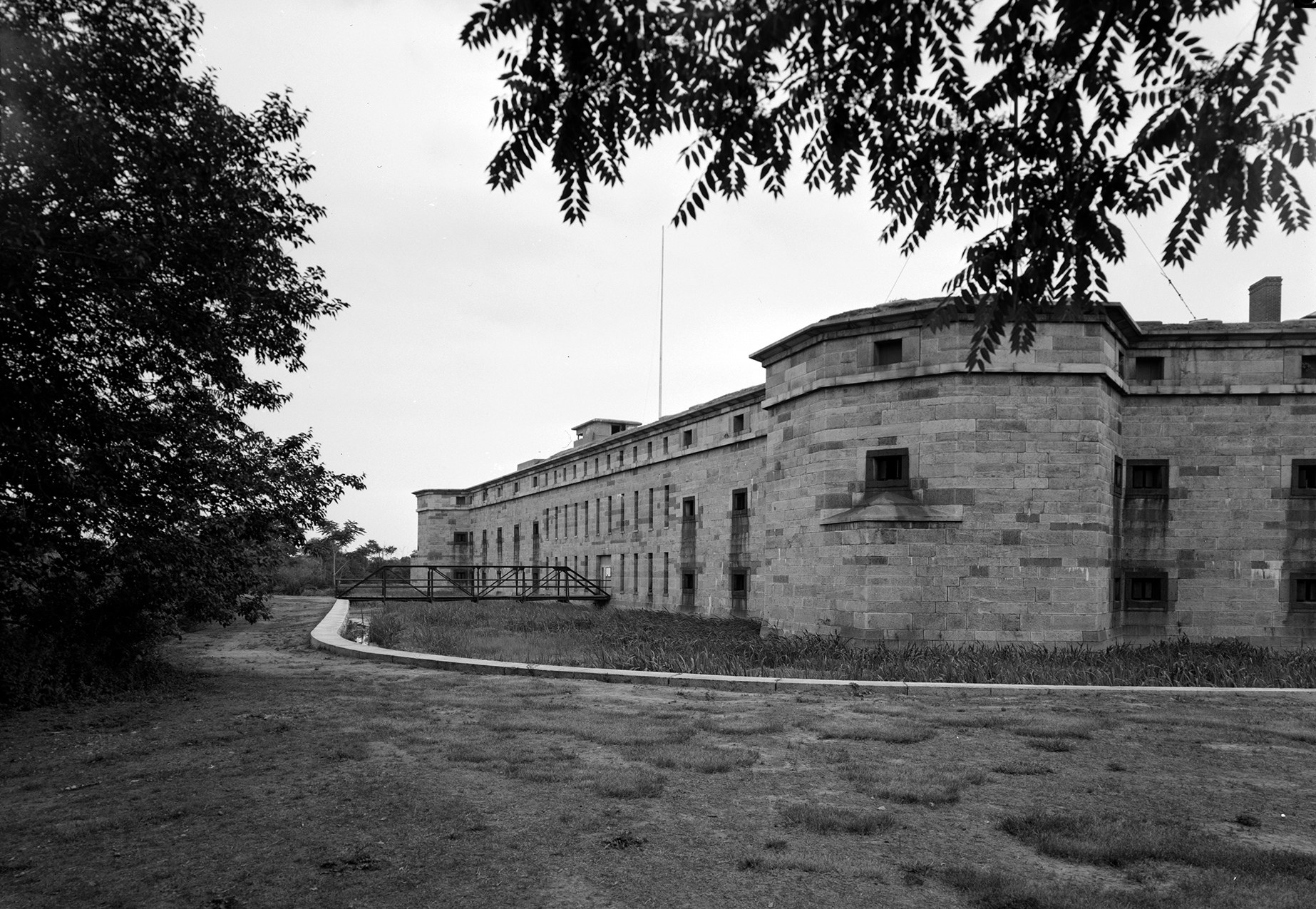
Secretary Stanton and the Army wanted the case kept out of civilian courts. After all, it was Union soldiers who had been targeted in the riot. Major Addison A. Hosmer, acting judge advocate general, and Oakes recommended that the prisoners be tried under military law. Their recommendation rested on numerous testimonies gathered shortly after the riot, while the town was under military occupation. To them, the evidence pointed to an organized and seditious conspiracy.[21]
Lincoln was not so sure. His initial instinct was to order the prisoners’ release, but by mid-July he reversed course to allow time to review all the evidence. Pressure mounted from all sides, as letters and petitions flooded in from Illinois, while the Army urged him to stand firm.
Orlando Ficklin, who had witnessed the riot from inside the courthouse, traveled to Washington, D.C., in July, though it is unclear whether he met with the president. A Democrat, Ficklin had served alongside Lincoln in Congress and had shared courtrooms with him in their early legal careers. They exchanged letters during Ficklin’s time in Washington, but he ultimately returned to Illinois empty-handed.[22]
As summer gave way to autumn, the ongoing war and the approaching election consumed the president’s attention. The fall of Atlanta on September 2 and Sheridan’s victories in the Shenandoah Valley greatly improved Lincoln’s chances for reelection. On November 4, just four days before the vote, Lincoln penned a brief note on the cover of Major Hosmer’s July 26 report and forwarded it to the War Department:
“Let these prisoners be sent back to Coles County, Ill., those indicted be surrendered to the sheriff of said county, and the others be discharged.”[23]
By November 14, the fifteen prisoners were en route to Illinois by train. The two indicted for murder in connection with the Charleston Riot, George Washington Rardin and John Redmon, were exonerated at trial in December 1864.[24] Rardin, age 29, would die less than a year later.
After the war, John H. O’Hair and the other indicted rioters who had fled quietly returned to their farms. The cases were reopened in 1871, but two years later, following the election of a new Democratic state’s attorney, James W. Craig, they were finally dismissed. O’Hair did not live to see the outcome, dying of illness on October 7, 1872.[25]
Remarkably, none of the participants were ever held legally accountable for their roles in the riot. Over time, Unionists and Copperheads in east-central Illinois gradually set aside their old animosities and found a way to live peacefully alongside their former adversaries.
[1] Michael Kleen, “The Copperhead Threat in Illinois: Peace Democrats, Loyalty Leagues, and the Charleston Riot of 1864,” Journal of the Illinois State Historical Society 105 (Spring 2012): 80; Charles Sumner to Francis Lieber, Jan. 17, 1863, in Edward L. Pierce, Memoir and Letters of Charles Sumner, Vol. IV (Boston: Roberts Brothers, 1894), 114.
[2] Stephen E. Towne, “‘Such conduct must be put down’: The Military Arrest of Judge Charles H. Constable during the Civil War,” Journal of Illinois History 9 (Spring 2006): 43-62.
[3] Charles H. Coleman and Paul H. Spence, “The Charleston Riot, March 28, 1864,” Journal of the Illinois State Historical Society 33 (March 1940), 21.
[4] Richard K. Tibbals, “‘There has been a serious disturbance at Charleston…’: The 54th Illinois vs. the Copperheads,” Military Images 21 (July-August 1999), 13; Coleman and Spence, 20.
[5] John Scott Parkinson, “Bloody Spring: The Charleston, Illinois Riot and Copperhead Violence During the American Civil War” (Ph.D. diss., Miami University, 1998), 168-71.
[6] Charles H. Coleman, “Depositions Taken in Charleston, Illinois after the Charleston Riot of March 28, 1864,” Vol. I (Charleston: Illinois Circuit Court, 1939), 24.
[7] Tibbals, 12.
[8] Danny Briseno, “York family goes to war,” The Prairie Press (Paris, IL) 12 June 2017.
[9] The War of the Rebellion: A Compilation of the Official Records of the Union and Confederate Armies. Series I, Vol. XXXII, Part 1 (Washington: Government Printing Office, 1891), 633.
[10] Robert D. Sampson, “‘Pretty Damned Warm Times’: The 1864 Charleston Riot and ‘the Inalienable Right of Revolution’,” Illinois Historical Journal 89 (Summer 1996): 99.
[11] “The Charleston Butchery,” Daily Illinois State Journal (Springfield, IL) 2 April 1864.
[12] Official Records, 634.
[13] Tibbals, 15; Coleman and Spence, 31-33.
[14] Official Records, 631, 634.
[15] William H. Herndon and Jesse W. Weik, Abraham Lincoln: The True Story of a Great Life, Vol. II (New York: D. Appleton and Company, 1924), 229. Herndon’s account of the riot and its aftermath contains several factual errors, including the wrong year.
[16] Carl Sandburg, Abraham Lincoln: The War Years, Vol. 1 (New York: Harcourt, Brace & Company, 1939), 616.
[17] Charles H. Coleman, Abraham Lincoln and Coles County, Illinois (New Brunswick: Scarecrow Press, 1955), 230-231. Hanks gave several versions of this conversation. According to Herndon, Lincoln said, “If I did, Dennis, it would be difficult to find another man to fill his place.” Herndon and Weik, Abraham Lincoln, 230.
[18] Peter J. Barry, “The Charleston Riot and its Aftermath: Civil, Military, and Presidential Responses,” Journal of Illinois History 7, no. 2 (Summer 2004), 89-90.
[19] Official Records, 631; Coleman, 228.
[20] Barry, “The Charleston Riot and its Aftermath,” 90; Peter J. Barry, “‘I’ll keep them in prison a while …’: Abraham Lincoln and David Davis on Civil Liberties in Wartime,” Journal of the Abraham Lincoln Association 28, no. 1 (Winter 2007), 22.
[21] Official Records, 632-633.
[22] Coleman, 227-229; Roy P. Basler, ed., The Collected Works of Abraham Lincoln, Vol. VII (New Brunswick, NJ: Rutgers University Press), 455.
[23] Official Records, 643.
[24] Barry, “The Charleston Riot and its Aftermath,” 103.
[25] Ibid., 106.

 M.A. Kleen
What are your thoughts?