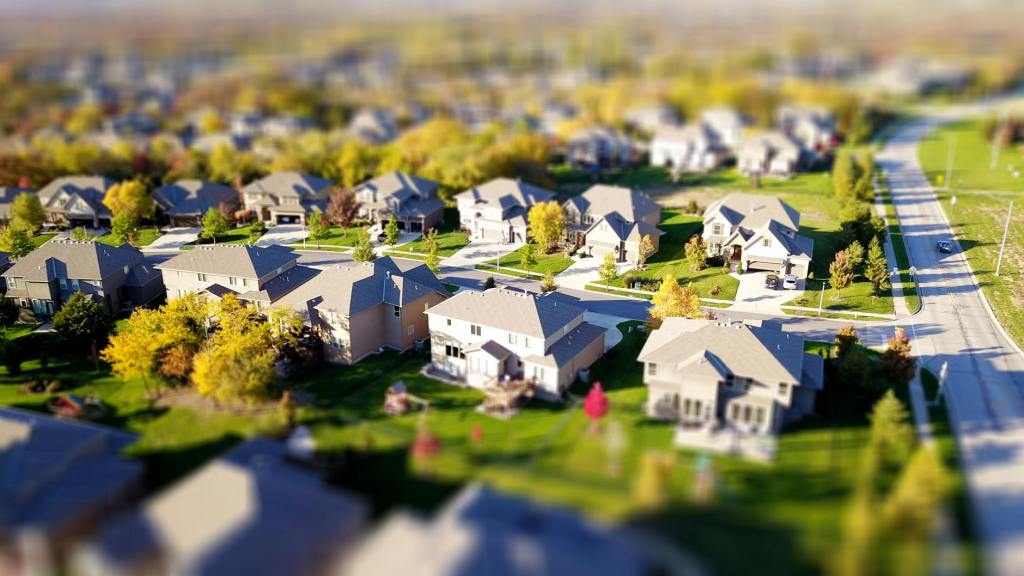
The carefully planned perfection of suburbia was meant to offer safety and order, but films like Suburbicon and American Beauty reveal its darker side—where conformity breeds repression, and hidden flaws shatter the illusion of harmony. Dive into the unsettling world of suburban gothic horror, where humanity’s duality thrives behind white picket fences.
Suburbia, with its perfectly trimmed lawns, cookie-cutter homes, and air of safety, was once the pinnacle of the American Dream. After World War II, millions fled overcrowded cities for these planned communities, promising refuge from urban chaos and the chance to build a better life. But as the years passed, cracks began to show in the suburban utopia. Crime didn’t vanish, secrets lingered behind closed doors, and a genre began to emerge that turned this idealized setting into a breeding ground for horror: suburban gothic.
Suburban gothic horror flips the comforting image of suburban life into a facade hiding chaos, violence, and societal critique. From Suburbicon to The ‘Burbs, these tales suggest that danger isn’t confined to shadowy forests or decaying castles—it thrives in the cul-de-sacs and pastel-painted homes we trust the most. But how did suburbia, designed to shelter us from life’s troubles, become the perfect backdrop for dread?
Suburbia’s roots lie in an idealistic vision. Following World War II, developers like William Levitt created mass-produced housing communities, most famously Levittown, that symbolized postwar prosperity. These neighborhoods promised more than just homes; they offered a lifestyle free from urban problems like crime, overcrowding, and poverty. They were sold as the perfect places to raise families and nurture happiness.
However, these communities also introduced new pressures: conformity, materialism, and rigid social roles. They weren’t open to everyone, either—early suburbs often excluded people of color through discriminatory housing policies. Beneath the surface of idyllic suburbia was a simmering discontent that writers and filmmakers couldn’t ignore. By the late 20th century, the suburban gothic narrative had emerged, highlighting what suburbia tried so hard to suppress: the flaws and failures of humanity.
A Dream Turned Nightmare
Suburbicon (2017), written by the Coen brothers and directed by George Clooney, epitomizes the dark critique of suburban life. Set in the 1950s, the film opens with a picture-perfect community that appears lifted straight out of a brochure. Families greet each other warmly, lawns are meticulously maintained, and neighbors share apple pies. But when the African American Mayers family moves in, the community’s friendly facade collapses, unleashing waves of racism and hostility.
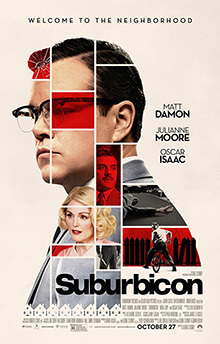
Amid this chaos, the film shifts to the story of Gardner Lodge (Matt Damon), whose seemingly tragic life—a home invasion leaves his wife dead—slowly unravels into a web of deceit, murder, and greed. The irony is striking: while the town rallies against the Mayers, blaming them for disrupting suburban peace, the real villain is Gardner, a man driven by selfishness and violence.
The duality of Suburbicon underscores suburban gothic’s central theme: the real monsters often live among us. The community’s obsession with maintaining its image blinds it to the corruption within, proving that even meticulously planned environments can’t eliminate humanity’s darker impulses.
Suburban gothic horror doesn’t just invent tales of chaos—it often draws from history and real-life fears. The suburbs of the 1980s, for example, were rife with anxiety over “Stranger Danger,” child abductions, and the creeping influence of drugs. These fears were reflected in Summer of 84 (2018), which follows a group of teens investigating their neighbor, a police officer they suspect is a serial killer.
The film taps into a chilling truth: even in neighborhoods designed to feel safe, the biggest threats can come from familiar faces. This echoes real-life cases like John Wayne Gacy, a suburban contractor and community volunteer who turned out to be one of America’s most infamous serial killers. The idea that horrors can grow unnoticed in the most ordinary of places is a hallmark of suburban gothic and resonates deeply with audiences.
Conformity as a Monster
Another staple of suburban gothic is the critique of conformity. Planned communities were designed with homogeneity in mind, from the identical rows of houses to strict homeowner association rules. This push for uniformity, however, often leads to stifling environments where individuality and freedom are suppressed.
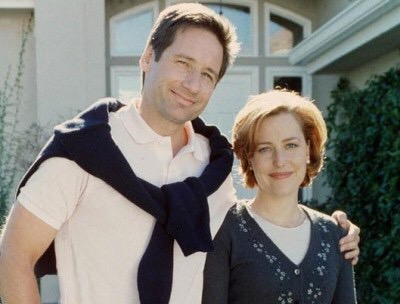
In The X-Files episode “Arcadia,” this theme is literalized. Agents Mulder and Scully pose as a married couple in a gated community to investigate mysterious disappearances. They discover that the perfection of the neighborhood is maintained by a supernatural enforcer—a Tibetan thoughtform summoned by the community’s leader to punish rule breakers. The monster, born from the community’s obsession with order, becomes a metaphor for how conformity can turn oppressive, even deadly.
This idea of conformity-as-monster also features in Eerie, Indiana’s episode “Foreverware,” where a mother preserves her family’s appearance of perfection by literally sealing them in plastic containers each night. Such surreal takes on suburban life highlight the lengths to which people will go to maintain appearances, even at the cost of authenticity and freedom.
While many suburban gothic stories focus on individual or familial secrets, others use the genre to critique systemic issues, particularly race. The exclusionary policies of early suburbs created a veneer of harmony by actively shutting out diversity, but this exclusion didn’t erase the presence of racism—it simply masked it.
In Suburbicon, the Mayers family is subjected to relentless harassment, while their white neighbors use their presence as a scapegoat for unrest. This storyline, though underdeveloped in the film, reflects a broader truth about suburban history. Communities often prided themselves on safety and harmony, but those qualities were frequently built on exclusion and intolerance. Suburban gothic horror doesn’t just expose the personal flaws of its characters—it also critiques the societal structures that enable those flaws.
Perhaps the most compelling feature of suburban gothic horror is its exploration of duality: light and shadow, safety and danger, appearance and reality. This duality is embodied in the very design of the suburbs, which promise refuge from the chaos of the city but often create their own kinds of entrapment.
In American Beauty (1999), Lester Burnham’s suburban life is a prison of materialism and monotony, driving him to seek freedom through rebellion—only to meet a tragic end. In Desperate Housewives (2004–2012), Wisteria Lane’s pristine image masks layers of betrayal, murder, and deceit, with each house hiding its own unique horror. These stories suggest that no matter how carefully we construct our environments, human nature cannot be so easily tamed.
What Suburban Gothic Horror Teaches Us
At its core, suburban gothic horror asks one unsettling question: can we ever escape the darker parts of ourselves? Suburbia, with its carefully controlled environments, was an attempt to create a utopia—a place where happiness could be built through planning. But as this genre reveals, true safety and perfection are illusions. Humanity’s flaws follow us wherever we go, no matter how green the grass or white the picket fence.
These stories also serve as a mirror, forcing us to confront uncomfortable truths about our communities and ourselves. They remind us that the neighbor who waves hello could have something sinister to hide, that the pursuit of perfection often leads to repression, and that sometimes, the monsters we fear most are the ones we see in the mirror.
By turning the suburbs into a stage for horror, these tales reframe the American Dream as a cautionary tale—one that continues to captivate audiences, long after the lights in the cul-de-sac have gone out.

 M.A. Kleen
What are your thoughts?