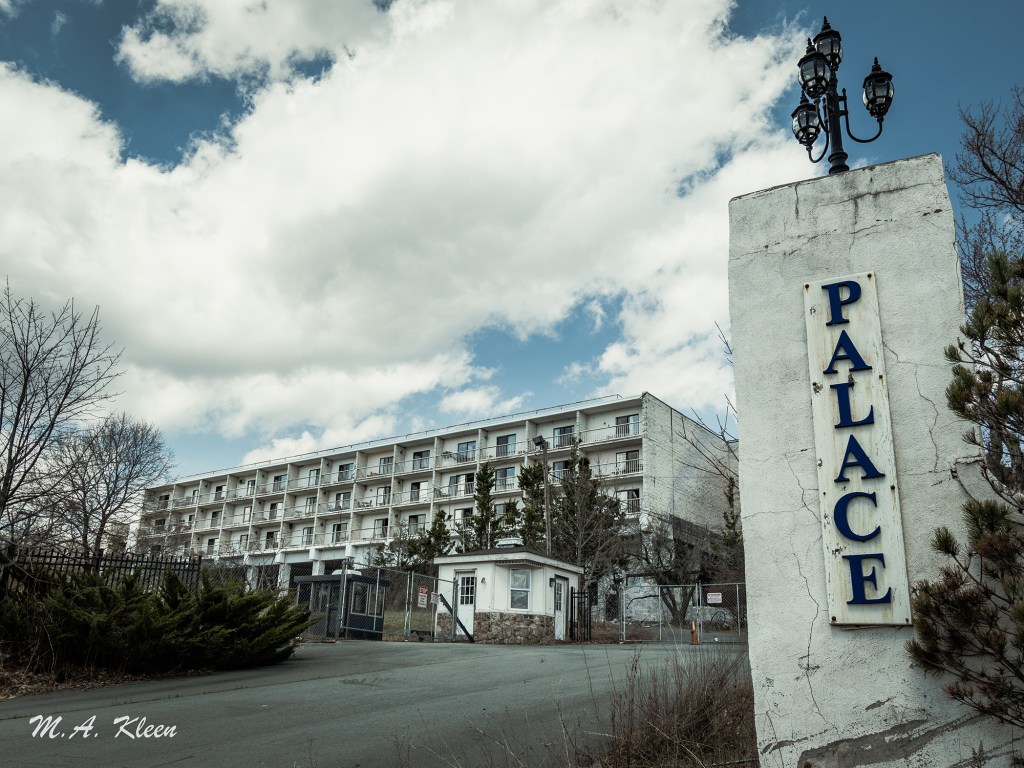
Once a glittering haven of laughter, music, and endless summer nights, New York’s Borscht Belt now stands as a haunting tapestry of abandoned resorts and untold stories. Step into the Catskills’ forgotten past, where echoes of a golden era linger in the ruins.
Driving through the winding roads of New York’s Catskill Mountains, it’s hard not to feel a sense of nostalgia mingled with mystery. Once the vibrant heart of Jewish American summer culture, the Borscht Belt has faded into a ghostly shadow of its former glory. The remains of iconic resorts and theaters, now abandoned, hint at a golden era that bridged tradition and modernity, entertainment and escape. The air is heavy with untold stories, and as I drive past these crumbling landmarks, it feels like time itself is lingering here, refusing to move on.
From the 1920s to the 1970s, the Borscht Belt was more than a vacation spot—it was a cultural phenomenon. Named after a quintessential Eastern European soup, it became a haven for Jewish families seeking refuge from the heat of New York City summers. With over 500 resorts, hotels, and bungalow colonies, this region offered a slice of paradise, complete with kosher cuisine, vibrant entertainment, and a sense of belonging.
The allure of the Catskills wasn’t just the cool mountain air; it was the promise of community and joy. At places like Grossinger’s Resort and the Concord, visitors danced, laughed, and bonded. These were the training grounds for comedians who became legends—Rodney Dangerfield, Mel Brooks, and Joan Rivers among them. In this enclave, you could be unapologetically Jewish, laugh until your sides hurt, and eat until you couldn’t move. Today, the laughter is gone, but the walls of these establishments seem to whisper memories of their heyday.
As I approach Liberty, the grand ruins of Grossinger’s Resort come into view. Once the crown jewel of the Borscht Belt, this sprawling resort was synonymous with opulence. Imagine Olympic-sized swimming pools, elegant dining halls, and lavish shows that rivaled anything Broadway had to offer. The movie Dirty Dancing captured the spirit of this era, though it was set in a fictionalized version of such resorts.
Today, Grossinger’s is a skeleton. Its once-bustling corridors are now overgrown with weeds, and graffiti mars its decaying walls. Yet, there’s a strange beauty in the decay. I step closer and notice a faded sign near the pool area that reads, “Relax, Refresh, Rejoice.” The irony is almost poetic. Even in its dilapidated state, Grossinger’s holds on to its identity—a shrine to a past that refuses to be forgotten.

Heading south of Liberty, I find the Swan Lake Resort, also known as the Stevensville Hotel. This one hits differently—perhaps because it was bought in 2015 by an Orthodox Jewish group but remains unused. There’s something haunting about its dormancy, as though it’s waiting for life to return. The resort’s facade is a stark reminder of the many summers it hosted families eager for rest, relaxation, and kosher cooking.
Standing on the roadside, I can almost hear echoes of laughter and see children chasing each other across manicured lawns. Swan Lake, like so many others, is a time capsule. It’s as if it’s frozen in anticipation, a silent sentinel to a bygone era.
Not all relics of the Borscht Belt are hotels. Driving along NY State Highway 52, I stumble upon the ruins of the Mountain Drive-In. Opened in 1951, this three-screen theater was a beacon of entertainment for families and teenagers alike. Now, it looks like something out of a dystopian novel. The marquee, advertising “Mountain Fest ’97,” leans precariously, and the lot is eerily quiet, save for the rustle of leaves.
The drive-in was more than a movie venue; it was a gathering place, a slice of Americana with a Jewish twist. Today, the empty lot and decayed structures tell a different story, one of neglect and the inexorable march of time.

The stories of some Borscht Belt resorts ended abruptly and tragically. Take the Shawanga Lodge, for instance. In 1959, it hosted a groundbreaking conference on laser technology—proof that the Catskills weren’t just about leisure but innovation too. Tragically, the lodge burned to the ground in 1973, leaving only ashes where greatness once stood.
Not far from Shawanga was the Overlook, another jewel in the Borscht Belt’s crown. Operated by the Schrier family, it offered everything from bungalows to big-name entertainment. Like many of its contemporaries, the Overlook succumbed to the forces of time, neglect, and changing tastes. Today, it’s little more than a memory.
Woodbourne, a hamlet nestled along the Neversink River, holds a gem of Art Deco architecture—the Center Theatre, also known as the Peace Palace. Built in 1938, it was added to the National Register of Historic Places in 2001. Yet, it’s been abandoned since the 1980s. The theater’s facade still hints at its former grandeur, but inside, it’s a different story.
Nearby, in White Lake, stands an 1848 Greek Revival hotel, one of Sullivan County’s oldest structures. Its story mirrors that of the theater—grand beginnings, a slow decline, and now, abandonment. Developers have tried to repurpose it, but the hotel seems to resist, clinging to its storied past.

The decline of the Borscht Belt wasn’t sudden; it was the result of cultural shifts and new opportunities. By the 1970s, increasing religious tolerance allowed Jewish families to vacation anywhere. The advent of air travel opened up destinations like Florida and the Caribbean, and suddenly, the Catskills felt old-fashioned.
Yet, the spirit of the Borscht Belt lingers. It’s in the faded signs, the cracked pool tiles, and the stories passed down through generations. It’s in the ruins of Kutsher’s Hotel, the inspiration for the film Dirty Dancing, and the memories of the young couples who met at summer dances and later married.
Driving away from these sites, I feel a profound sense of loss but also gratitude. The Borscht Belt was more than a place—it was a cultural touchstone, a sanctuary, and a symbol of resilience. Its decline is bittersweet, but its impact is undeniable.
If you ever find yourself in the Catskills, take a detour down these forgotten roads. Walk among the ruins and imagine the laughter, the music, the clinking of glasses. These places may be abandoned, but they are far from forgotten. The Borscht Belt lives on, not just in history books or photographs, but in the echoes of the mountains and the hearts of those who remember.

 M.A. Kleen
What are your thoughts?