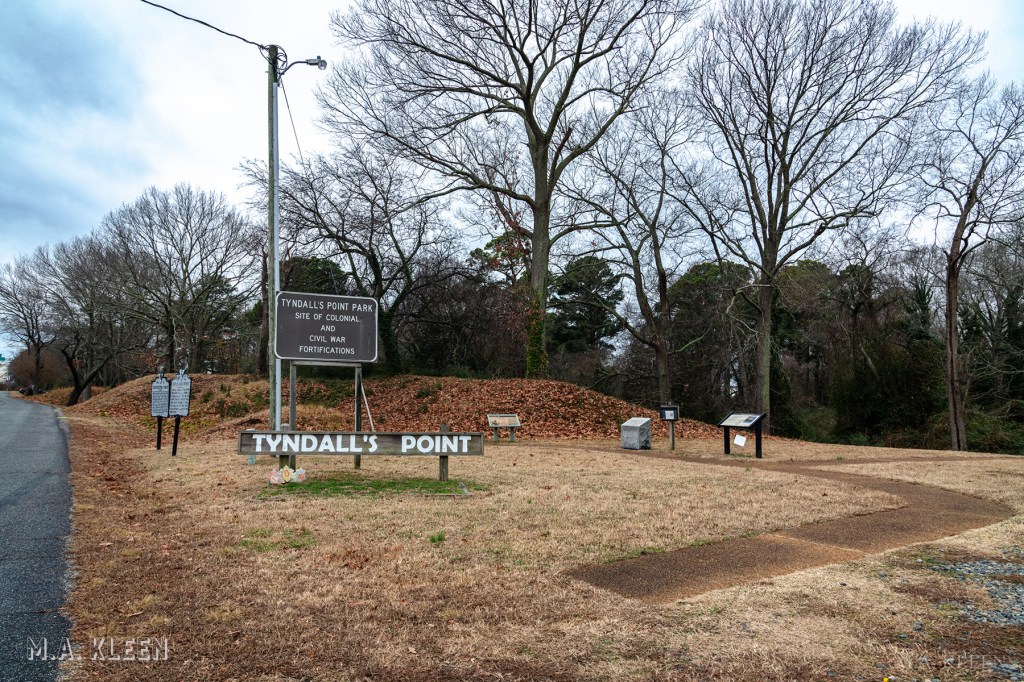
Gloucester Point is significant for being the scene of the first hostile engagement between Virginia and the U.S. government in the Civil War, but it has Revolutionary War history as well.
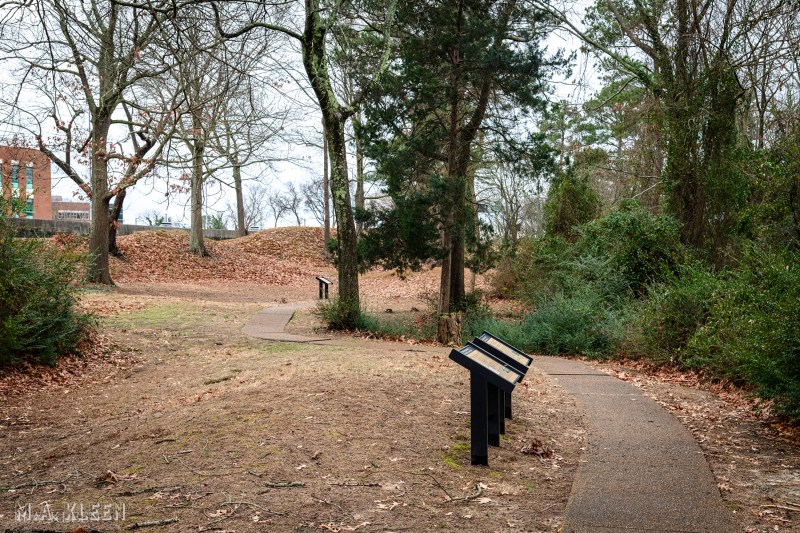
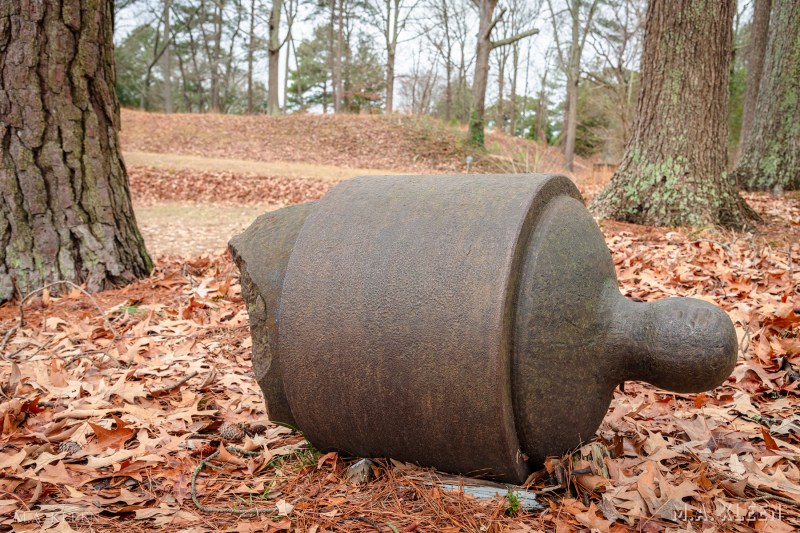
Tyndall’s Point Park sits tucked away behind the George Washington Memorial Highway (U.S. Route 17), its serpentine mounded earthworks winding along a trail through the woods. At one time in the distant past, artillery batteries commanded the entrance to the York River from this bluff. Today, it is almost unrecognizable, with the Virginia Institute of Marine Sciences across the highway and the modern Coleman Memorial Bridge reaching across the river to Yorktown.
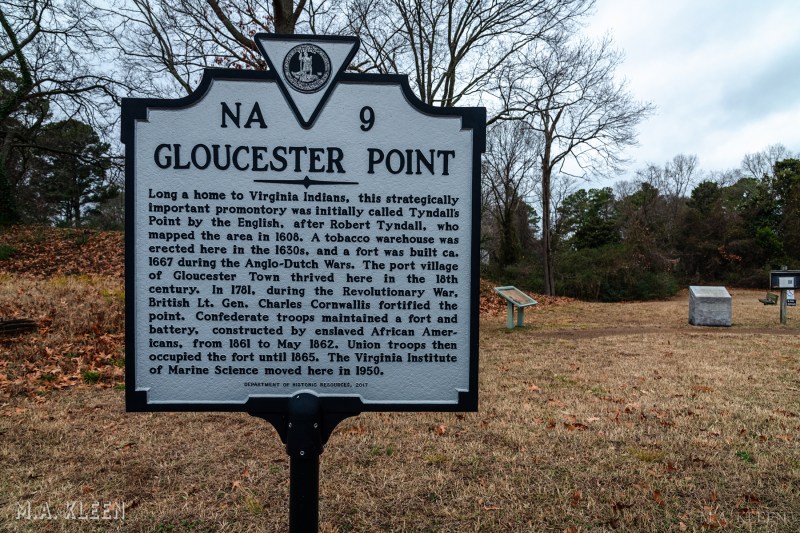
This strategic point has a long history of military activity going back hundreds of years. British colonists first built a fort here in 1667 and named it Fort James a few years later. It was a crucial strong point for British forces during the American Revolution and helped cover Lt. Gen. Charles Cornwallis’ rear during the Siege of Yorktown. Its commander, Lt. Col. Banastre Tarleton surrendered the fort to French Brig. Gen. Claude Gabriel de Choisy on October 19, 1781, one hour after Cornwallis surrendered his army.
Tyndall’s Point was renamed Gloucester Point sometime after the Revolutionary War.
To my knowledge, nothing remains of these earlier forts. The existing earthen parapets were built by Confederate engineers during the American Civil War. On April 27, 1861, U.S. President Abraham Lincoln extended the blockade of the seven original Confederate States to include the ports of Virginia. This was an uncertain time because it was after the Richmond Secession Convention voted in favor of secession, but before voters ratified it in a May 23rd referendum.
On May 3, 1861, Robert E. Lee appointed Col. William B. Taliaferro commander of the defenses at Gloucester Point and instructed him to oversee construction of a shore battery there. On May 6, Taliaferro ordered the Richmond Howitzers with two six-pounder cannons to report to Gloucester Point to assist in the defense. They arrived the next morning.
At the same time, U.S. Commodore Garrett J. Pendergrast ordered Lt. Thomas O. Selfridge, Jr., commander of the converted steam tugboat USS Yankee, to sail up the York River and examine the fortifications. As the Yankee approached within 2,000 yards of Taliaferro’s battery, it fired several shots across the Yankee’s bow. The Richmond Howitzers reportedly fired 12-13 shots during the engagement. The Yankee fired six rounds from its pair of cannon in return, but did not score a hit.
Lt. Selfridge saw the futility of continuing the engagement and sailed away after a few minutes. Neither side reported casualties. This brief exchange of fire was the first hostile engagement between Virginia and the U.S. government in the Civil War, occurring a little less than two weeks before Virginia formally seceded from the United States.
Today, you can visit the former Confederate earthworks at Tyndall’s Point Park off Vernon Street, behind the Gloucester Inn at 7418 Battery Dr, Gloucester Point, VA 23062. Unless you were looking for it, you might never know it was there. There is a small parking lot, and several interpretive markers and signs along the winding trail tell the story of its use during the Revolutionary War and Civil War.

 M.A. Kleen
What are your thoughts?