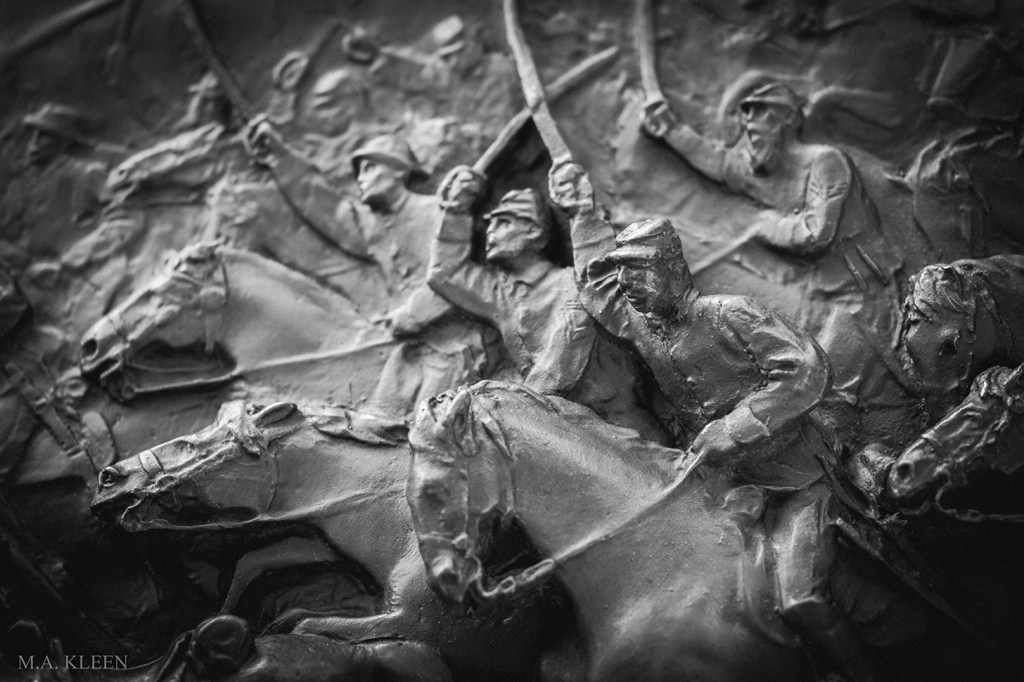
As Pickett’s Charge was underway, Confederate cavalry commander Maj. Gen. J.E.B. Stuart attempted his own audacious assault east of Gettysburg. After being cut off from the rest of Robert E. Lee’s army for weeks, Stuart finally arrived on the afternoon of July 2nd. Lee reportedly scolded Stuart for being absent during that critical time. Perhaps to regain some personal sense of honor, on the afternoon of July 3rd, Stuart rode out to find his Federal counterpart, Brig. Gen. David M. Gregg and his cavalry division. The two mounted forces clashed for over four hours. When the dust settled, Stuart’s horsemen were stopped in their tracks, demonstrating once again that the Union cavalry was no longer outmatched.
After both Pickett’s and Stuart’s charges were repulsed, Union cavalry commander Brig. Gen. Hugh Judson Kilpatrick attempted his own reckless gamble. He ordered Brig. Gen. Elon John Farnsworth to charge the Confederate’s right flank in the shadow of Big Round Top. The terrain was rocky and uneven, and Farnsworth protested the order. Never-the-less, he obeyed, and he accompanied Maj. William Wells’ 1st Vermont Cavalry. Farnsworth had two horses shot out from under him before he was killed–shot five times. Wells survived, earning the Medal of Honor. The attack achieved nothing but adding to the long list of casualties. The Battle of Gettysburg was over.

 M.A. Kleen
What are your thoughts?