In June 1863, Confederate Gen. Robert E. Lee intended to use the Shenandoah Valley as a corridor to invade the north, with the Blue Ridge Mountains hiding his movements from the enemy. To do so, he first needed to clear the 8,324-man Federal garrison commanded by Maj. Gen. Robert H. Milroy at Winchester, Virginia. He entrusted his Second Corps commander Lt. Gen. Richard S. Ewell with the task. Milroy had occupied the area around Winchester since late December 1862, digging fortifications to protect his supply depot as well as the Baltimore and Ohio Railroad farther north. On June 12, Ewell took his three divisions and one cavalry brigade, for a total of 19,000 men, through Chester’s Gap into the Shenandoah Valley. He sent one division under Maj. Gen. Robert E. Rodes northeast to cut off the Federal retreat and his other two divisions under Maj. Gen. Jubal A. Early and Maj. Gen. Edward “Allegheny” Johnson to directly attack Milroy at Winchester. On June 13th, the two sides skirmished and an artillery duel erupted southeast of Winchester. Southwest of town, Confederate Brig. Gen. John B. Gordon’s brigade rolled up the scattered Union troops, until a battery on Bowers’ Hill stopped them. That evening, Milroy’s troops withdrew into their fortifications.
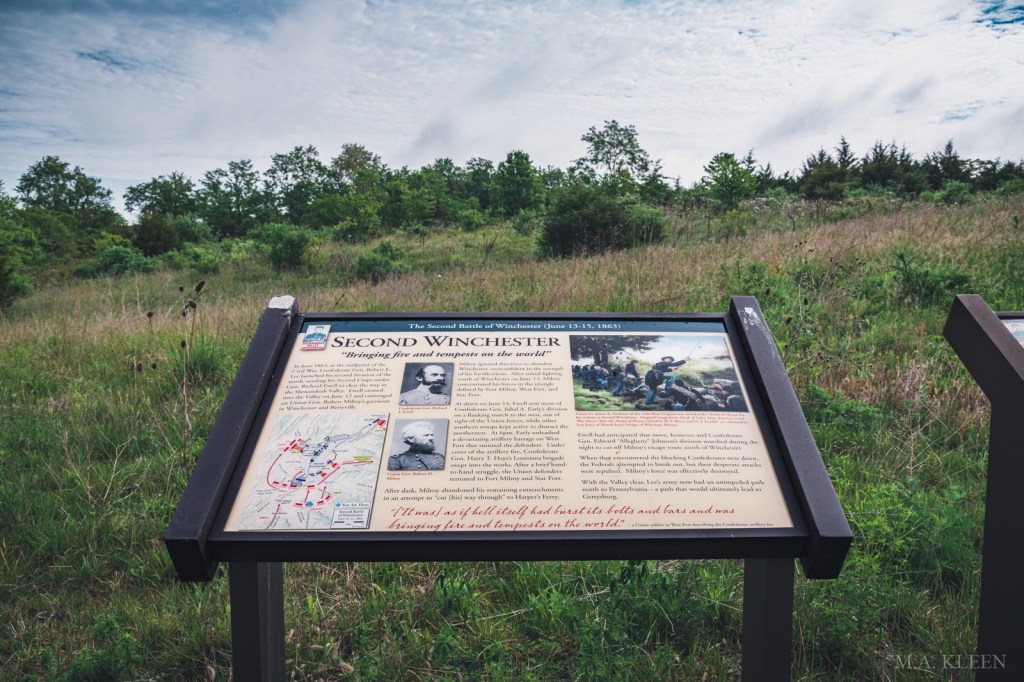
Gettysburg Campaign – Winchester, June 13, 1863
1–2 minutes

 M.A. Kleen
What are your thoughts?