Hidden among the marshes, forests, and sprawling estates northwest of Chicago, Cuba Road has become one of Illinois’ most notorious haunted highways. Phantom houses, ghostly lovers, abandoned mansions, and decades of whispered legends have transformed this quiet Barrington road into a rite of passage for generations of thrill seekers searching for something strange in the darkness.
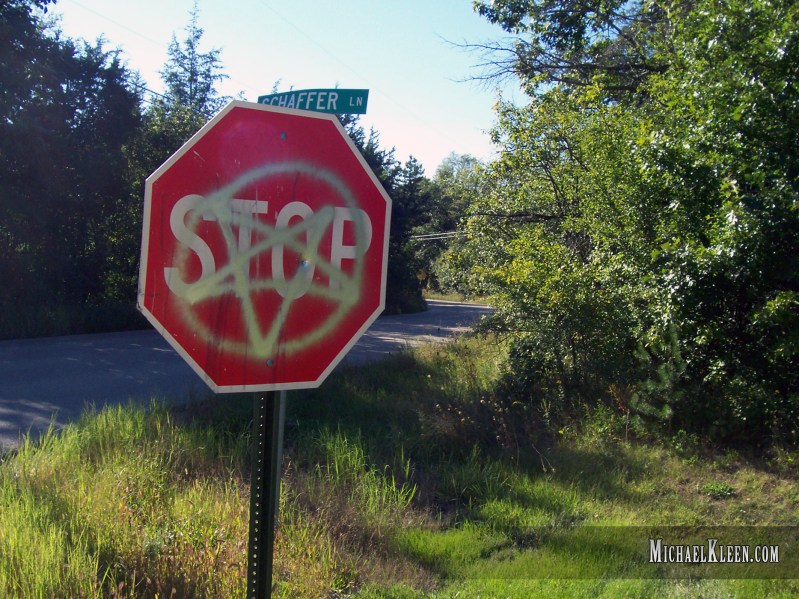
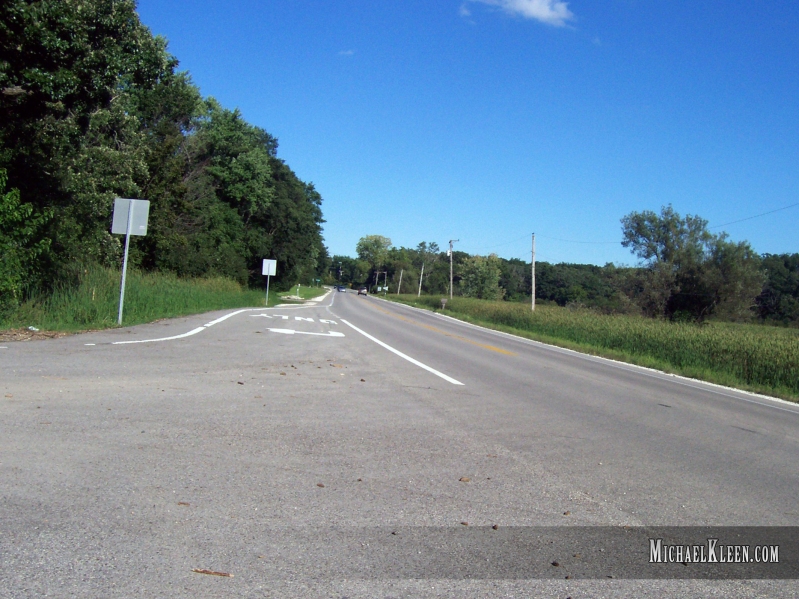
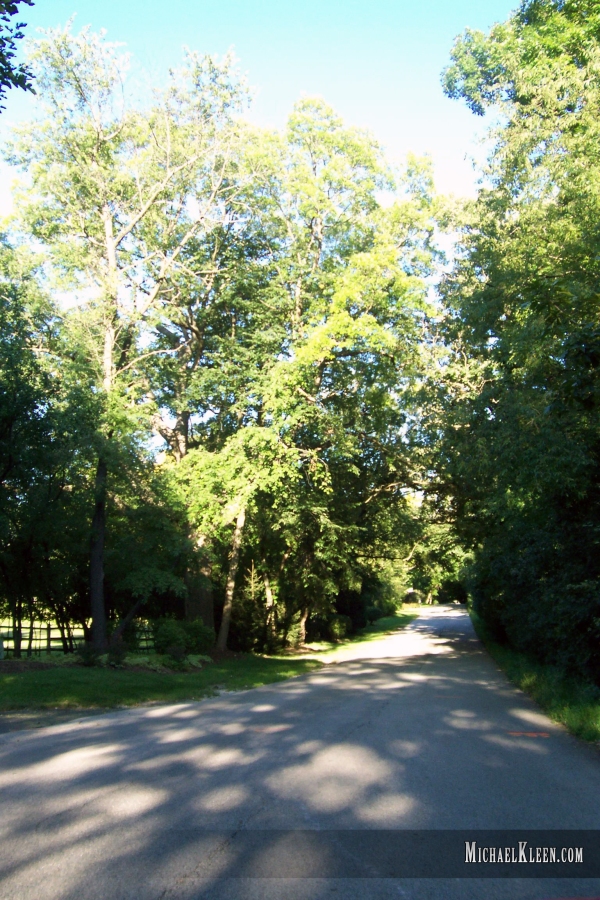
- Cuba Road near Barrington, Illinois, is considered one of Chicagoland’s most infamous haunted roads, often compared to Archer Avenue and Bachelors Grove Cemetery for the sheer number of legends attached to it.
- Local folklore surrounding the road includes phantom cars, mysterious “spook lights,” vanishing houses, spectral lovers, and the ghost of a young boy seen wearing a red shirt and overalls.
- Rainbow Road, a side street off Cuba Road, was once home to a secluded abandoned mansion that inspired rumors of gangsters, satanic activity, and even a hidden insane asylum before it was demolished in the early 2000s.
- The eerie atmosphere of Cuba Road is heightened by its isolated marshes, dense woods, and wealthy secluded estates, which have made the area a longtime destination for ghost hunters and thrill-seeking teenagers.
I grew up in the northwest suburbs of Chicago. Des Plaines, to be exact—home of the famous Choo Choo Restaurant, the first franchised McDonald’s, and the old stomping grounds of John Wayne Gacy. When my friends and I wanted a scare, we usually headed for Cuba Road, a lonely stretch north of the suburbs about half an hour from my home. My sister, four years older than me, was the first person I ever heard mention it. She had just gotten her driver’s license and, like many teenagers, wanted to test her newfound freedom somewhere thrilling. Cuba Road was that place.
Dark and isolated, the road wound past sprawling mansions hidden deep behind trees, where every bend seemed to conceal something unseen. Rumors swirled about abandoned insane asylums, phantom cars, haunted cemeteries, and all manner of things that prowled the night. For an added dose of danger, some of the more foolhardy visitors even turned off their headlights to see how far they could drive down the blackened road before fear—and common sense—forced them to stop.
Cuba Road lies between the affluent communities of Lake Zurich and Barrington, quiet upper- and upper-middle-class enclaves northwest of Chicago. The main stretch of the road runs between Route 12 (Rand Road) and Route 14 (Northwest Highway) and has accumulated a remarkable collection of local legends over the years. White Cemetery, along the western end of the road, is known for its mysterious “spook lights.”
The road itself is said to host phantom cars, spectral lovers, and even a vanishing house. Nearby Rainbow Road, a side street off Cuba, was once home to an abandoned mansion that locals alternately claimed had been an old asylum or a hideout for gangsters. The building has since been demolished, and the property is now being redeveloped, though the stories surrounding it stubbornly persist.
The ghost stories that seem to pour from the mouths of visitors led author Ursula Bielski to proclaim, “For Chicagoland ghosthunters, Cuba Road is the single most notorious haunted site north of southwest suburban Bachelors Grove Cemetery.” Anyone familiar with the reputation of Bachelors Grove understands the weight of that comparison. Scott Markus, who has done extensive research into the road’s folklore, dubbed Cuba Road “the Archer Avenue of the North Side” because of the sheer variety of legends attached to it.
Yet Cuba Road lies in Lake County, and many residents there do not consider themselves part of Chicago or even its suburban orbit in Cook County. The Barrington ZIP code, 60010, ranked among the wealthiest in the United States in 2008 for areas with more than 20,000 tax returns, rivaled in Illinois only by Hinsdale and surpassed nationally by just a handful of New York communities.
That economic divide between Barrington and a more working- or middle-class suburb like Des Plaines adds another layer to the mystique of Cuba Road. Many visitors cannot shake the feeling that they are trespassing into a world where they do not entirely belong, a kind of reverse “slumming.” Unsurprisingly, the residents who settled there seeking privacy have little appreciation for their quiet roads and sprawling front yards becoming a paranormal playground after dark.
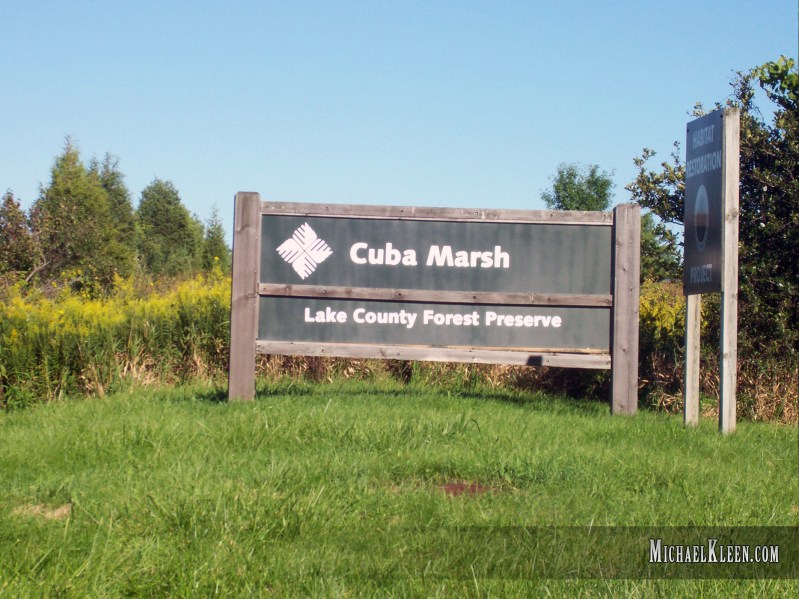
Our tour of Cuba Road begins at the intersection with Rand Road, where gas stations and strip malls have crept so close that they nearly obscure the entrance to the infamous avenue. Heading west, the first major landmark is the Cuba Marsh Forest Preserve. By day, the marsh is a favorite destination for cyclists, rollerbladers, and joggers. After dark, however, it takes on a far more unsettling character.
The preserve marks the point where visitors leave behind the safe familiarity of the suburbs. There are no streetlights, only the droning of insects and the croaking of frogs and other amphibians hidden in the marsh grass. Some motorists searching for a shortcut through the preserve along Ela Road have reportedly encountered more than they bargained for.
Ela Road cuts north and south through the forest preserve, intersecting Cuba Road a little more than a mile west of Route 12. According to Rachel Brooks, author of Chicago Ghosts, an old barn once stood somewhere south of Cuba Road along Ela. Near it sat a swing set, and witnesses claimed to hear the spirit of a young girl laughing and playing there—sometimes crying softly in the shadows of the decaying structure.
While no barn stands along Ela Road today, farms once occupied the area, and abandoned driveways still disappear into the trees where those homesteads once sat. Like many local legends, the story of the red barn on Ela Road may preserve the fading memory of a real place long since reclaimed by the marsh and forest.
In Chicago Ghosts, Rachel Brooks recounts the experience of a young man named David who, along with several friends, decided to explore Ela Road one night. The dense marsh and thick stands of trees pressing in from both sides quickly unsettled them. In the darkness, the road seemed endless. Hoping to turn around and continue toward Cuba Road, David pulled into what he believed was a driveway.
“He pulled the car into the driveway and prepared to back out when he noticed a child’s wagon sitting in the driveway near the rear of his vehicle,” Brooks wrote. Moments later, the disembodied laughter of a child echoed through the darkness. David and his friends wasted no time getting out of there.
Continuing west along Cuba Road, with the Cuba Marsh Forest Preserve on your left, you soon come to a set of railroad tracks. About 800 feet beyond them lies Rainbow Road, which winds north through a wooded residential area of wealth and seclusion. The road bends sharply left, continues on, then turns sharply right. A stone wall and wrought-iron gate once stood on the outside of that second curve. Behind it, a blacktop driveway disappeared into a grove of willow trees, where an old abandoned mansion sat hidden from the road. The property was scattered with outbuildings, a pond, a silo, and even a doghouse.
According to Scott Markus, the mansion’s former owners appeared to have left in haste. “The closets still contained clothes, and the kitchen drawers still held silverware,” he wrote in Voices from the Chicago Grave. One woman he interviewed described rooms full of toys, along with satanic markings and animal skulls in the basement. In Haunted Illinois, Troy Taylor claimed that trespassers reported lights glowing in the windows, “strange figures,” and the sounds of “moaning and crying” from within.
Some of the more imaginative visitors returned with stories claiming the building had once been an insane asylum or sanitarium. For those who had never seen the property firsthand, or who knew little about local history, the rumors were easy to believe. Many did. In reality, no asylum ever stood along Rainbow Road, only a decaying mansion whose isolated appearance was more than enough to secure its place in local legend.
Sometime in the early 2000s, the local fire department intentionally burned the abandoned house to the ground. According to Scott Markus, however, a guest house, barn, and tennis courts still remained on the property afterward. The land was eventually redeveloped into an upscale subdivision known as Kaitlin’s Way, marketed as “Barrington’s Finest Custom Home Neighborhood.”
In the course of his research, Markus uncovered a tragic incident connected to the estate involving the death of a young boy. The mansion itself belonged to real estate developer Robert Krilich, who employed a full-time groundskeeper to maintain the property. The groundskeeper’s family, the Cokenowers, lived in the guest house tucked away behind the trees.
Scott Markus later spoke with the groundskeeper’s daughter, Sherry Cokenower-Mitchell, who recounted a tragedy that struck the property in 1968. Her seven-year-old brother, William, was killed when a heavy stone birdbath toppled over as he tried to climb it. Over the years, reports surfaced of a ghostly boy in a red shirt and overalls wandering along Cuba Road. William’s father came to believe the apparition might be the spirit of his long-deceased son.
There was another abandoned house in the area, though it never achieved the same notoriety as the Rainbow Road mansion. It once stood kitty-corner from Rainbow Road, hidden within Cuba Marsh. “Kids used to drive up there before the road was closed and neck and drink beer,” a local librarian named Dorothy told Dale Kaczmarek. That house has long since been demolished, but the cracked driveway and remnants of the foundation still linger in the marsh.
Cuba Road is also haunted by a third house, though this one belongs more to folklore than physical reality. Somewhere between the intersection of Cuba Road and Route 59 (Hough Street) and White Cemetery, motorists have reported glimpsing a simple farmhouse—sometimes engulfed in flames—only for it to vanish completely when they pass by again.
In Chicago’s Street Guide to the Supernatural, Richard T. Crowe appeared to connect this phantom house with the abandoned home in Cuba Marsh. “Debris from the house was still visible in the early 1980s,” he wrote. “On rainy, overcast days or stormy nights one can see… an apparition, a ghostly house where once the real physical house had existed.”
Whatever its exact location, the folklore consistently holds that the house burned down, possibly with its owner still inside. According to both Ursula Bielski and Rachel Brooks, witnesses have reported seeing an elderly woman wandering the property. In Brooks’ account, the woman carried a lantern as she moved slowly through the yard. “But should you try to approach the old woman or walk down the path to the house,” she wrote, “all will be gone.”
The mystery houses of Cuba Road, both real and imagined, hint at a darker history largely forgotten by most visitors. Stories of gangsters prowling the Barrington area, dumping bodies, and carrying out the business of organized crime linger in the murky past. Yet within living memory, genuine terror touched the homes along this secluded avenue. Some of the abandoned properties scattered through the area were left behind in the wake of violence, while teenagers drank beer and fooled around nearby, oblivious to what had once occurred there.
In early August 1972, a group of Black Vietnam veterans who had received dishonorable discharges murdered millionaire Paul Corbett, his wife, stepdaughter, and sister-in-law inside their Barrington Hills mansion roughly four miles southwest of Cuba Road. The gang called itself De Mau Mau, after the Mau Mau uprising against British colonial rule in Kenya during the 1950s. Just two months later, on October 16, 1972, a nineteen-year-old girl was found dead from a gunshot wound in the bedroom of her father’s home near the intersection of Route 59 and Cuba Road.
Still shaken by the Corbett murders, residents throughout the area were on edge. According to the Chicago Tribune, Lake County Sheriff Orville Clavey “warned reporters on the scene not to approach houses because many Barrington area residents are heavily armed.” Tragically, that very atmosphere of fear contributed to the young girl’s death. Her family had accumulated more than a dozen rifles and handguns inside the home. Her twelve-year-old brother reportedly found a .38-caliber pistol, tripped, and accidentally fired the shot that killed her.
More than one author of Chicagoland ghost lore has written about a romantic couple seen strolling near White Cemetery along Cuba Road. Sometimes they appear on warm summer evenings, other times in the chill of autumn, walking hand in hand toward the setting sun before gradually fading from sight. According to Scott Markus, witnesses do not actually see the couple themselves, but only their shadowy silhouettes.
There may be a simple explanation for the vanishing lovers. Drivers traveling west into the setting sun can have their vision obscured—sometimes nearly blinded—by the intense orange glare. Under the right conditions, it is entirely possible for a couple walking along the roadside to disappear from view in the reflection of a rearview mirror or the blinding light pouring through a windshield.
From Rand Road to Northwest Highway, Cuba Road stretches only five miles, yet it has carved out an outsized place in the folk consciousness of Illinois. For generations of teenagers and young adults from northern Cook County, driving the lonely road has become a rite of passage much like Archer Avenue for the south and southwest suburbs. Residents of unincorporated Barrington may resent the steady stream of curiosity seekers, but as long as young people go searching for adventure beyond the reach of city lights, Cuba Road will continue to draw them into its shadows.
Donate
Enjoy what you read? Please consider making a one-time donation to support my research.
Enjoy what you read? Please consider making a monthly donation to support my research.
Enjoy what you read? Please consider making a yearly donation to support my research.
Choose an amount
Or enter a custom amount
Your contribution is appreciated.
Your contribution is appreciated.
Your contribution is appreciated.
Sources
- Ursula Bielski, More Chicago Haunts: Scenes from Myth and Memory (Chicago: Lake Claremont Press, 2000).
- Scott Markus, Voices from the Chicago Grave: They’re Calling. Will You Answer? (Holt: Thunder Bay Press, 2008).
- Dale Kaczmarek, Windy City Ghosts: An Essential Guide to the Haunted History of Chicago (Oak Lawn: Ghost Research Society Press, 2005).
- Rachel Brooks, Chicago Ghosts (Atglen: Schiffer Books, 2008).
- Troy Taylor, Haunted Illinois: The Travel Guide to the History & Hauntings of the Prairie State (Alton: Whitechapel Productions Press, 2004).
- Richard T. Crowe, Chicago’s Street Guide to the Supernatural (Oak Park: Carolando Press, 2000, 2001).
- ”De Mau Mau,” Time Magazine, 30 October 1972.
- Chicago Tribune (Chicago) 17 October 1972
- Chicago Tribune (Chicago) 18 October 1972.


What are your thoughts?