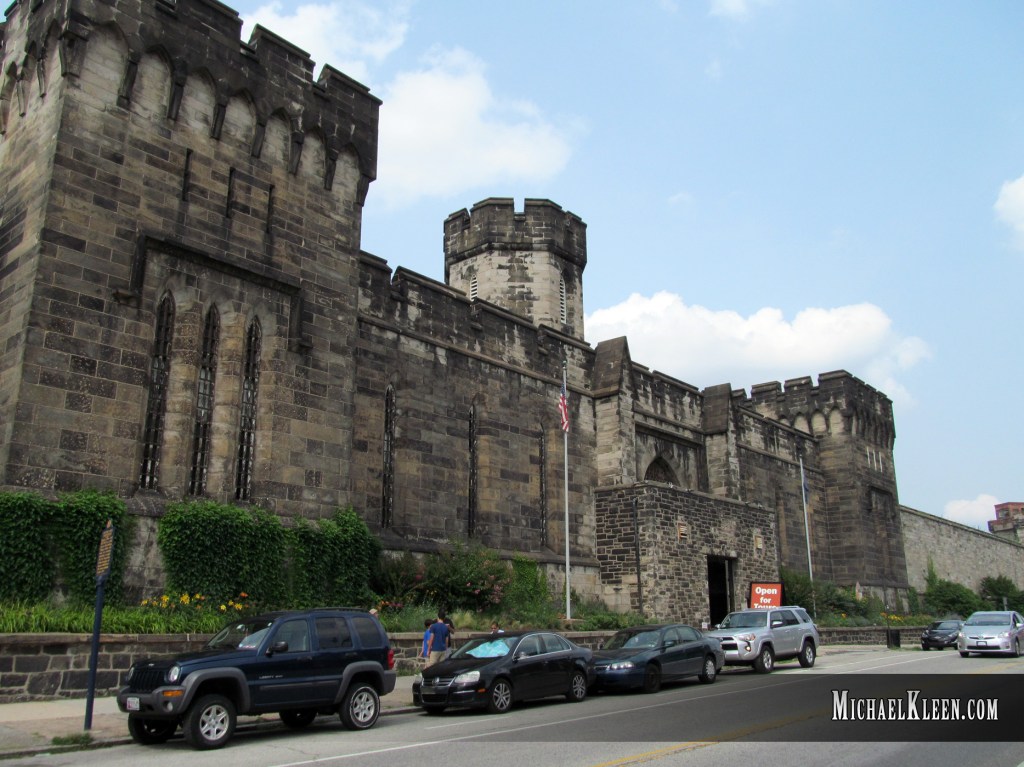
Walk the same halls as notorious criminals in America’s first true penitentiary. Do the ghosts of long-suffering inmates remain?
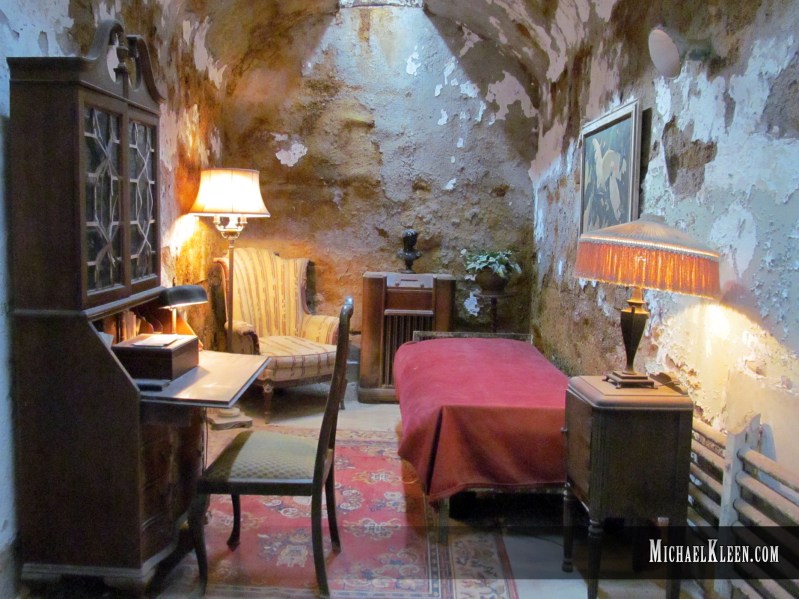
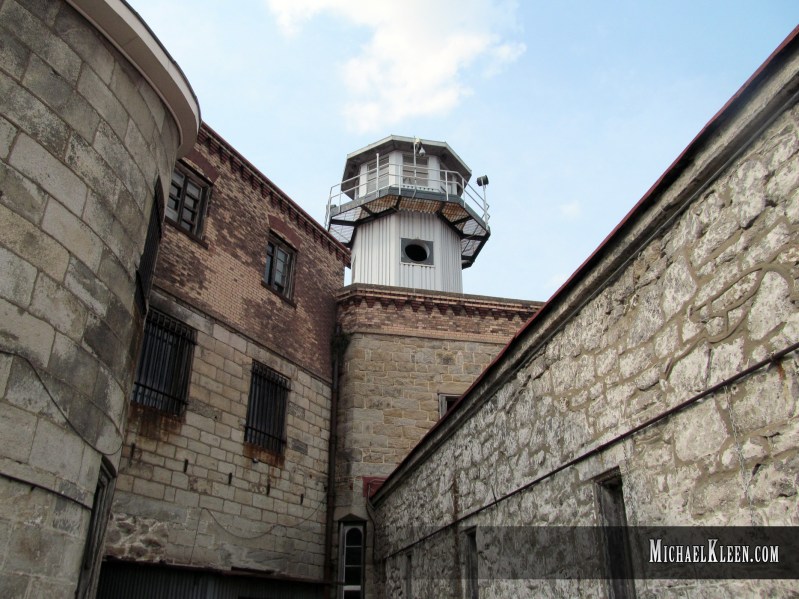
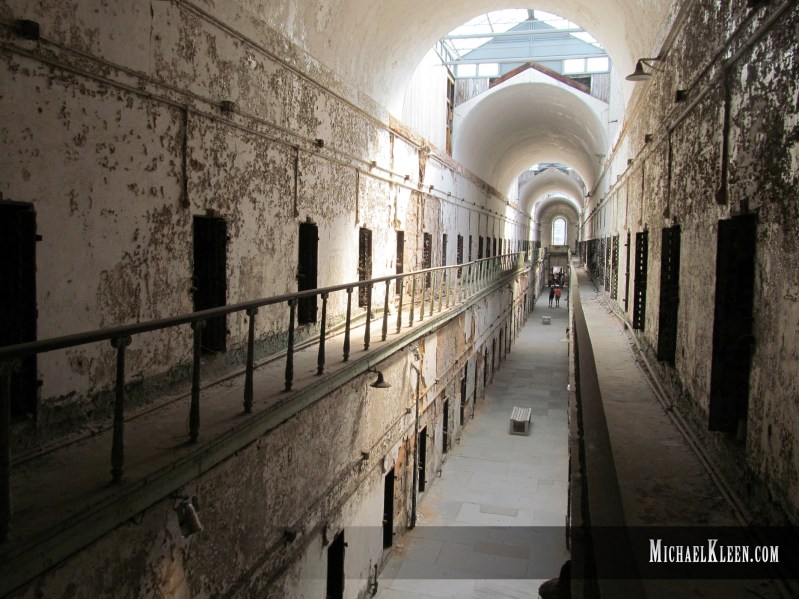
- Eastern State Penitentiary in Philadelphia was built in 1829.
- The penitentiary emphasized solitary confinement, isolation, reflection, and quiet labor.
- Eastern State Penitentiary closed in 1971 and stood abandoned for the next 23 years.
- Today, the prison hosts daily tours and special events, including an annual haunted house called “Terror Behind the Walls.”
Some might find it ironic that the world’s first true penitentiary was built not only in the Land of the Free, but in the City of Brotherly Love. With its Gothic Revival exterior, Eastern State Penitentiary was designed to reform criminals, yet inspired fear for more than a century. Standing in the heart of modern Philadelphia, Pennsylvania, it served as a grim reminder of the fate awaiting those who ran afoul of the law. It is no surprise that more than a few ghosts are said to linger behind its thick stone walls.
Eastern State Penitentiary is located at 2027 Fairmount Avenue, between Corinthian Avenue and North 22nd Street, in Philadelphia’s Fairmount neighborhood. Fairmount was once a farming community outside the city before being incorporated into Philadelphia in the nineteenth century. Designed by architect John Haviland and opened in 1829, Eastern State received its first prisoner, Charles Williams, that same year. The prison became so famous that it was one of two places Charles Dickens wanted to see when he visited Philadelphia in 1842.
The system enforced at the prison became known as the “Pennsylvania Model.” Unlike New York’s Auburn System, which emphasized strict punishment and hard labor, the Pennsylvania Model promoted solitary confinement, isolation, reflection, and quiet work. Inspired by Quaker beliefs, the system was intended to inspire penitence in prisoners, giving rise to the term “penitentiary.”
Charles Dickens sharply criticized this method of incarceration, writing, “I hold this slow and daily tampering with the mysteries of the brain to be immeasurably worse than any torture of the body; and because its ghastly signs and tokens are not so palpable to the eye.”
In 1913, prison officials abandoned the policy of strict isolation and expanded the facility with weaving shops, a bakery, kitchens, and guard towers equipped with spotlights. Over the years, Eastern State Penitentiary housed several notorious inmates, including Al Capone, who was permitted to comfortably furnish his cell during his stay in 1929.
In 1945, bank robber Willie Sutton and eleven other inmates escaped by digging a tunnel beneath the prison wall. Eastern State Penitentiary finally closed in 1971 and stood abandoned for the next twenty-three years.

Hey, Sleuthhounds!
Imagine you are a newspaper reporter in Philadelphia in 1842, accompanying Charles Dickens on his visit to the prison. Write an article describing what he saw and how he reacted.
Its crumbling corridors, overgrown prison yard, and long history of suffering seemed almost destined to inspire ghost stories. In some cellblocks, tree roots creep down the walls, creating a nightmarish scene of nature reclaiming the ruins. The former penitentiary has since become notorious for reports of paranormal activity, attracting television programs such as Most Haunted Live!, Ghost Hunters, Ghost Adventures, and MTV’s Fear.
According to NPR, “Cellblock 12 is known for echoing voices and cackling; Cellblock 6 for shadowy figures darting along the walls; Cellblock 4 for visions of ghostly faces. Many people have reported seeing a silhouette of a guard in one of the towers.” Other visitors have described phantom footsteps, wails, and whispers.
Today, the prison offers daily tours and special events, including its annual haunted attraction, “Terror Behind the Walls.” Art installations are scattered throughout the grounds and inside some of the cells, while the museum offers a wealth of information about the history of the U.S. prison system. No visit to Philadelphia is complete without touring Eastern State Penitentiary. Who knows what you might find? Come for the history, stay for the ghosts.
Donate
Enjoy what you read? Please consider making a one-time donation to support my research.
Enjoy what you read? Please consider making a monthly donation to support my research.
Enjoy what you read? Please consider making a yearly donation to support my research.
Choose an amount
Or enter a custom amount
Your contribution is appreciated.
Your contribution is appreciated.
Your contribution is appreciated.


What are your thoughts?