
Suburbia promises safety, community, and perfection—but what if those promises are the very things that breed fear? Dive into the unsettling world of suburban Gothic, where films like American Beauty and Disturbia reveal how perfection, conformity, and isolation create the ultimate setting for anxiety and dread.
Suburbia has long been sold as the American Dream made tangible—a world of neatly trimmed lawns, friendly neighbors, and endless potential for happiness. Yet, in the world of Suburban Gothic, these very qualities become the foundation for terror. The pursuit of perfection, the pressure to conform, and the isolating structure of suburban life create an environment where fear thrives, transforming quiet neighborhoods into harrowing stages for paranoia, betrayal, and violence.
Suburban Gothic doesn’t rely on distant castles or haunted woods for its chills. Instead, it exposes the dread lurking within our closest relationships and most familiar settings. Through films like The ‘Burbs, American Beauty, Fright Night, Arlington Road, and Disturbia, we see how suburbia’s promises of safety and harmony often mask deep psychological tensions and social anxieties. Let’s unpack how this genre taps into our collective fears, turning perfection into the ultimate horror.
Suburban life is often synonymous with perfection: immaculate homes, thriving families, and well-manicured neighborhoods. But what happens when maintaining this perfection becomes an all-consuming obsession? In suburban Gothic, the relentless pursuit of the ideal is a breeding ground for repression and psychological collapse.
In American Beauty (1999), Carolyn Burnham (Annette Bening) exemplifies this pressure. Her pristine house and polished image are more than symbols of success—they’re her armor against personal failure. But this facade isolates her from her husband and daughter, who reject her superficial priorities. Carolyn’s quest for perfection drives her into an affair, highlighting the fragility of her carefully curated life. Suburban Gothic shows that the pressure to uphold appearances doesn’t just stifle individuality—it destroys relationships and breeds resentment.
Suburban Gothic thrives on the tension between individuality and conformity. In planned communities, where homogeneity is seen as a virtue, any deviation from the norm can trigger fear and suspicion.
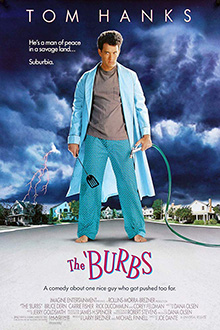
In The ‘Burbs (1989), Ray Peterson (Tom Hanks) and his neighbors become obsessed with the Klopek family, whose dilapidated house and reclusive behavior mark them as outsiders. The neighbors’ paranoia spirals into a full-scale investigation, culminating in a chaotic showdown. While played for dark comedy, the film critiques the suburban tendency to equate difference with danger. The Klopeks’ oddity becomes a lightning rod for the neighborhood’s collective insecurities, exposing how conformity can lead to irrational fear and mob mentality.
Similarly, in Arlington Road (1999), Michael Faraday (Jeff Bridges) grows suspicious of his seemingly perfect neighbors, the Langs (Tim Robbins and Joan Cusack). Their polished facade and friendly demeanor conceal a horrifying truth: they are domestic terrorists plotting a catastrophic attack. The Langs use conformity as a weapon, blending seamlessly into the community to mask their intentions. This duality—where perfection hides malevolence—reflects a darker fear: that the very thing we strive for can be used against us.
Suburban Gothic shows that conformity, while comforting on the surface, breeds anxiety. When everyone is expected to fit a mold, even small deviations can feel like threats, creating an environment where suspicion festers and fear takes root.
While suburbia is often portrayed as a bastion of community, its very design fosters isolation. Wide streets, sprawling yards, and the emphasis on privacy create physical and emotional distance between neighbors. This isolation, while intended to provide comfort, often becomes a source of fear in suburban Gothic.
In Disturbia (2007), Kale Brecht (Shia LaBeouf) is confined to his suburban home under house arrest. With nothing to do, he begins spying on his neighbors and grows convinced that one of them, Robert Turner (David Morse), is a serial killer. The film uses Kale’s isolation to amplify his paranoia, turning the quiet, disconnected neighborhood into a breeding ground for suspicion. Suburbia’s emphasis on privacy means that Turner’s activities go unnoticed, highlighting the dark side of a community designed to keep its members at arm’s length.
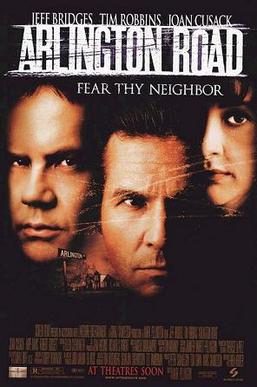
Isolation is also a key theme in Arlington Road. Michael’s growing unease is exacerbated by the emotional distance between himself and the people around him. His neighbors’ friendliness feels performative, and his attempts to sound the alarm are dismissed as paranoia. The film underscores how isolation in suburbia can leave individuals vulnerable, disconnected from the very support systems meant to protect them.
Suburban Gothic reveals the paradox of suburban life: the more we prioritize privacy and independence, the more we risk cutting ourselves off from the connections that keep fear and loneliness at bay.
One of the most unsettling aspects of suburban Gothic is its focus on betrayal—the idea that the people we trust most, our neighbors and loved ones, may harbor dark secrets. In a setting built on the expectation of safety and trust, this betrayal becomes all the more horrifying.
In Fright Night (1985), Charley Brewster (William Ragsdale) discovers that his new neighbor, Jerry Dandridge (Chris Sarandon), is a vampire. Jerry’s charm and affability make him an unlikely villain, but it’s this very quality that allows him to blend into the neighborhood and prey on its residents. Charley’s struggle to convince others of Jerry’s true nature underscores a recurring theme in suburban Gothic: the danger of trusting appearances.
This theme is also central to Arlington Road. The Langs’ wholesome image is a carefully constructed facade, designed to lull their neighbors into complacency. When Michael finally uncovers their true nature, it’s too late—he has already been manipulated into playing a role in their plot. The betrayal of trust in these films reflects a deeper fear: that the very foundation of suburban life—community and mutual reliance—can be a lie.
The psychological tensions explored in suburban Gothic don’t exist in a vacuum. They reflect broader societal fears and anxieties, making the genre both deeply personal and universally resonant.
Suburban Gothic often explores the fear of falling short of societal expectations. In American Beauty, Carolyn’s obsession with success masks her insecurity, showing how the pressure to achieve can erode self-worth and relationships.
The genre frequently revolves around the revelation of secrets, reflecting the anxiety of living a double life. In The ‘Burbs and Fright Night, neighbors who seem ordinary are exposed as dangerous, highlighting the tension between private lives and public personas.
Perhaps the most pervasive theme is the fear that danger isn’t “out there” but within the very spaces we consider safe. Films like Disturbia and Arlington Road turn suburban neighborhoods into sites of terror, challenging the idea that perfection can protect us from harm.
Suburban Gothic transforms the idyllic promises of suburbia into a backdrop for fear, exposing the psychological and social tensions hidden beneath its polished surface. The relentless pursuit of perfection, the pressure to conform, and the isolating nature of suburban design create fertile ground for paranoia, betrayal, and repression. Films like The ‘Burbs, American Beauty, Disturbia, Fright Night, and Arlington Road show us that the true horror of suburbia isn’t the monsters in the shadows—it’s the cracks in the foundation of the dream itself.
As we look closer at the white picket fences, identical mailboxes, and neatly arranged homes, we’re reminded that even in the safest places, fear finds a way to thrive. After all, perfection may not just hide the horror—it may be the reason for it.

 M.A. Kleen
What are your thoughts?