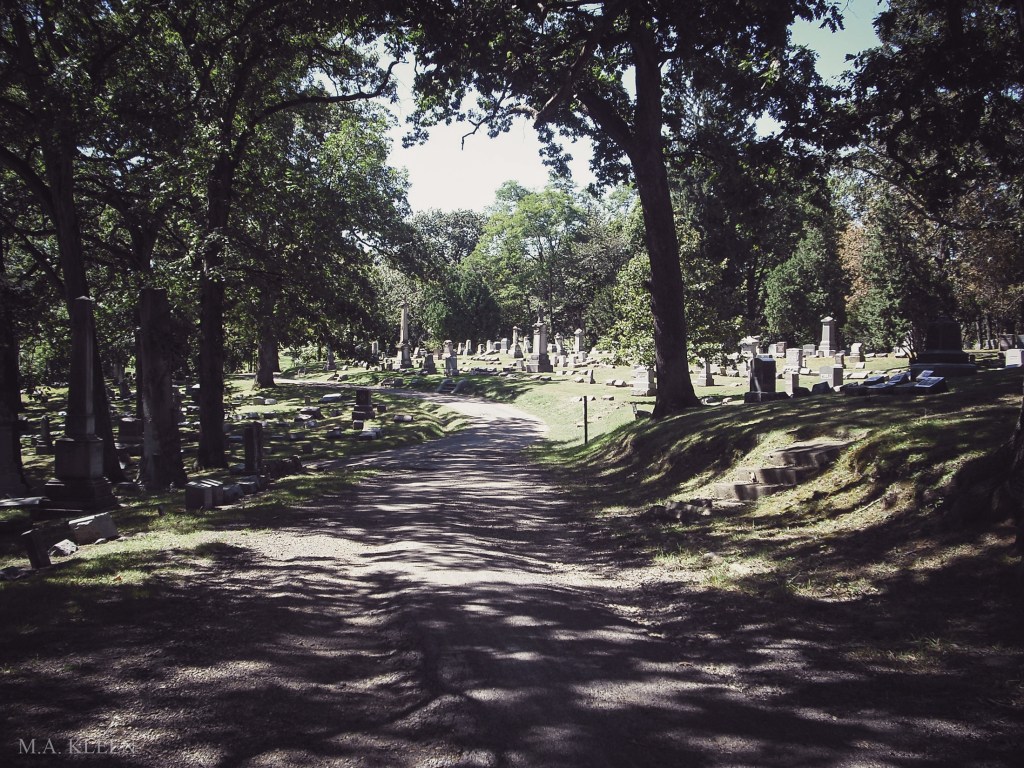
Hidden among winding roads and ancient oaks, Peoria, Illinois’ Springdale Cemetery holds more than a century and a half of history—alongside chilling legends and true crimes that refuse to be forgotten. From Civil War ghosts to the infamous 1935 Hallmark murder, its quiet paths lead deep into the city’s haunted past.
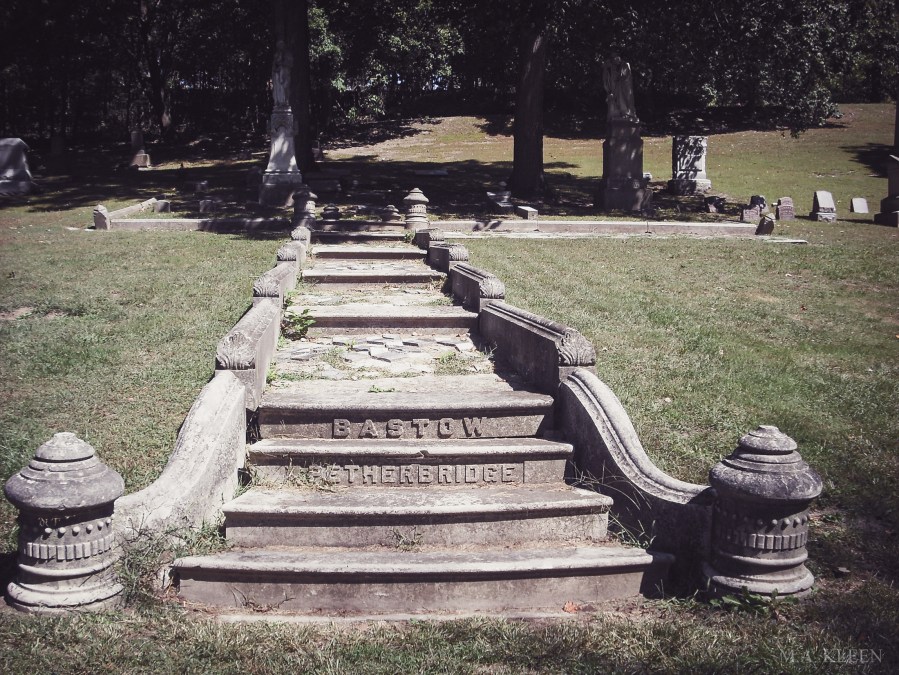
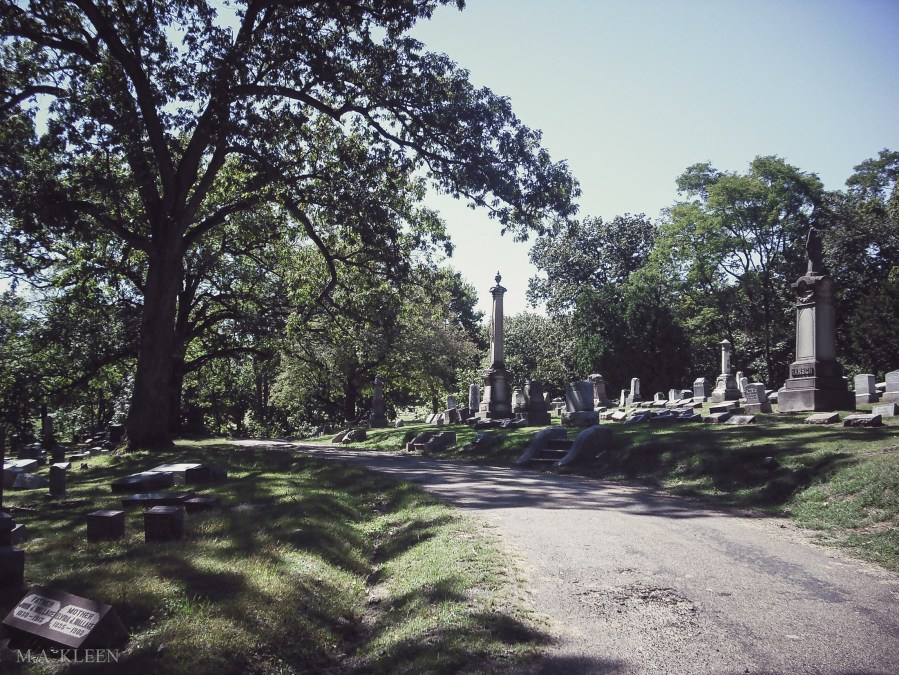
- Springdale Cemetery was the site where 19-year-old Mildred Hallmark’s body was found, leading to the conviction and execution of Gerald Thompson, Peoria’s first known serial predator.
- Visitors near the Lightner family plot have reported mysterious white or yellow orbs and sightings of a young woman in a white dress who vanishes into the dark.
- At Springdale Cemetery’s heart lies 14 acres of tallgrass oak savanna, preserved in 1870 by Superintendent Captain John H. Hall. Some of its oak trees are nearly 300 years old.
Lost among the winding roads, wooded hills, and shaded ravines of Springdale Cemetery in Peoria, Illinois, it is easy to forget you are still within a city of over 113,000 people. This deceptively peaceful, 223-acre garden cemetery is hemmed in by the Peoria Zoo and Luthy Botanical Garden to the west, and by the hum of U.S. Highway 150 to the east.
Founded in 1857, Springdale’s first burial was five-year-old Ben Frank Powell, son of Judge Elihu Powell, laid to rest that spring on high ground overlooking the Illinois River and Lake Peoria. Like other rural cemeteries of the nineteenth century, it was intended as both a secular burial ground and a public park—a place for quiet walks, shaded contemplation, and communion with the dead.
The 1901 gatehouse, an unusual craftsman bungalow, once greeted mourners at the entrance. Time and weather took their toll, and it was demolished in 2010 when repairs proved too costly. Though nearly 80,000 are buried here, there is room for twice as many, leaving certain corners overgrown and eerily still.
Neglect plagued the cemetery for decades, until Illinois Comptroller Dan Hynes seized control in 1999. Three years later, an intergovernmental agreement formed the Springdale Cemetery Management Authority to restore and care for the grounds.
Springdale holds more than graves, it shelters named landscapes like Soldier’s Hill, Whispering Woods Pet Cemetery, The Willows, Boulder Valley, and the Prairie.
At its heart lies a rare remnant of tallgrass oak savanna, 14 acres set aside in 1870 by Superintendent Captain John H. Hall to preserve a vanishing landscape. Some of its trees have stood for nearly 300 years, silent witnesses to generations who came here seeking rest, both for the living and the dead.
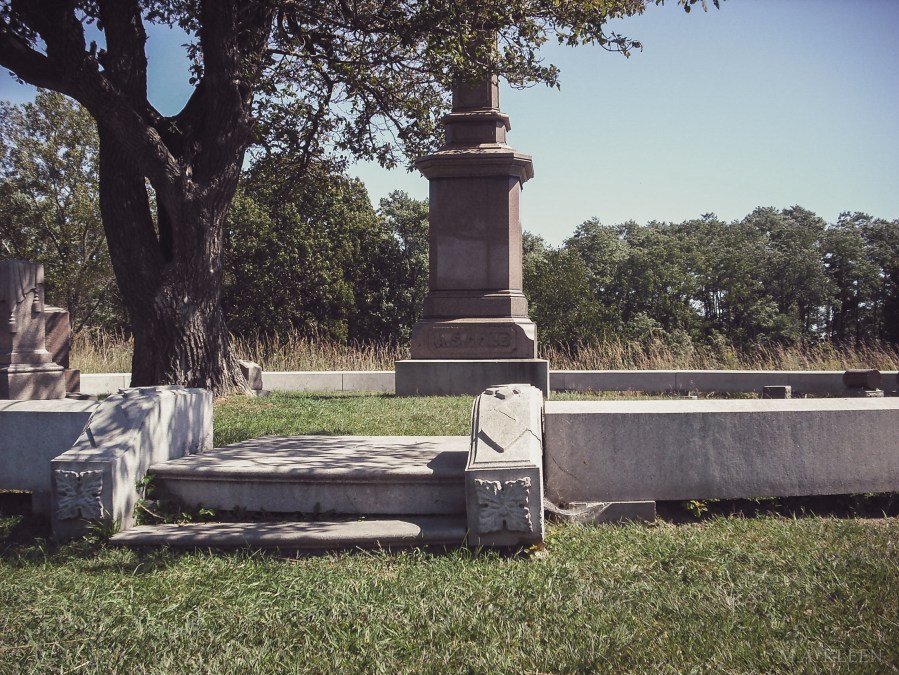
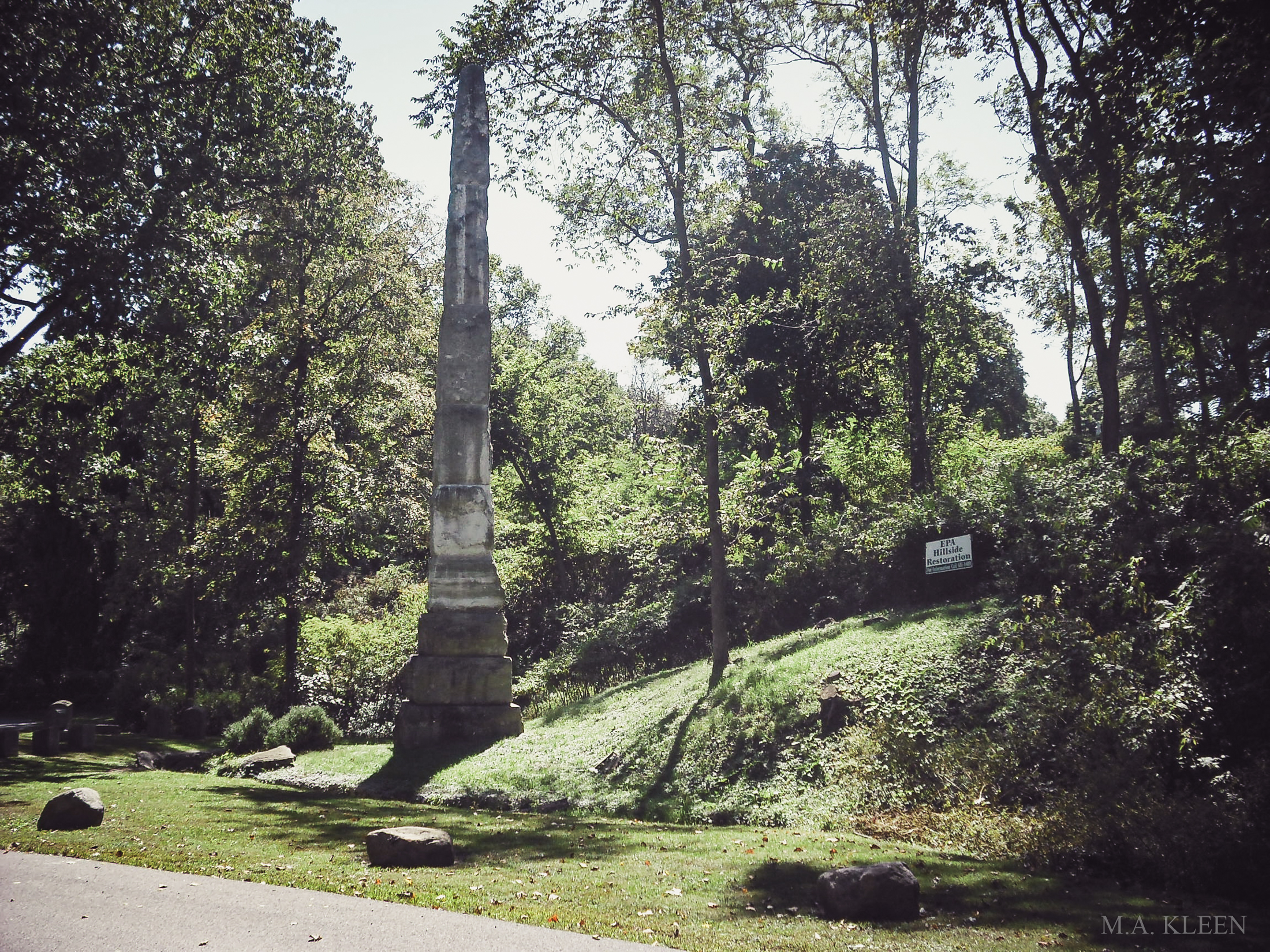
At the heart of this prairie lies the family plot of Peoria pioneer Almiran Smith Cole Sr., who emigrated from Massachusetts to Illinois in 1835. Cole opened Peoria’s first distillery, later selling it to establish a larger and more successful operation. His family plot, shared with his first wife, Chloe, along with their children and grandchildren, is encircled by a raised granite ring. Towering above the rest is a red obelisk marking the grave of Almiran Smith Cole Jr., standing beside a single, gnarled tree.
Despite the Cole family’s devout Christian faith, the unusual design and lonely setting of their plot, an island of stone adrift in a sea of grass, has long stirred whispers. Locals call it the “Witch’s Circle,” claiming that under certain moonlit phases, shadowy figures gather there to perform secret rites, hidden from all but the most furtive eyes.

Hey, Sleuthhounds!
Visit Springdale and photograph landmarks like Soldiers Hill, the Prairie, and the Cole plot, and pair them with a researched historical fact. Share your photos on social media with the hashtag #SpringdaleSecrets.
Another of Springdale’s stories is rooted not in legend, but in grim fact—the 1935 murder of Mildred Hallmark, and the lingering shadow it cast over the cemetery.
On the rainy night of June 16, 1935, 19-year-old Mildred Hallmark left her cafeteria job in downtown Peoria, Illinois, and boarded a streetcar toward her home on East Maywood Avenue. She never arrived. The next morning, her nude body was found in Springdale Cemetery, lying in a drainage ditch. She had been raped and killed by a blow that broke her neck, shocking Peoria and sparking a citywide manhunt.
Suspicion fell on Gerald Thompson, a 25-year-old Caterpillar machinist from Peoria Heights. Well-liked and considered charming, he seemed an unlikely suspect until tips, including from another rape victim, linked him to the crime. When detectives confronted him with Hallmark’s torn clothing during an intense interrogation, Thompson broke down and confessed. His diary revealed assaults on at least 16 identified women, with as many as 30 victims in total.
Thompson’s July 1935 trial drew massive crowds, many of them women eager to see the accused. Hallmark’s grieving sister identified her clothing, and coworkers recalled her final hours. The defense claimed his confession was coerced, but the jury admitted it into evidence. On July 31, he was found guilty and sentenced to death.
Awaiting execution in Joliet, Thompson attracted visitors, correspondence, and a fiancée. On October 15, 1935, he died in the electric chair. Hallmark’s father, present at the execution, expressed relief that justice had been served. The case left a lasting mark on Peoria for both its brutality and the public frenzy surrounding it.
Since Mildred Hallmark’s tragic death, some visitors to Springdale Cemetery, particularly near the Lightner family plot, have reported strange phenomena. White or yellow orbs drift and flicker among the headstones, while others tell of a young woman in a white dress who appears in the shadows, only to fade silently into the dark.
More unexplained activity is said to occur near Soldiers Hill, the final resting place of more than 300 Civil War veterans. Eyewitnesses told Stephanie McCarthy, author of Haunted Peoria (2009), that they visited one evening in search of ghostly signs and got more than they bargained for. Out of the stillness, a pale green mist began to coil across the ground, and from it emerged the translucent figure of a soldier, silent and spectral beneath the darkening sky.
Springdale Cemetery is more than a resting place—it is a living chronicle of Peoria’s past, where history, memory, and myth intertwine among weathered stones and whispering trees. Its quiet paths lead to stories both celebrated and tragic, from the pioneering families who built the city to the unsolved mysteries and spectral tales that still stir the imagination. Whether drawn by its history, its beauty, or the possibility of encountering something beyond the veil, those who wander here find themselves in a place where time lingers, shadows deepen, and the past is never entirely at rest.
Donate
Enjoy what you read? Please consider making a one-time donation to support my research.
Enjoy what you read? Please consider making a monthly donation to support my research.
Enjoy what you read? Please consider making a yearly donation to support my research.
Choose an amount
Or enter a custom amount
Your contribution is appreciated.
Your contribution is appreciated.
Your contribution is appreciated.
DonateDonate monthlyDonate yearlySources
“Comptroller moves to revoke cemetery license.” Daily Review Atlas (Monmouth, IL) 4 May 1999.
“Conceal Killer of Peoria Girl in Secret Jail.” Chicago Sunday Tribune (Chicago, IL) 23 June 1935.
Hodges, Carl G. “The Hobby of Gerald Thompson,” in The Quality of Murder, Ed. by Anthony Boucher. New York: E.P. Dutton & Co., Inc., 1962.
Horner, Iva Kay. “Cemetery owner must repay $110,000.” Daily Review Atlas (Monmouth, IL) 24 March 1993.
McCarthy, Stephanie E. Haunted Peoria. Charleston, SC: Arcadia Publishing, 2009.
“Peoria Girl’s Slayer Gets the Chair.” Chicago Daily Tribune (Chicago, IL) 1 August 1935.
“Rapist-Slayer’s Diary Victims Give Evidence.” Chicago Daily Tribune (Chicago, IL) 25 June 1935.
“Sister of Slain Girl Weeps on Witness Stand.” Chicago Daily Tribune (Chicago, IL) 27 June 1935.
“Slaying of Peoria Girl is Solved by Man’s Confession.” St. Louis Star and Times (St. Louis, MO) 22 June 1935.
“Woman Beaten to Death in Peoria (ILL) Cemetery.” St. Louis Post-Dispatch (St. Louis, MO) 17 June 1935.

 M.A. Kleen
What are your thoughts?