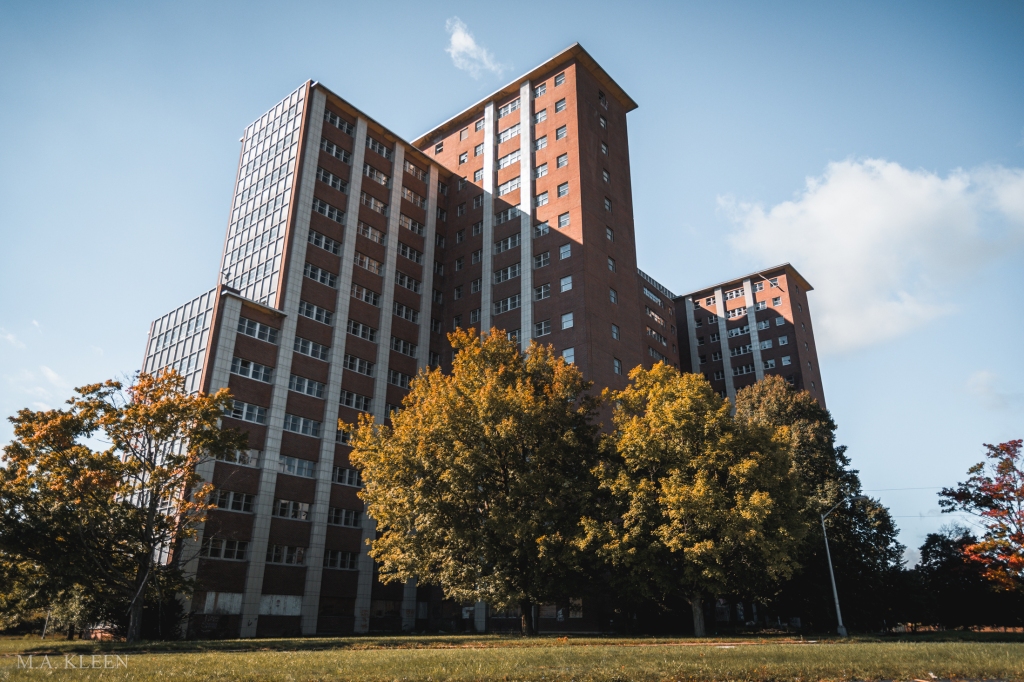
Abandoned for decades, Rochester’s towering Terrence Building holds a chilling history of ambition and neglect. From its psychiatric past to eerie modern legends, discover why it remains one of the city’s most talked-about landmarks.
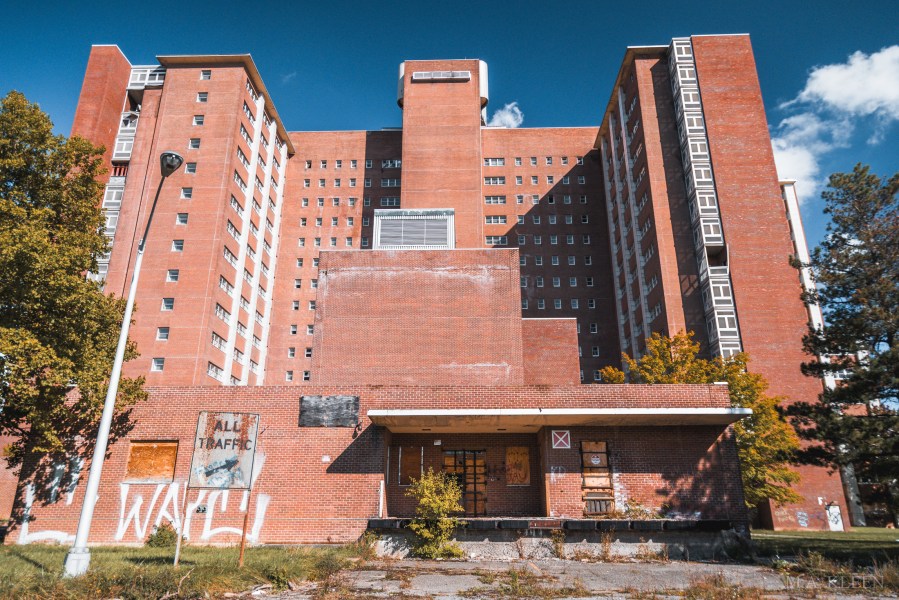
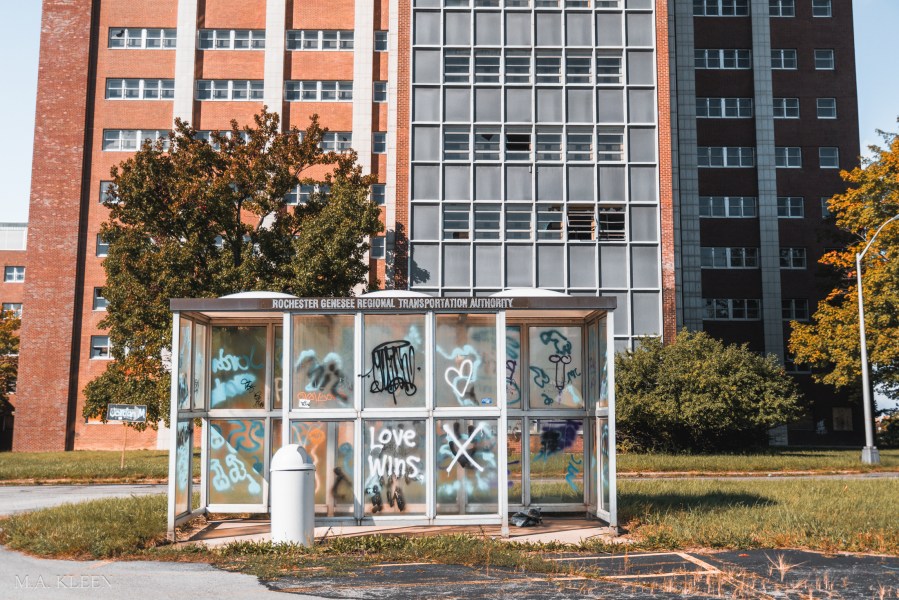
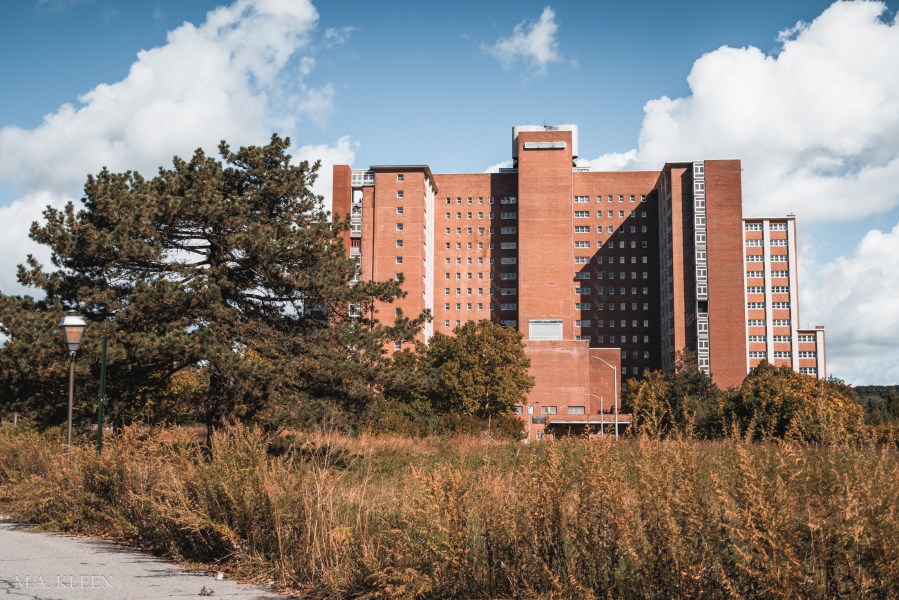
- Opened in 1959, this 16-story, 160-foot-tall psychiatric facility was considered a cutting-edge “skyscraper” of mental health treatment.
- In 1989, 24-year-old Deloria Michelle Allen became the first—and likely only—patient to die by suicide in its padded seclusion rooms.
- Abandoned since 1995, the building remains under active security and police watch, making entry rare and risky.
- Frequently listed among Rochester’s most haunted places, with reports of cold spots, moving shadows, and eerie sensations near the basement morgue.
Hidden in plain sight along Elmwood Avenue in Rochester, New York’s Azalea neighborhood, a redbrick, irregular capital I-shaped building looms over the adjacent Rochester Psychiatric Center. Known as the Terrence Building, it’s not particularly old, yet since its closure in 1995, it has captured the imaginations of urban explorers, mental health advocates, and the morbidly curious.
The 16-story, 160-foot-tall structure at 1201 Elmwood Avenue, originally called the Medical-Surgical Building, was constructed between 1955 and 1957 at a cost of $12 million. It opened in December 1959 as part of the Rochester State Hospital. Five floors of the facility were dedicated specifically to geriatric care, aiming to rehabilitate patients (half of Rochester State Hospital’s population at the time) and reintegrate them into the community. Dr. Guy Walters, an instructor at the University of Rochester Medical School, was appointed as its first head.
“The opening of this building is more than just the opening of a new facility to care for 1,100 patients,” Dr. Christopher F. Terrence, director of the State Hospital, told the Democrat and Chronicle newspaper in 1959. “It is a skyscraper, proclaiming to the community that in the fight against the ills that plague mankind’s physical and mental being, a long giant step has been taken in meeting and conquering those ills.” Around 1,200 people attended its first open house.
However, that initial optimism was short-lived. By the mid-1980s, less than 30 years later, discussions had already begun to replace the Terrence Building due to concerns about ventilation, fire safety, and patient privacy. The Community Mental Health Act of 1963 had laid the foundation for decentralizing state mental hospitals, making large institutions like the Terrence Building obsolete.
Tragic incidents like the suicide of Deloria Michelle Allen tarnished the tower’s reputation. On the evening of Tuesday, January 3, 1989, nurses found 24-year-old Deloria’s lifeless body in a padded seclusion room on the fourth floor. She had been placed there following an alleged attack on a staff member. Despite regular 15-minute checks, Deloria managed to strangle herself with a sock, appearing to staff to simply be sleeping. A patient at the hospital for five years, Deloria was considered “troublesome and dangerous to others.”
Instead of going to college like her peers, she had been institutionalized and died in a padded cell. Her death marked the first and likely only suicide in the building’s seclusion rooms. Afterward, there was no scandal or public outcry, only an internal policy review. Deloria’s body was quietly interred in a rural North Carolina cemetery.
Historical articles from the Democrat and Chronicle offer glimpses into daily life within the Terrence Building. The first floor housed both a chapel and a gift shop. A 1990 article detailed Rabbi Laurence Skopitz ministering to patients, describing locked wards “where patients sleep on couches or slump in front of TV sets.” One patient was observed “strapped onto a narrow stretcher, with one leg hanging off,” left unattended in a hallway. The gift shop, staffed by volunteers, provided comfort items such as cards, candy, and toiletries.

Hey, Sleuthhounds!
What do you think is more haunting about the Terrence Building—its tragic history, or the alleged paranormal activity?
In 1995, the new $76.8 million Rochester Psychiatric Center opened, featuring 12 residential housing units. All remaining patients were transferred from the Terrence Building, which has since stood abandoned for three decades. Today, the structure is a magnet for urban explorers across Upstate New York, although few successfully enter due to active security and regular police patrols. Those who manage entry face significant hazards, including black mold and asbestos. Still, there are dozens of videos from inside the building on sites like YouTube.
One anonymous urban explorer described their unsettling experience: “I had gone through a handful of floors now, and started to get a confined and claustrophobic view of how many spent their lives in the tower. I grew anxious, wanting to get closer to earth and the world I knew outside. It was as if I had stepped off into my unconscious; a bad dream. Hallway after hallway of unending rooms, repeated, over and over with no escape.”
Like similar institutions, the Terrence Building remains shrouded in stories of patient abuse and neglect, adding to its eerie legacy. Although detailed ghost encounters are rare, visitors frequently report unexplained sensations, including cold spots, moving shadows, and unsettling feelings. These vague yet persistent claims mingle among descriptions of peeling pastel paint, abandoned medical equipment like the old X-ray table, and the ominous basement morgue. As a result, it consistently ranks among Rochester’s most haunted locations.
Today, the Terrence Building stands as a decaying monument to an era defined by ambitious ideals and tragic outcomes. Once filled with optimism, its abandoned corridors now echo with whispers of neglect and unexplained phenomena. Perhaps the true haunting isn’t in ghostly sightings, but in the lingering memories of lives spent, and lost, in Rochester’s eeriest landmark.
Donate
Enjoy what you read? Please consider making a one-time donation to support my research.
Enjoy what you read? Please consider making a monthly donation to support my research.
Enjoy what you read? Please consider making a yearly donation to support my research.
Choose an amount
Or enter a custom amount
Your contribution is appreciated.
Your contribution is appreciated.
Your contribution is appreciated.
DonateDonate monthlyDonate yearlySources
“1,200 Attend State Hospital Open House.” Democrat and Chronicle (Rochester, NY) 8 December 1959.
Buterbaugh, Laura. “RPC may abandon high-rise.” Democrat and Chronicle (Rochester, NY) 25 September 1987.
Gordon, Craig. “Possible suicide at psych center under review.” Democrat and Chronicle (Rochester, NY) 6 January 1989.
Ireland, Corydon. “New state mental facility designed to be therapeutic.” Democrat and Chronicle (Rochester, NY) 6 October 1994.
Raub, Deborah Fineblum. “‘A very special congregation’.” Democrat and Chronicle (Rochester, NY) 29 September 1990.
Schneider, Eugene J., MD. “Rochester Psychiatric Center.” The R.P.C. Medical Staff Bulletin 2 (Sept / Dec 1993): 9-11.
“State Hospital Sets New Unit to Aid the Aged.” Democrat and Chronicle (Rochester, NY) 28 November 1959.
Zeigler, Michael. “RPC gift shop helps erase stigma.” Democrat and Chronicle (Rochester, NY) 13 February 1992.


 M.A. Kleen
What are your thoughts?