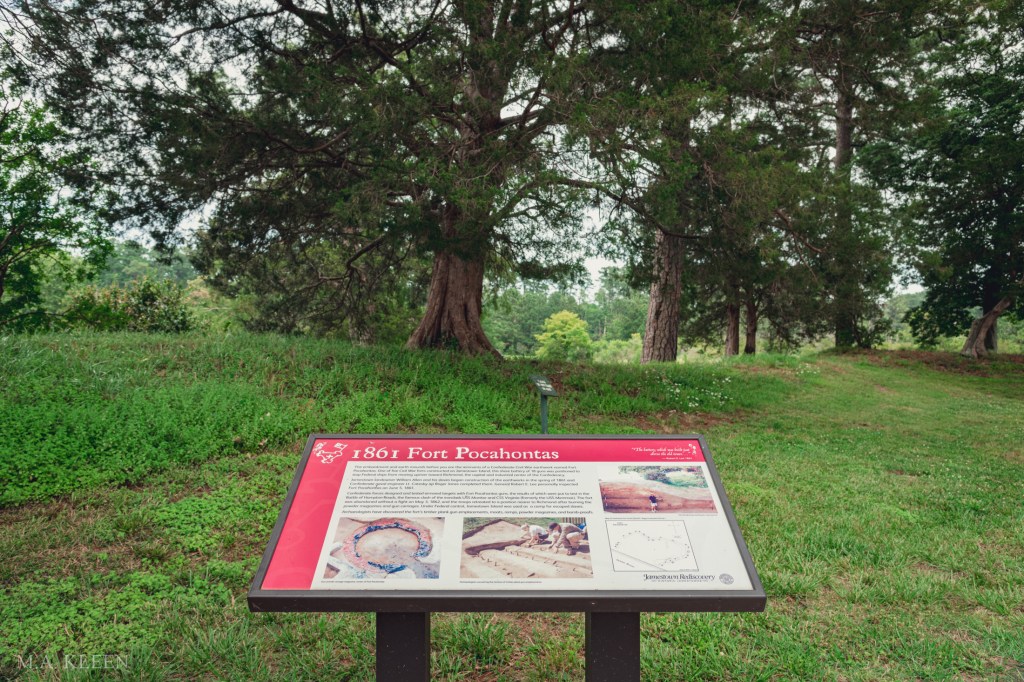
Discover the lost story of Fort Pocahontas, where earthworks, cannon platforms, and buried powder magazines still echo.
Jamestown Island greets most visitors with the worn charm of colonial America—brick church towers, weathered palisades, and the ghosts of the 1607 settlement. But if you stray just a bit off the usual path and let your feet follow the curve of the James River, something else begins to emerge from the woods and marshes. Earth mounds. Trenches. A rise of ground that’s too sharp to be natural. You’re standing on the bones of a forgotten Civil War outpost: Fort Pocahontas.
I came to Jamestown to see the roots of the country. I didn’t expect to find a Confederate fort hidden beneath centuries of history. But there it was.
Back in the spring of 1861, as Virginia broke from the Union and the country cracked apart, this quiet island bristled with activity. Jamestown was no longer just a historic relic; it became a military asset. The Confederacy saw its strategic value immediately. With the James River as a key naval artery to Richmond, control of this point was considered essential.
By summer, about 1,000 men were stationed here, shaping earth into defenses, mounting guns, and preparing for a fight that would never quite reach them.
One soldier described Fort Pocahontas as covering about an acre, built with a six-foot earthen wall and a massive ditch—15 feet wide, eight feet deep—wrapped around the outside. When I stood near the old trench line, I could still trace its shape under the grass and leaves.
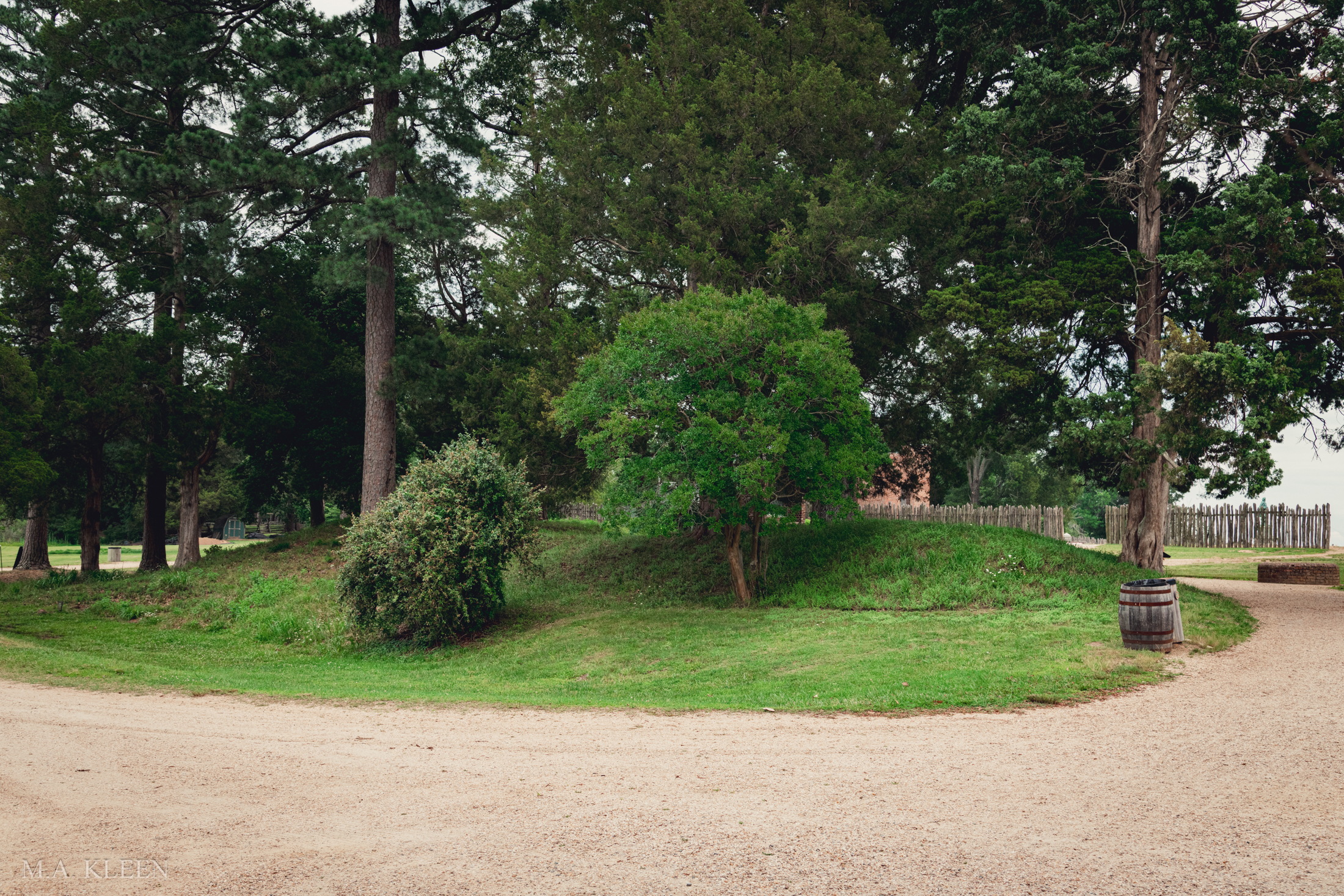
At the heart of the fort stood a 158-foot-long gun platform. Nearly 100 wooden joists supported it, bound together by a thousand iron spikes. Three powder magazines—partially excavated now—once stored the munitions, including a brick-lined chamber with a burned-out roof. The largest, nicknamed the “bombproof,” was big enough to breach the foundations of the original 1607 fort’s palisade.
Just beyond the tree line, I imagined the Brandon Artillery building their wharf. It took 144 pilings and over 30,000 board feet of timber. Nothing’s left of it now, but knowing it existed helps anchor the place in time. These men, some volunteers and others conscripted laborers—enslaved and free—were preparing for a war that had barely begun.
One detail sticks with me: the image of Jamestown on July 4, 1861. The first Independence Day after secession. The air thick with humidity, flags flying, soldiers dancing, food and drink passed around like it was 1776 again. Former U.S. President John Tyler himself showed up—71 years old and ready to fight, or at least say so. “Although he was a man of the olden time,” he said, “he would shoulder his musket and take his place in the ranks.” The whole thing reads like a fever dream of misplaced patriotism.
But by mid-1862, Union General George B. McClellan’s army was closing in. The Confederates pulled back, leaving Jamestown behind. Union cavalry found the battery abandoned, the gun carriages and powder magazines burned. Fort Pocahontas vanished into memory. The colonial narrative reclaimed the island. And for over a century, no one gave the fort another thought.
Until the archaeologists showed up.
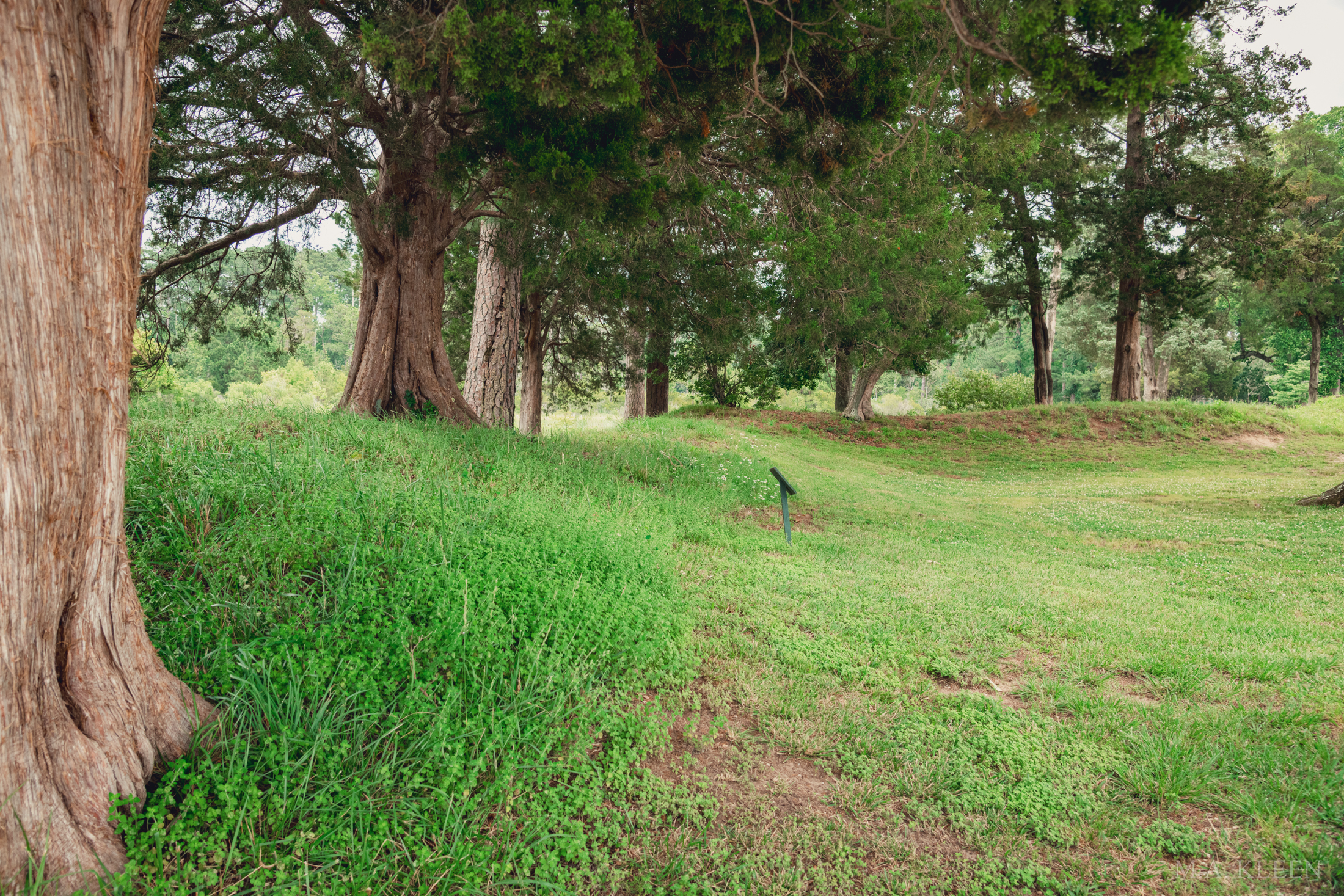
In the early 2000s, teams from Historic Jamestowne began to uncover trenches and embankments that didn’t match colonial-era layouts. They matched Civil War records instead. Military maps, surviving orders, and the pattern of the fortifications confirmed it: this was Fort Pocahontas. They found cannon spikes, buttons, tools, powder magazine remnants—all right where the records said they’d be.
Now, the site isn’t flashy. There’s no reconstructed fort, no big reenactments. Just a quiet path, a few signs, and the hum of cicadas as you walk through it. But if you know where to look—and what you’re looking at—it’s all still here. The war lines. The ghost of a gun platform. The shadow of a wharf. The memory of men who built something, waited for battle, and then moved on.
Fort Pocahontas is part of Historic Jamestowne, located within the Colonial National Historical Park in Virginia. While most visitors focus on the colonial site, you can walk to the Confederate earthworks by following signs or asking a ranger for directions. The site is partially wooded, and while there’s no cannon standing guard, the raised earth tells its own story.

 M.A. Kleen
What are your thoughts?