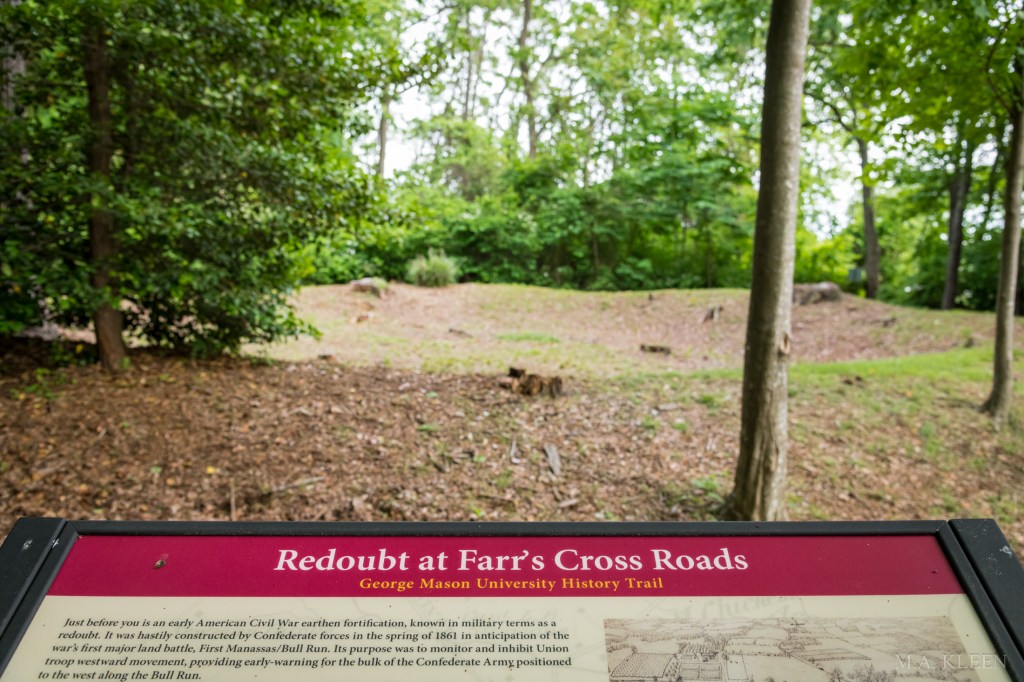
Amidst the bustling campus of George Mason University lies a hidden Civil War redoubt, quietly preserving the echoes of an overlooked Confederate outpost. Follow a trail through history and discover Fairfax County’s forgotten past.
Standing atop a wooded hill on the bustling campus of George Mason University, I felt transported back to the quiet Virginia crossroads of 1861. Hidden in plain sight, a circular earthen fortification built by the 5th Alabama Infantry offers a surprising and vivid window into the early days of the American Civil War.
As I followed the gentle incline up the hill, I thought about Colonel Robert E. Rodes and his men who, fresh from Alabama, arrived in Virginia in June 1861. They chose this strategic spot at Farr’s Crossroads—named after a local farming family—where the intersection of Braddock and Ox Roads once briefly marked an essential point of communication and defense. Today, cars stream by where soldiers once anxiously watched for signs of advancing Union troops.
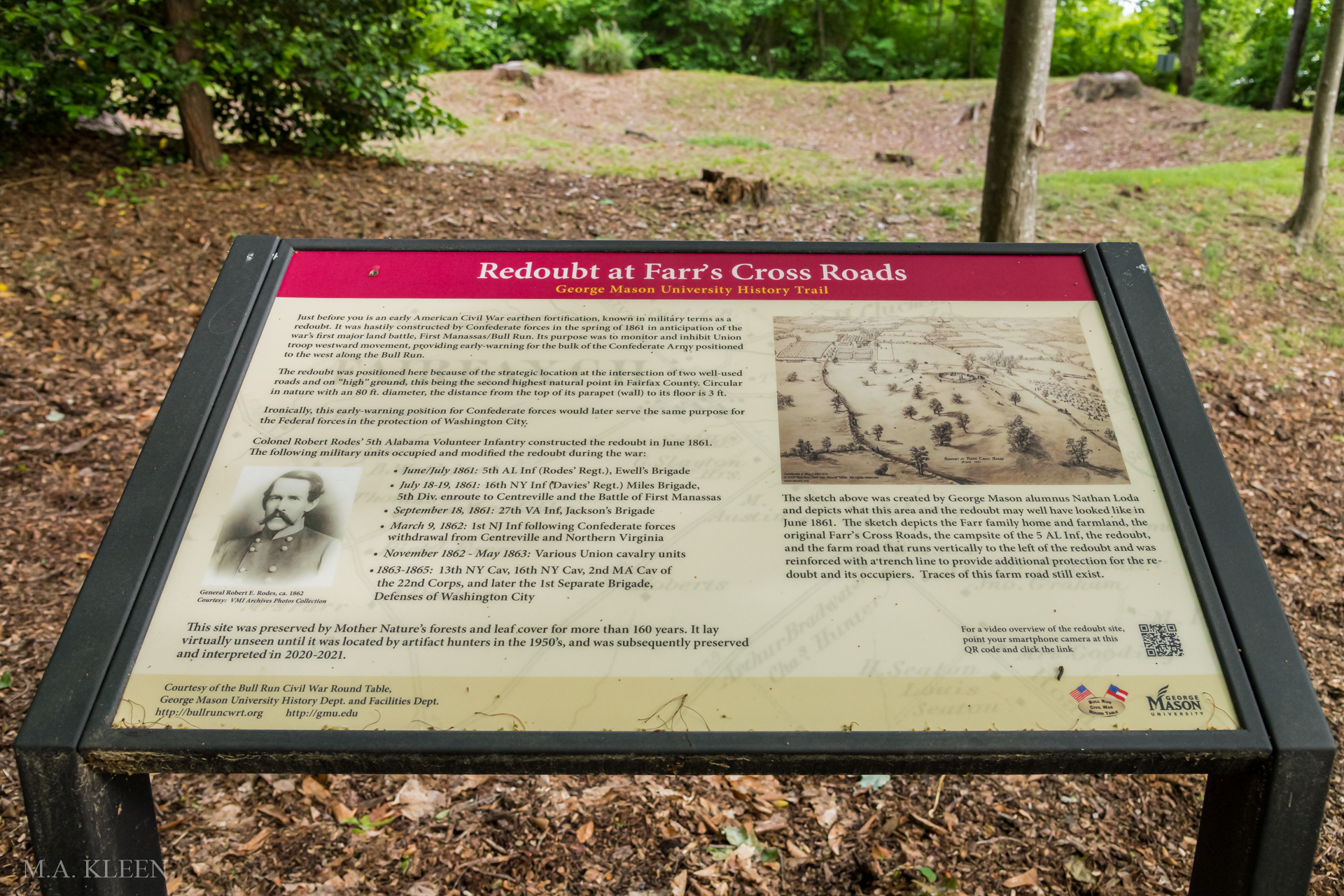
I paused near the interpretive sign at the entrance to the recently developed public history trail. Thanks to a partnership between George Mason University and the Bull Run Civil War Round Table, visitors can now explore not only the redoubt but also the remnants of a rare Civil War-era corduroy road uncovered nearly a decade ago.
Walking the path, it’s clear why the Alabama soldiers selected this hill—the second-highest natural elevation in Fairfax County—as their lookout. From this vantage point, the views stretched far in every direction, offering clear sightlines of the intersecting roads below. It was from here that Confederate Brigadier General Pierre Gustave Toutant-Beauregard hoped to detect any Union advance toward Manassas Junction.
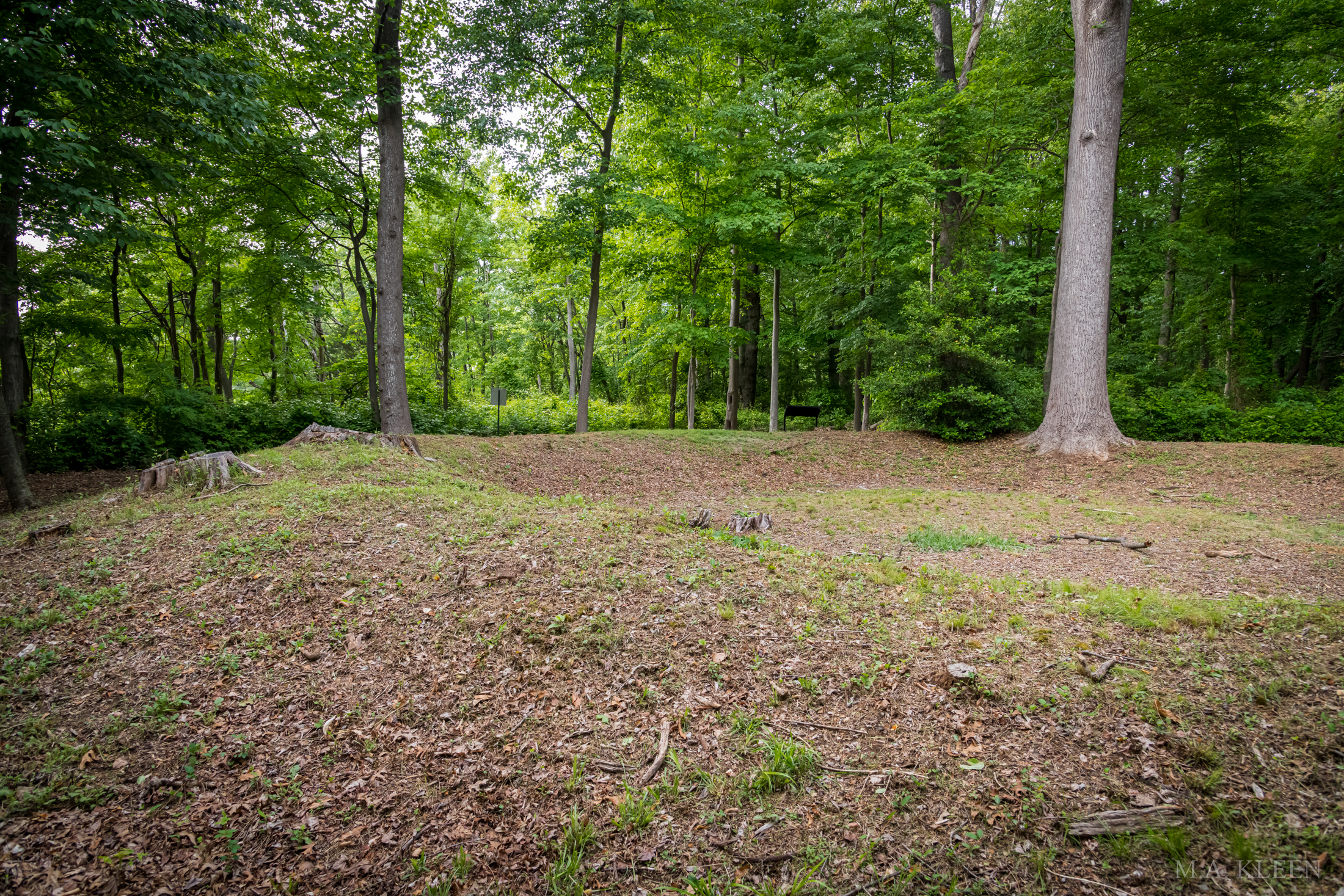
The redoubt itself, nearly 80 feet in diameter, blends subtly into the landscape, now partially reclaimed by trees and brush. Yet, standing at its edge, I could vividly picture the scene on July 17, 1861, as Union soldiers from Colonel Thomas A. Davies’ brigade slowly advanced along Braddock Road.
After skirmishing briefly with the Alabama regiment, the Union troops reached an abandoned Confederate camp around midday, too exhausted and disorganized to pursue further. By then, Rodes’ regiment had safely retreated toward Bull Run.
Exploring historical locations like Farr’s Crossroads in person brings the past to life in ways books rarely can. The terrain—the undulating hills, quiet streams, and ancient trees—paints a vivid picture of the landscape soldiers navigated. Had I not ventured beyond the official listings of the Historical Marker Database, I might never have noticed the historical marker perched quietly above the university’s entrance sign.
Visiting Farr’s Crossroads today not only uncovers forgotten chapters of Civil War history but offers a tangible connection to those who lived and fought here over 160 years ago. In a landscape transformed by modern life, places like this redoubt are powerful reminders of a past waiting to be rediscovered.

 M.A. Kleen
What are your thoughts?