Remember those childhood books, movies, and games that once felt unforgettable—until they were forgotten? Join me as I track down these lost pieces of my past, from eerie Halloween movies to classic games, proving that nostalgia has a way of bringing the past back to life.
One Halloween night long ago, at a neighborhood party, I caught glimpses of a movie called Boogieman, which I thought starred Jeffrey Jones. The story revolved around a family moving into a haunted old house. In one memorable scene, the ghost leaves glowing green footprints on the wall. Thinking it’s a prank, the dad peels the glowing footprints off and sticks them to his chest and arms. That’s all I remembered.
For decades, that memory lingered at the back of my mind. I loved those Halloween parties hosted by our neighbor down the block, and that movie scene became a vivid anchor to that time. Despite my efforts, I could never track down the movie—until recently. As it turns out, it wasn’t Boogieman at all, and Jeffrey Jones wasn’t in it. Still, the scene played out almost exactly as I remembered.
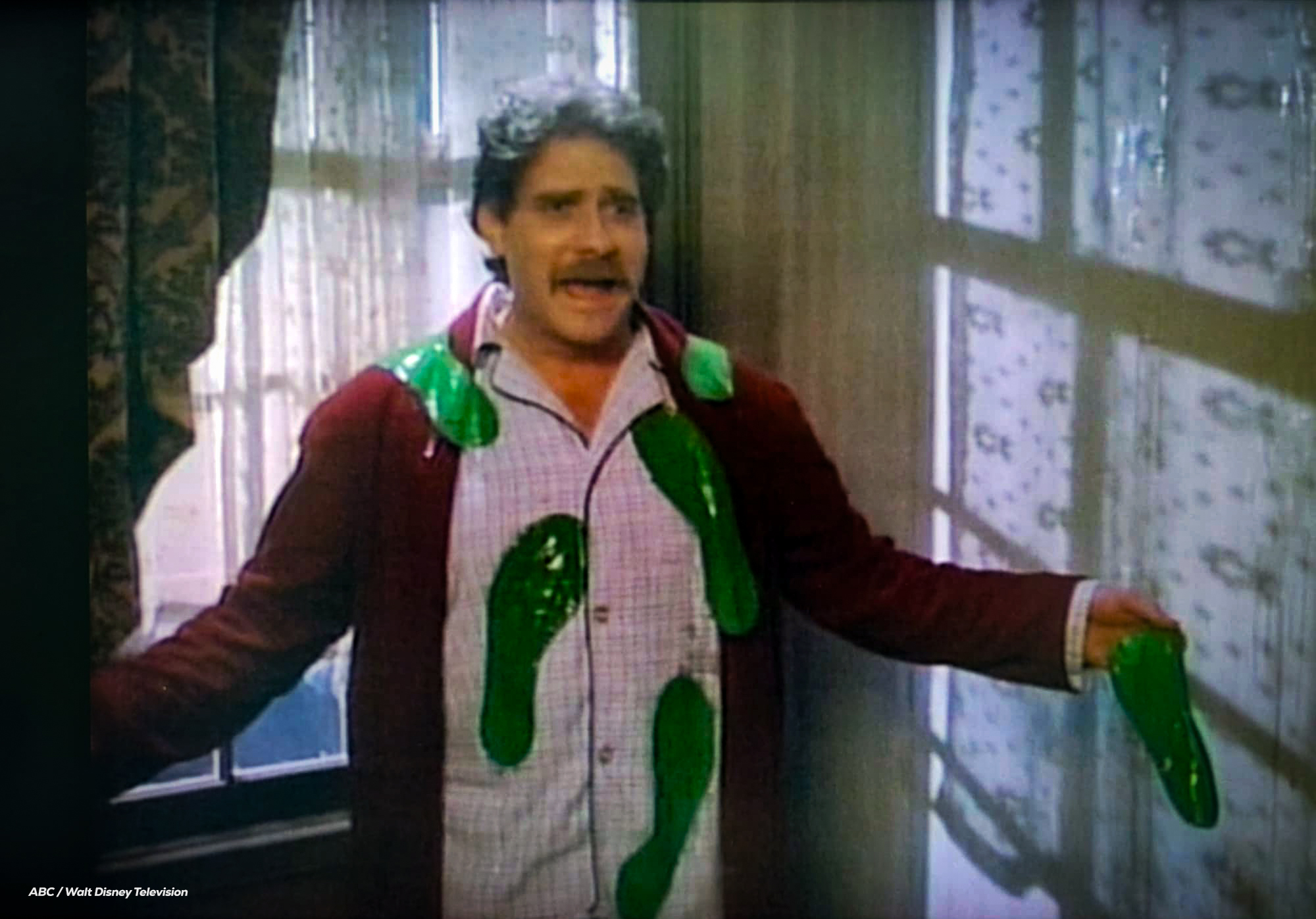
The movie was actually Mr. Boogedy, first aired on ABC in 1986, now available to stream on Disney+. I discovered it through a six-year-old Reddit post from someone who also recalled only the footprint scene. The dad was played by Richard Masur, not Jeffrey Jones. A young David Faustino (Married… with Children) and Kristy Swanson (Ferris Bueller’s Day Off) also appeared in the 45-minute film. I suspect my brain swapped Richard Masur for Jeffrey Jones because I was such a huge Beetlejuice fan at the time.
Rediscovering this movie was just the latest example of reconnecting with forgotten media from my childhood—but it’s far from the only one. Over the years, there have been books, songs, and movies I once loved but had mostly forgotten, with only hazy details lingering in my memory, making them hard to identify. In the past year or two, I’ve managed to stumble upon several of these lost favorites, thanks to friends and some help from internet sleuthing.
Dr. Demento 20th Anniversary Collection – “The Homecoming Queen’s Got a Gun”
Growing up in a borderline working-class family, most of my books, movies, and CDs came from the local library. When I really loved an album, I’d use my sister’s stereo to record it onto cassette tapes. At one point, I had dozens of these homemade tapes, but over the years, only a few survived. For decades, I didn’t own a cassette player, so those tapes sat untouched and unheard—until I finally bought a player last year. Hearing those long-forgotten songs again was a delightful surprise, a nostalgic window into the music I once cherished.
One of these albums was the Dr. Demento 20th Anniversary Collection, which included the song “The Homecoming Queen’s Got a Gun” by Julie Brown, and wow, does this song hit different in 2025 than it did in 1995. The first modern American mass shooting at a school was perpetrated by 16-year-old Brenda Spencer on January 29, 1979 in San Diego, California. When comedian Julie Brown released her satirical song “The Homecoming Queen’s Got a Gun” in 1984, the subject was still something of a novelty and the idea of a homecoming queen slaughtering her classmates was too absurd to be taken seriously.
Julie Brown was an underrated genius who launched her career satirizing Madonna and 1980s Valley Girl culture. The lyrics of “The Homecoming Queen’s Got a Gun” make me wince today, thinking of how what was once a subject to lampoon is no longer a laughing matter. Still, her lyrics were painfully ahead of their time. “… An hour later, the cops arrived. By then the entire glee club had died.”
Usborne Time Traveller Books
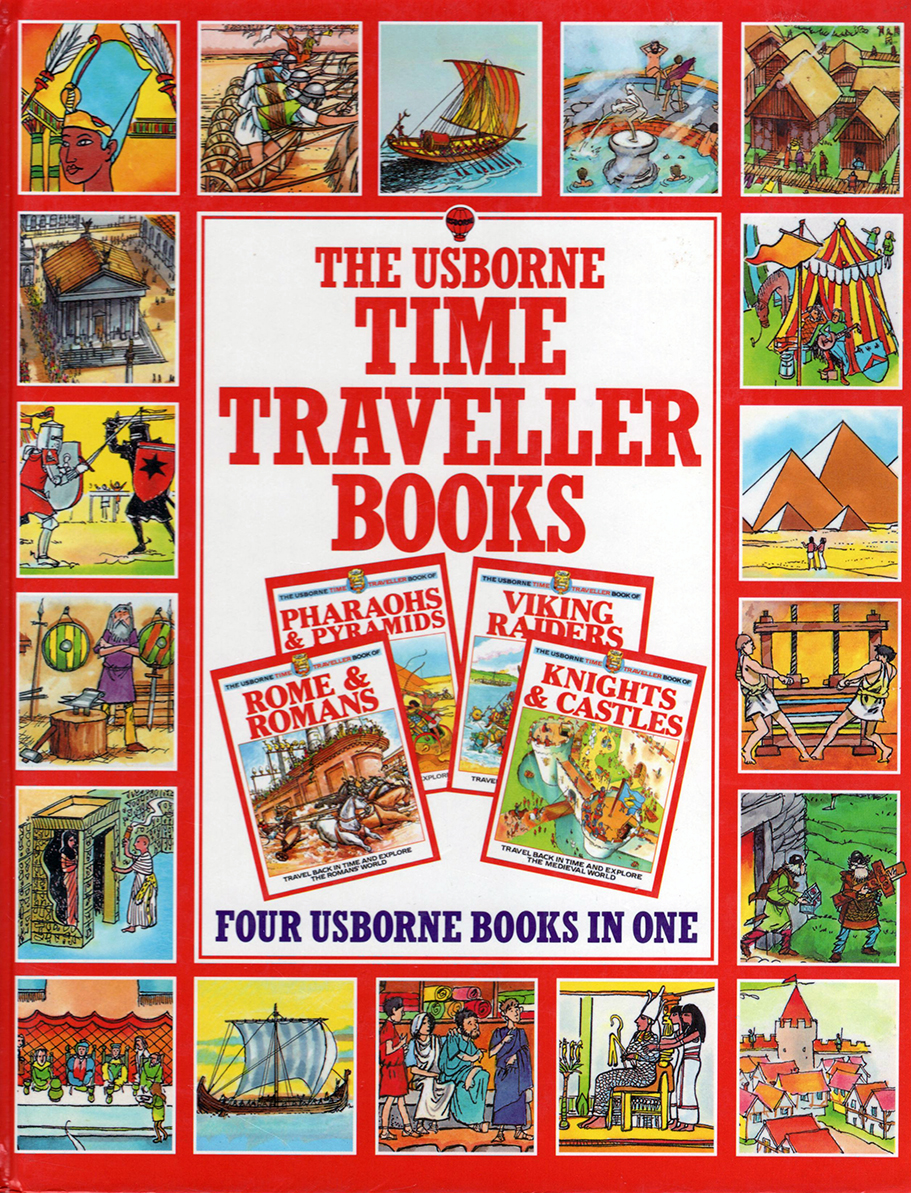
Many memories surfaced while writing a reminiscence about the old Des Plaines Public Library, but one particularly hazy recollection stood out—a series of nonfiction children’s books about time travel. I vaguely remembered that they were written as if the reader had traveled back in time, illustrating what daily life was like in ancient Egypt, Rome, or the Middle Ages. The books featured a cartoonish art style, reminiscent of the Where’s Waldo? series.
Determined to identify them, I scoured the Internet, posted on Reddit, and inquired on Facebook—all to no avail. I couldn’t recall the title, author, or any other specifics. Just as I began to wonder if I had imagined them, a friend finally stumbled upon the answer: the Usborne Time Traveller series! Originally published in four volumes—Pharaohs & Pyramids, Viking Raiders, Rome & Romans, and Knights & Castles—the books were later compiled into a single edition in 1993.
When I finally got my hands on a copy, the experience was indescribable. As I turned the pages for the first time in nearly 30 years, it felt as if I had been transported back to my own childhood. Better yet, it still holds up after all these years. There’s an element of HowStuffWorks, showing cross-sections of buildings and the processes they used to construct castles and ships. It’s a great addition to any kid’s library.
Lewis and Clark Stayed Home
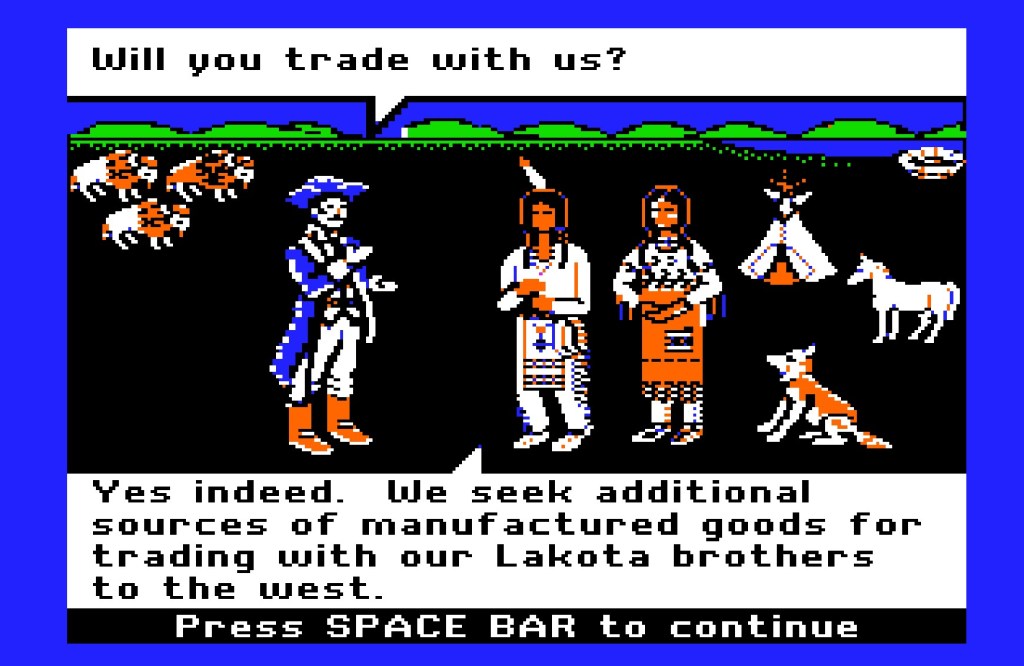
We all remember classic edutainment games like The Oregon Trail, Where in the World Is Carmen Sandiego?, and Math Blaster Plus!—the ones we used to play in the school computer lab. Recently, I discovered that the Internet Archive has a collection of these old games available to play right in your browser. One title I hadn’t seen since elementary school was Lewis and Clark Stayed Home, created by the same team behind The Oregon Trail.
The premise of Lewis and Clark Stayed Home is that explorers Meriwether Lewis and William Clark have fallen ill, and it’s up to you to complete their legendary 1804–1806 expedition to the Pacific Ocean. Along the way, you must manage your team, hunt or trade for food, and interact with Native American tribes to trade and learn from them. I always found the game both fun and educational. Even as a kid, I loved learning about history.
Unlike The Oregon Trail, which follows a linear progression, Lewis and Clark Stayed Home allows you to roam freely across a map, exploring different terrain and visiting tribes marked by small teepees. You can offer them gifts to build goodwill and trade for various goods. The tribes also share details about their history and customs, making the game an engaging and interactive learning experience. Play it for free at Archive.org.
Grendel Grendel Grendel
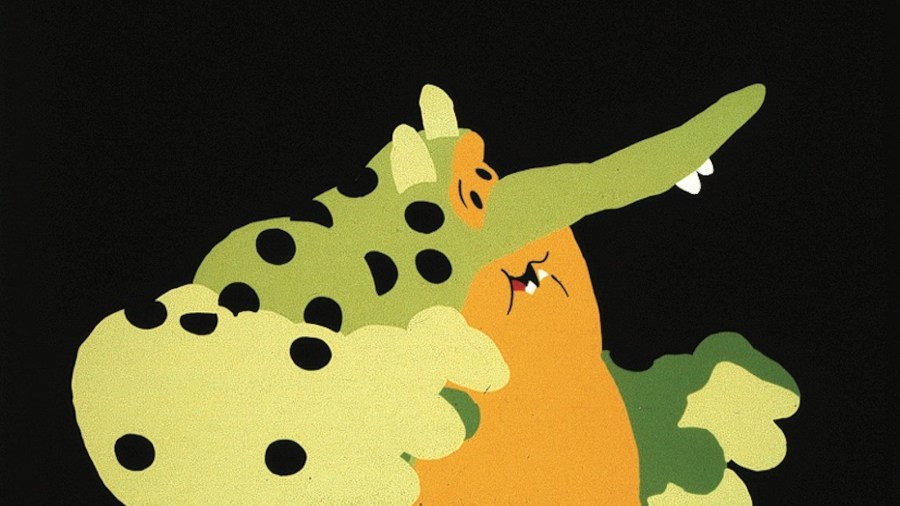
This 1981 Australian animated movie by Alexander Stitt adapted John Gardner’s novel Grendel into a psychedelic art style reminiscent of an acid trip. The philosophical story re-imagines Beowulf from the monster’s perspective. I don’t know why my parents thought this movie was appropriate for children (maybe because it’s animated), but I watched this at a much too young age.
For years, the images have lingered in the back of my mind, this poor creature crawling back to his cave to die, calling out for his mother after getting his arm ripped off. It was only recently that I rediscovered its title, Grendel Grendel Grendel. You can watch it for free on Tubi.


 M.A. Kleen
What are your thoughts?