
What happens when two coming-of-age films take wildly different roads to explore the messy, thrilling journey of growing up? Dive into The Edge of Seventeen and Paper Towns to uncover how their characters confront loss, identity, and the search for meaning—sometimes with heart, sometimes with chaos, but always with something to teach us.
Coming-of-age films often tread familiar territory: identity crises, friendships evolving, and a sense of yearning for purpose or connection. While The Edge of Seventeen (2016) and Paper Towns (2015) both explore these universal adolescent experiences, their approaches, tones, and the psychological depths they explore differ significantly. Both films navigate themes of growth and self-discovery, yet they diverge in the way their characters confront challenges, whether in healthy or problematic ways.
Both films center on teenage protagonists grappling with personal upheavals against the backdrop of high school, a setting synonymous with change and growth. In The Edge of Seventeen, Nadine Byrd (Hailee Steinfeld) faces the world with biting sarcasm and deep insecurity following her father’s death, the fracturing of her relationship with her best friend Krista, and her contentious bond with her mother. Similarly, Paper Towns introduces us to Quentin “Q” Jacobsen (Nat Wolff), a rule-abiding high schooler whose quiet existence is upended by Margo Roth Spiegelman (Cara Delevingne), a free-spirited enigma from his past who vanishes after one wild night together.
Both stories frame their protagonists’ journeys around loss and discovery—whether it’s Nadine’s struggle to find herself amidst personal tragedy or Quentin’s search for Margo, which becomes a quest for meaning. However, their paths diverge in execution and thematic focus.
One key distinction lies in tone. The Edge of Seventeen seeks raw realism (though whether it succeeds is another issue). Kelly Fremon Craig crafts a narrative filled with uncomfortable honesty, where Nadine’s awkwardness, volatile emotions, and self-destructive tendencies are portrayed as painfully authentic. Critics have compared it to the works of John Hughes, though it departs from his often rosy depiction of adolescence by confronting Nadine’s mental health struggles.
Paper Towns, on the other hand, leans into the whimsical and romanticized. Based on John Green’s novel, the film presents Margo as an almost mythical figure, embodying the “manic pixie dream girl” trope before deconstructing it. Quentin’s journey to find Margo is less about her and more about unraveling the idea of her—how idealization can obscure reality. The film dances between lighthearted humor, poignant reflections on mortality, and existential musings, wrapped in an adventurous road trip narrative.
Nadine’s arc in The Edge of Seventeen is deeply introspective. The film does not shy away from depicting her flaws—she lashes out at loved ones, makes impulsive decisions, and isolates herself. Her struggles hint at deeper psychological issues, possibly borderline personality disorder, as some critics have suggested. Traits like unstable relationships, intense fear of abandonment, and self-destructive behaviors suggest her journey is not simply one of “teen angst” but a broader reckoning with mental illness.
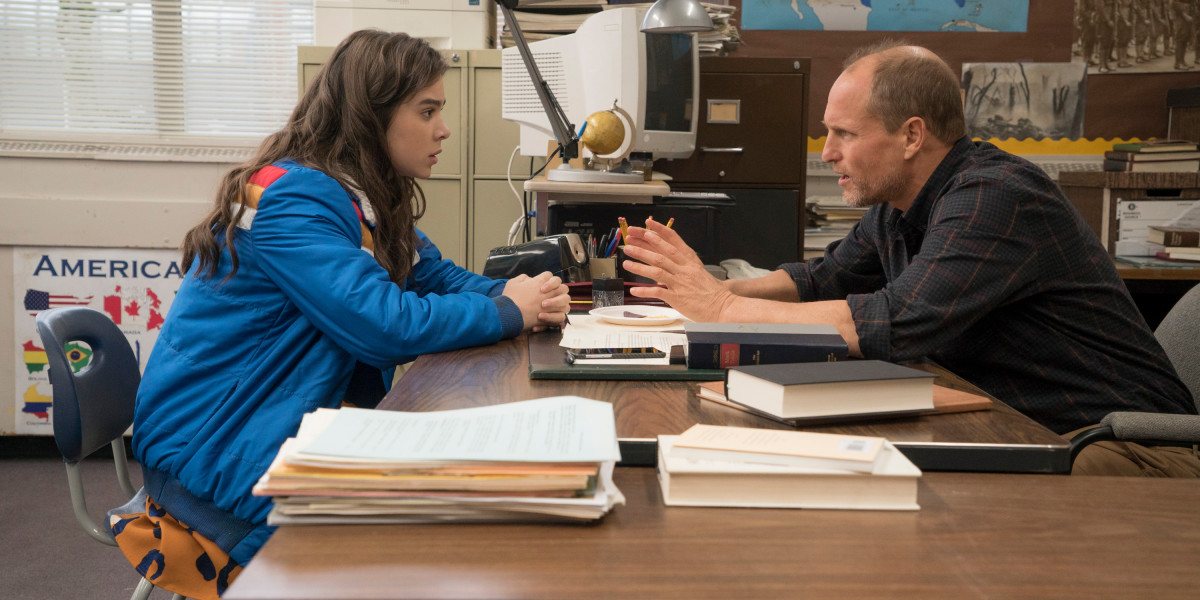
Despite her volatility, Nadine does experience growth. Her interactions with Mr. Bruner (Woody Harrelson), a sardonic yet grounding figure, help her confront her feelings without judgment. By the film’s end, she begins to mend fences with her family and recognizes the importance of connection, though it’s left ambiguous whether this marks a permanent change or merely a small step forward.
In Paper Towns, Quentin’s arc is more cerebral. While Nadine battles inner demons, Quentin embarks on an external adventure that mirrors his internal growth. His pursuit of Margo is symbolic, representing his transition from boyhood fantasies to adult realities. He idealizes Margo as the ultimate dream, a beacon of excitement and freedom. Yet, as he uncovers the reality of her life—a lonely, misunderstood girl seeking escape—he learns that people cannot be reduced to ideals.
Unlike Nadine, whose journey is raw and turbulent, Quentin’s feels more polished and optimistic. The film emphasizes camaraderie and self-discovery without delving into the darker underpinnings of adolescent psychology. By the end, Quentin doesn’t “win” Margo but gains clarity about himself, his friendships, and the life he wants to live.
Both characters confront their challenges, but the methods they employ highlight critical differences in how their respective films view adolescence.
Nadine’s approach to her struggles often veers into unhealthy territory. She lashes out at those around her—venting on her best friend, her mother, and even a teacher who tries to help. Her impulsive behaviors, such as a risky sexual encounter and binge drinking, suggest a cry for help. However, her eventual willingness to open up, as seen in her vulnerable moments with Erwin (Hayden Szeto) and Mr. Bruner, signals growth.
While the film ends on a hopeful note, critics have argued it brushes over the complexity of her mental health issues. Growth is implied, but without professional intervention or support, her trajectory may remain precarious.
Quentin approaches his crisis with methodical determination. While his initial pursuit of Margo stems from an unrealistic ideal, his journey is ultimately a positive one. He grows closer to his friends, embraces spontaneity, and learns to let go of unrealistic expectations. His arc demonstrates a healthier approach to coping—channeling emotional struggles into curiosity, adventure, and self-reflection.
Unlike Nadine, Quentin operates within a more supportive environment, with friends who encourage him and provide stability. His growth feels safer and less fraught.
The supporting characters in both films serve as mirrors to the protagonists, highlighting their growth (or lack thereof).
In The Edge of Seventeen, Nadine’s strained relationships with her mother and brother reflect her feelings of abandonment and loss. Krista’s betrayal underscores her fear of being left behind, while Mr. Bruner provides the rare stability she desperately needs. These dynamics add emotional weight to her journey.
In Paper Towns, Margo serves as both catalyst and cautionary tale. Her rebelliousness inspires Quentin, but her loneliness highlights the dangers of unchecked escapism. His friends—Ben, Radar, and Lacey—each undergo their own subtle transformations, reinforcing the film’s theme of interconnected growth.
Interestingly, both films touch on mortality, albeit in contrasting ways. For Nadine, her father’s death is a formative trauma that disrupts her ability to process emotions healthily. Her coming-of-age journey revolves around making sense of this loss and finding her place in the world.
In Paper Towns, mortality is more philosophical. Margo’s early encounter with death propels her to reject societal norms and seek authenticity, even if it isolates her. For Quentin, the realization of life’s brevity inspires him to live more fully, albeit within the bounds of his comfort zone.
The Edge of Seventeen and Paper Towns offer two distinct portraits of adolescence. Nadine’s story is messy, raw, and rooted in psychological realism, while Quentin’s journey is idealistic, adventurous, and steeped in metaphor. Both characters grow through their challenges, but their methods and outcomes differ. Nadine stumbles through pain and dysfunction, embodying the chaos of teenage life, while Quentin navigates his crisis with measured self-reflection, offering a more palatable vision of growth.
Ultimately, these films remind us that adolescence is multifaceted. Whether we see ourselves in Nadine’s turbulent self-doubt or Quentin’s yearning for purpose, the journey to adulthood is rarely straightforward—and it’s in these complexities that both stories find their resonance.

 M.A. Kleen
What are your thoughts?