Adolescence is a time of transformation, isolation, and discovery—a perfect storm of emotions that horror films uniquely bring to life. By turning the struggles of growing up into chilling tales of fear and resilience, these stories reveal how the monsters we face often reflect the darkest corners of our own journey into adulthood.
Adolescence is a paradoxical time of boundless potential and deep uncertainty. It’s a threshold where identities are forged, where childhood innocence clashes with adult complexities, and where the monsters lurking in the shadows often turn out to be reflections of inner turmoil. Horror films have long served as a dark mirror to these universal growing pains, transforming the emotional, social, and physical upheavals of adolescence into chilling tales of terror. Films like Summer of 84, The Blackcoat’s Daughter, Super Dark Times, It, and Ginger Snaps do more than just entertain—they expose the raw, primal anxieties of growing up and show how the horror genre uniquely captures the essence of “coming of age.”
At its core, adolescence is a liminal phase, a boundary-crossing experience akin to the transformation at the heart of horror. It’s a period where the familiar body becomes alien, where friendships fracture under the strain of emerging identities, and where authority figures—parents, teachers, and neighbors—seem distant or even threatening. Each of these films explores this liminality, blending the physical, emotional, and existential fears of adolescence into narratives that highlight the darker facets of coming of age.
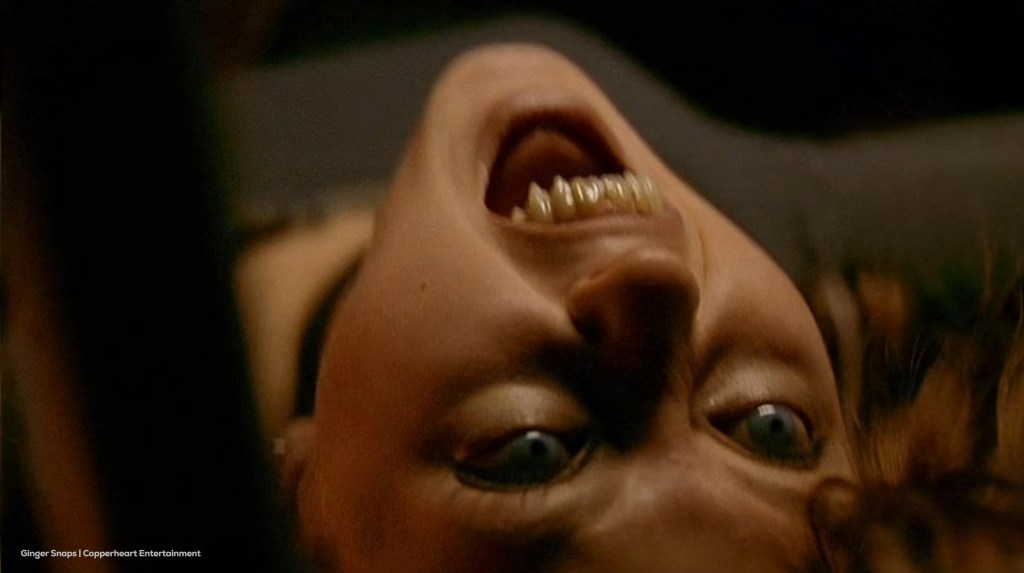
Take Ginger Snaps (2000), for example, where the titular character’s werewolf transformation begins with her first period. Ginger’s physical metamorphosis—from menstruation to sprouting fur and a tail—parallels the visceral, often grotesque changes of puberty. Horror becomes a metaphor for the alienation and discomfort that accompanies these transformations. Similarly, in It (2017), Pennywise the Clown embodies childhood fears, but also the looming specter of adult responsibilities and traumas. The Losers’ Club must confront not only a literal monster but the figurative monsters of abuse, bullying, and grief that shape their adolescence.
Loneliness is a recurring theme in these films, a natural byproduct of adolescence as young people navigate the chasm between childhood and adulthood. Oz Perkins’ The Blackcoat’s Daughter (2015) delves deeply into this isolation. Kat (played by Kiernan Shipka), left alone at her boarding school, becomes unmoored in a setting designed to protect and nurture. Instead, it becomes a crucible of her darkest impulses. Her descent into violence and demonic possession isn’t merely supernatural—it’s a meditation on the emotional isolation teenagers often feel, especially when their needs and fears are misunderstood by authority figures.
Isolation also plays a critical role in Summer of 84 (2018), where Davey’s attempts to unmask his serial-killer neighbor are dismissed by the very adults who should provide support. His isolation isn’t just physical; it’s an emotional disconnection from a world that demands he grow up while simultaneously disregarding his perceptions. This alienation sharpens the horror of his discovery, making the real-life terror all the more devastating.
Adolescent friendships are a cornerstone of identity, but they are also volatile and prone to fractures. The horror genre thrives on this tension, using it to highlight the stakes of growing up. In Kevin Phillips’ Super Dark Times (2017), the friendship between Zach and Josh deteriorates under the weight of a shared, horrific secret. Their camaraderie, once a sanctuary, becomes a battleground for guilt, fear, and moral ambiguity. The film paints an unflinching picture of how adolescence can mutate relationships, turning best friends into strangers—or worse, enemies.
This fragility is echoed in It, where the Losers’ Club relies on their collective strength to combat Pennywise (played by Bill Skarsgård) but also grapples with individual fears and rivalries. Beverly Marsh’s struggles with abuse highlight how external pressures can fracture even the strongest bonds. The horror lies not just in the supernatural threat but in the tenuous nature of their connection as they teeter on the brink of adulthood.
The physical transformations of adolescence are fertile ground for horror’s grotesque and visceral imagery. Nowhere is this more evident than in Ginger Snaps, where Ginger’s werewolf transformation is an explicit metaphor for puberty. Her newfound aggression, sexual awakening, and rejection of societal norms mirror the chaotic and often contradictory impulses of growing up. The film’s body horror amplifies these anxieties, showing how the adolescent body becomes a battleground for identity and control.
Similarly, The Blackcoat’s Daughter uses Kat’s demonic possession as a metaphor for the alienation and rage that simmer beneath the surface of many teenagers. Her body becomes a vessel for external forces, a chilling reflection of the ways adolescents can feel out of control—subject to the whims of hormones and societal expectations while struggling to express their individuality.
Many of these films are steeped in nostalgia, not merely as a stylistic choice but as a means of exploring how the past shapes the present. Summer of 84 uses its 1980s suburban setting to evoke a time when “Stranger Danger” was a national obsession and children were often left to fend for themselves. The meticulously crafted world of the suburbs—complete with manicured lawns and milk cartons bearing missing children—becomes a sinister backdrop for the loss of innocence. It’s a reminder that adolescence, for all its romanticized portrayals, is fraught with real dangers.
Similarly, It capitalizes on its late-1980s setting to ground its supernatural horror in the universal experiences of small-town life. The nostalgia is purposeful, evoking a time when kids roamed unsupervised, their adventures tinged with both wonder and peril. This temporal specificity enhances the relatability of the characters’ fears, whether they’re facing Pennywise or grappling with the more mundane horrors of growing up.
What sets horror apart as a genre is its ability to externalize internal struggles. Adolescence is a period of heightened emotion, where every fear, desire, and disappointment feels apocalyptic. Horror films tap into this emotional intensity, crafting narratives that feel both exaggerated and authentic. In Super Dark Times, the accidental killing of a friend becomes a metaphor for the irreversible mistakes of youth, while The Blackcoat’s Daughter turns Kat’s emotional isolation into a literal descent into hell.
Horror also provides a safe space for exploring taboo subjects. It delves into child abuse, Ginger Snaps tackles female sexuality, and Summer of 84 confronts the terror of discovering that the trusted adults in your life can be monstrous. These films don’t shy away from the messy, uncomfortable realities of growing up; instead, they amplify them, using the genre’s conventions to probe deeper truths.
If adolescence is a journey of transformation, then horror’s preoccupation with metamorphosis is uniquely suited to the coming-of-age narrative. The werewolf transformation in Ginger Snaps, the demonic possession in The Blackcoat’s Daughter, and the group’s growth in It all underscore the painful but necessary process of change. These transformations are rarely easy, often leaving scars—literal and figurative—that the characters carry into adulthood.
But horror also offers catharsis. By confronting their fears, the protagonists in these films gain a deeper understanding of themselves and their place in the world. Whether it’s Brigitte choosing to stay with her sister despite the danger, or the Losers’ Club standing together against Pennywise, these moments of courage and connection provide a glimmer of hope amidst the darkness.
Horror’s power lies in its ability to confront the raw, unfiltered truths of human experience, and adolescence provides fertile ground for these explorations. Films like Summer of 84, The Blackcoat’s Daughter, Super Dark Times, It, and Ginger Snaps weave universal coming-of-age themes into their narratives, transforming the everyday struggles of growing up into stories of terror and resilience.
Through their exploration of isolation, transformation, and the fragility of relationships, these films remind us that the monsters we face as teenagers—whether external or internal—are both universal and deeply personal. Horror, with its visceral immediacy, captures the essence of adolescence in a way few genres can, leaving us with stories that are as haunting as they are profoundly human.

 M.A. Kleen
What are your thoughts?