
Long before Hamilton County existed, a brutal murder along a lonely frontier creek may have given rise to one of Illinois’ oldest ghost stories. Trace the legend of the headless horseman of LaKey Creek through early land records, family histories, and generations of folklore to uncover the unsettling history behind the phantom rider said to haunt the banks of the creek to this day.

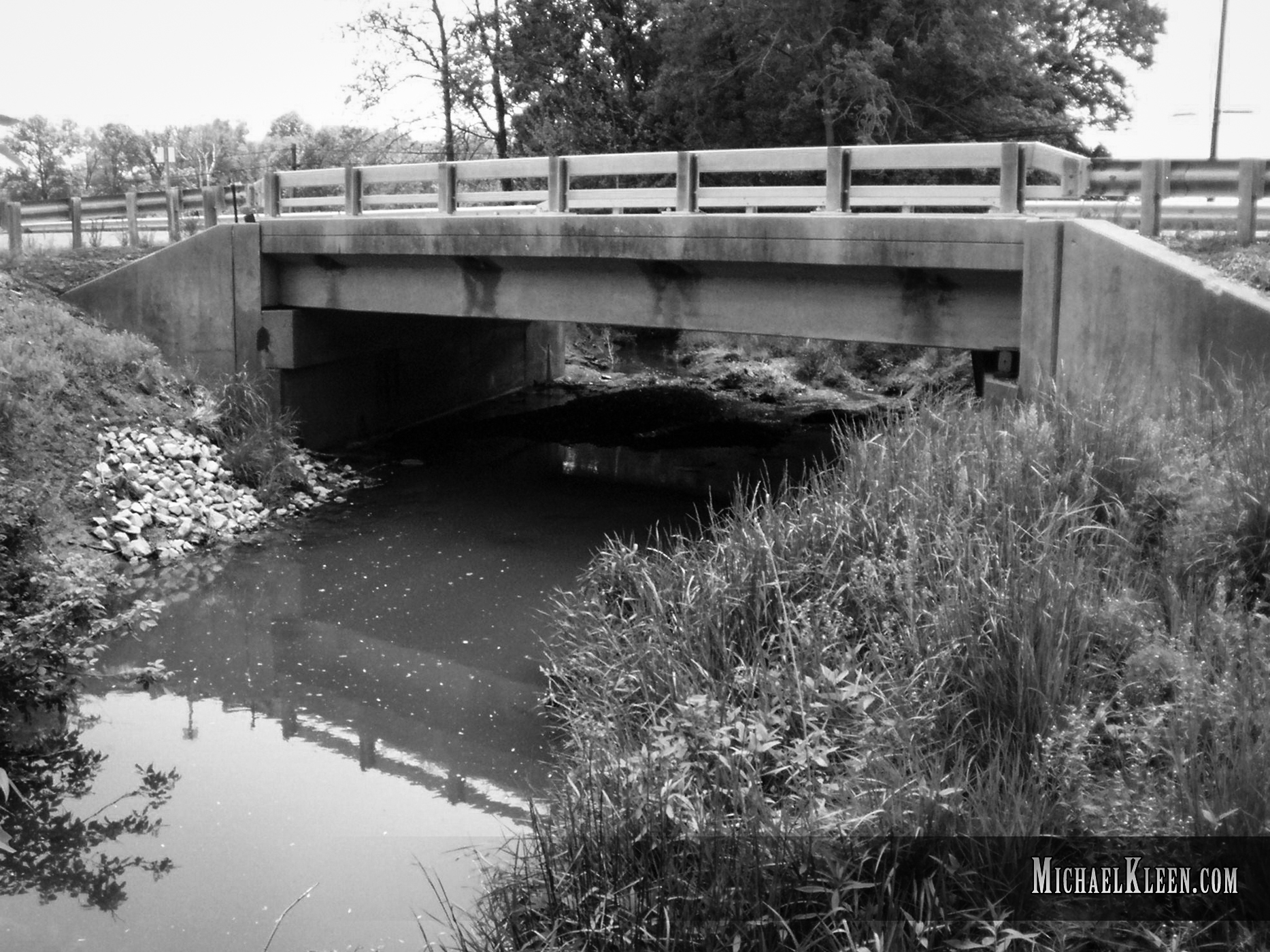
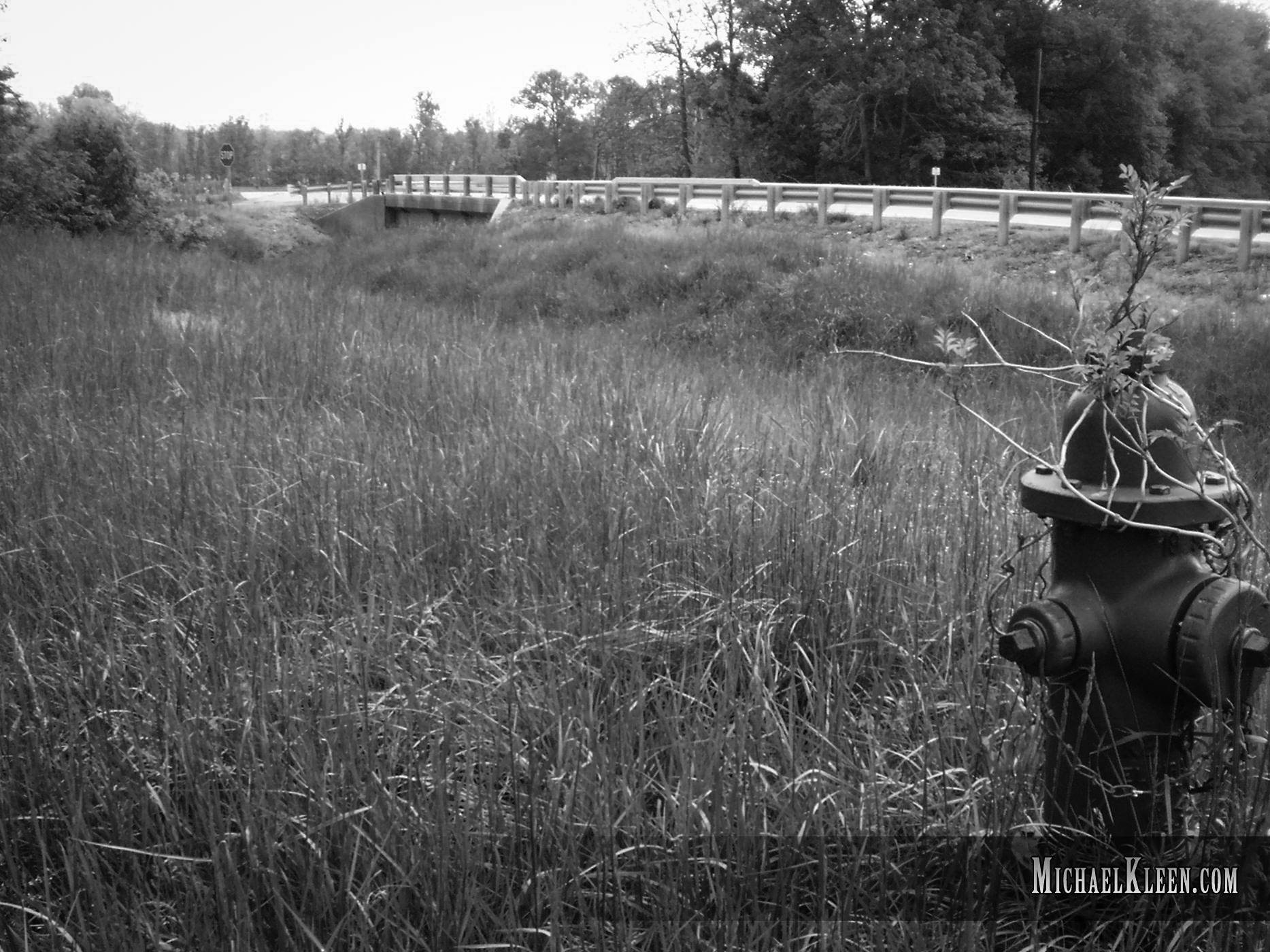
- LaKey Creek in Hamilton County, Illinois, may preserve one of the oldest surviving ghost legends in the state, with roots stretching back to the territorial era before Illinois achieved statehood in 1818.
- According to local folklore, a settler named Lakey was found decapitated beside a tree stump near his unfinished cabin, his own ax still embedded in the wood.
- For decades afterward, travelers reported encounters with a silent headless horseman riding a large black horse along the creek before vanishing into the darkness downstream.
- Research by historians and descendants of the Leakey/Lakey family uncovered records suggesting the legend may have been inspired by a real early settler named Simon Leakey, who died near the creek in 1819 under mysterious circumstances.
“I almost wept as the spectra placed
The head back into the sack;
Clop, clop… the headless rider
moved on.” –Neil Tracy “The Legend of Lakey”
LaKey Creek drains the farmland northwest of McLeansboro, Illinois, winding south until it joins the north fork of the Saline River in rural Hamilton County. From there, the Saline gathers strength before finally emptying into the Ohio River along the eastern edge of the Shawnee National Forest. For an early settler, the creek would have seemed an ideal place to build a homestead. Unfortunately for Mr. Lakey, the man whose name the stream still bears, the picturesque tract he chose also became the place of his death. He purchased a strange kind of immortality there, leaving behind not only a creek, but a legend.
Not long after Lakey’s death, two travelers reportedly encountered a fearsome black steed carrying a headless rider. The phantom horseman pursued them relentlessly until they crossed the creek. There, at the water’s edge, the apparition turned downstream and vanished into the darkness. The headless horseman of LaKey Creek may well be one of the oldest ghost stories in Illinois.
Passed down through oral tradition until John W. Allen finally committed it to paper in 1963, the tale of the mysterious Lakey and his violent end has become firmly embedded in the folklore of Southern Illinois. Much like Jonesboro’s legend of Dug Hill and Provost Marshal Welch, the story may preserve the memory of some long-forgotten and unsettling event in local history.
Long before a concrete bridge crossed the shallow creek 1.5 miles east of McLeansboro along Route 14, folklorists say a frontiersman named Lakey attempted to build a log cabin near a ford on the old wagon road to Mt. Vernon. His work was nearly finished when he felled an oak tree to split boards for the roof. The following morning, a lone traveler reportedly discovered Lakey’s bloodied body. His head had been severed by his own ax, which remained buried deep in the oak stump. According to legend, the killer was never found.
But the story does not end there.
For decades after the murder, travelers reportedly encountered a headless horseman riding out of the woods along LaKey Creek. “Always the rider, on a large black horse, joined travelers approaching the stream from the east, and always on the downstream side,” John Allen wrote. “Each time and just before reaching the center of the creek, the mistlike figure would turn downstream and disappear.” The phantom descended silently upon those traveling west toward McLeansboro, escorting them to the water’s edge before vanishing into the darkness. Witnesses never described the rider as overtly threatening, nor did he give any sign of why he pursued them at all.
For many years, folklorists, genealogists, and local historians have tried to determine who gave LaKey Creek its name, and whether that person inspired the legend of the headless horseman. As it turns out, there is compelling evidence that the murder itself was real, and that the story may predate not only McLeansboro, but Hamilton County as well.
In 1973, Ralph S. Harrelson published research identifying what he believed to be the historical figure behind the Lakey legend. While examining an early history of Hamilton County, he uncovered a single sentence stating that a man named Lakey—the same individual for whom the creek was supposedly named—had once lived near the ford and, more intriguingly, had been murdered by his own son-in-law.
The passage read: “Mr. Lakey, who lived on the Jones Tract, after whom Lakey’s Creek was named, and who was killed by his son-in-law.” Pursuing the lead further, Harrelson discovered records showing that a man named Joel Leaky had owned land in the area prior to 1824. “Leaky,” apparently, was simply an alternate spelling of “Lakey.” “Joel could be, and probably is, the person for whom the creek is named,” Harrelson concluded.
Descendants of the Leaky—or Leakey—family, whose surname is now commonly spelled Lakey, have also combed through old records in an effort to uncover the truth behind the grisly story. Their research revealed that Simon Leakey, born June 8, 1778, in Surry County, North Carolina, joined many Southern settlers in pushing westward in search of cheap, fertile land. He arrived in Ohio in 1807 before moving to Illinois in 1816. Traveling with him were his wife, Ruth, and their three children: Anna, Jacob, and Elizabeth. Two other daughters, Mary and Sarah, died before the family reached Illinois.
Simon also had a brother named Joel, who was married to a woman named Nancy Calloway. On February 7, 1817, when Illinois was still a territory and Hamilton County had not yet been carved from White County, Joel purchased land along a creek in Township 5, Range 6, northeast quarter of Section 23 (though Ralph Harrelson later listed it as Range 5). Just eleven days later, on February 18, 1817, Michael Jones, the land agent for White County, acquired the same property. What happened in the brief span between those two transactions? Was it enough time for Joel to raise a small cabin before meeting a violent end? The historical record suggests otherwise.
We know from probate records that Michael Jones took Simon Leakey to court in 1819 for trespassing on his land. The case never reached trial because, according to a family Bible record, where births and deaths were often recorded in that era, Simon died in 1819 and was buried near LaKey Creek. A RootsWeb entry for Joel Leakey goes a step further, claiming Simon was murdered. If the Hamilton County history is correct, and Simon was indeed killed by his son-in-law, the culprit would have to have been the husband of one of his two surviving daughters, Ann or Elizabeth.
Records show Elizabeth did not marry until 1826, effectively ruling out her husband. Ann, however, married a man named Hiram Long in White County sometime around 1818 or 1819. The couple soon moved to St. Clair County on the opposite side of the state. Still, if Hiram Long was responsible for Simon Leakey’s death, no surviving official records have surfaced to prove it.
Simon’s widow, Ruth, moved to Lawrence County, Indiana, in 1820. For that reason, Gilbert M. Lakey, a descendant of the family, believed Simon—not Joel—was the man for whom the creek was named. Joel eventually relocated to Texas, where he died on February 25, 1837. By 1820, no one bearing the name Leaky or Lakey remained in White County.
Hamilton County was carved from White County in 1821, the same year McLeansboro was platted.
Since its first publication in 1963, the tale of the headless horseman of Southern Illinois has appeared in numerous works on Illinois ghost lore. Among them are Beth Scott and Michael Norman’s Haunted Heartland (1985), Jo-Anne Christensen’s Ghost Stories of Illinois (2000), Troy Taylor’s Haunted Illinois (1999, 2004), and Chad Lewis and Terry Fisk’s Illinois Road Guide to Haunted Locations (2007).
Because it is an old ghost story with relatively few reported sightings, the various retellings show little variation. Still, several authors have embellished John Allen’s original account with details of their own. In Troy Taylor’s version, the man who discovered Lakey’s body was a neighbor who had stopped by with a batch of eggs. “He knew that his friend planned to purchase some laying hens soon, but with the cabin nearly completed, there had simply not been time,” Taylor wrote. “Rounding the back of the house, he discovered Lakey’s bloody and headless body beside a tree stump.”
Jo-Anne Christensen added that Lakey, at least according to legend, “had no family that anyone knew of.” A little creative license, of course, is almost unavoidable in the business of ghost lore.
Although both Taylor and Christensen implied the headless horseman has continued to appear in modern times, even after a concrete bridge was built over the creek in 1952, only Chad Lewis and Terry Fisk recorded a contemporary encounter with the phantom. According to their account, a local woman familiar with the Lakey legend, whose identity the authors withheld, described an unsettling experience of her own.
The woman crossed the bridge every day on her drive to and from work. One evening, she noticed something unusual moving in the woods. “As the woman slowed down to get a better look at what she had seen, she almost crashed her car because of what was staring back at her,” Lewis and Fisk wrote. “Perched on top of a large horse was a man with no head.”
Today, a grassy field and a small patch of woods occupy the land where Lakey’s cabin supposedly once stood. LaKey Creek still winds and trickles south through Hamilton County, following the same lonely course it has for generations. Only the creek, and perhaps its mysterious headless rider, knows what truly happened along its muddy banks more than 190 years ago.
Donate
Enjoy what you read? Please consider making a one-time donation to support my research.
Enjoy what you read? Please consider making a monthly donation to support my research.
Enjoy what you read? Please consider making a yearly donation to support my research.
Choose an amount
Or enter a custom amount
Your contribution is appreciated.
Your contribution is appreciated.
Your contribution is appreciated.
Sources
- John W. Allen, Legends & Lore of Southern Illinois (Carbondale: Southern Illinois University, 1963, 1973).
- Ralph S. Harrelson, “History and Legend of Lakey,” Goshen Trails (October 1973): 13.
- Troy Taylor, Haunted Illinois: The Travel Guide to the History & Hauntings of the Prairie State (Alton: Whitechapel Productions Press, 2004).
- Jo-Anne Christensen, Ghost Stories of Illinois (Edmonton: Lone Pine, 2000).
- Chad Lewis and Terry Fisk, The Illinois Road Guide to Haunted Locations (Eau Claire: Unexplained Research Publishing Company, 2007).


What are your thoughts?