If you haven’t opened your favorite World War 2 grand strategy game in a while, you may notice some dramatic changes.
Alongside its DLC No Compromise, No Surrender, Paradox Entertainment rolled out a new resource for Hearts of Iron IV: Coal. The new resource, and its mechanics, is available for all players regardless of whether or not you own the DLC.
With enough foresight and play testing, this new resource would add interesting balance and nuance to the game, especially for veteran players looking for more realism and historical depth. Coal was an enormously critical resource in World War 2.
But, it’s Paradox, so as soon as they rolled out this new feature, it caused dozens of bugs and other issues that will take at least ten patches and updates to correct. Four patches have dropped since the DLC was released on November 20. The latest, 1.17.2, introduces even more changes, with new buildings and a modified industrial tech tree.
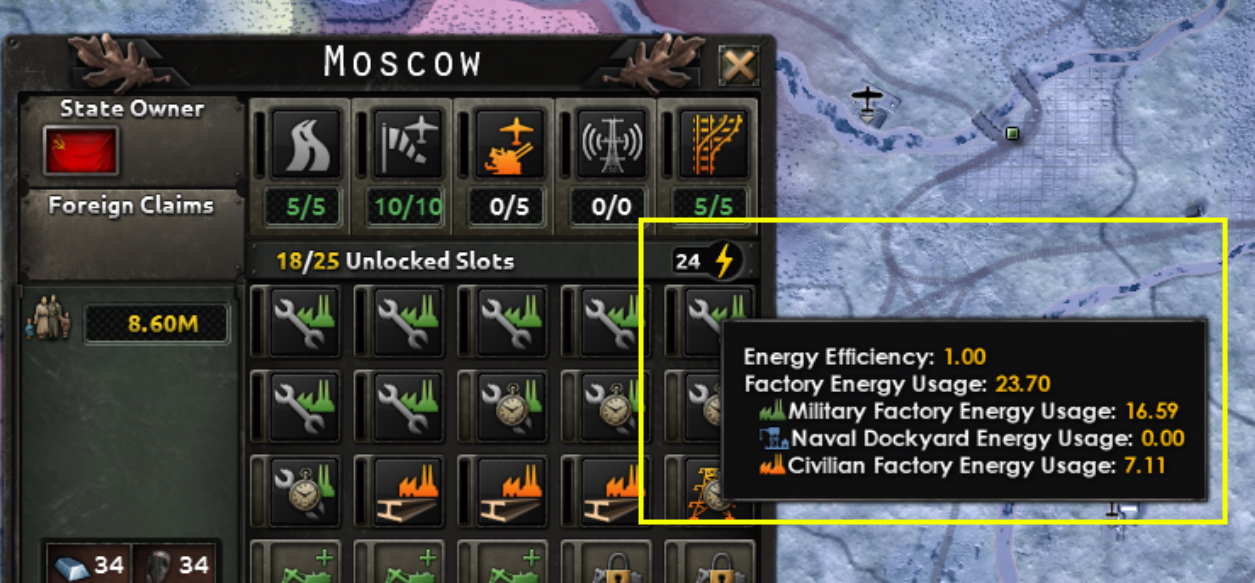
The purpose of this new resource is to restrain the number of factories a country can build. Each factory (civilian, military, and dockyard) now costs energy, which is produced by coal. If your number of factories outstrips your coal output, production penalties are imposed. Push back from the gaming community compelled Paradox to introduce new features, which are explained below.
Keep in mind that subsequent updates will probably change how this works.
The latest update introduced two new mutually exclusive buildings. You can only build one of these per province. Both cost 12000 IC.
Reinforced Electrical Grid
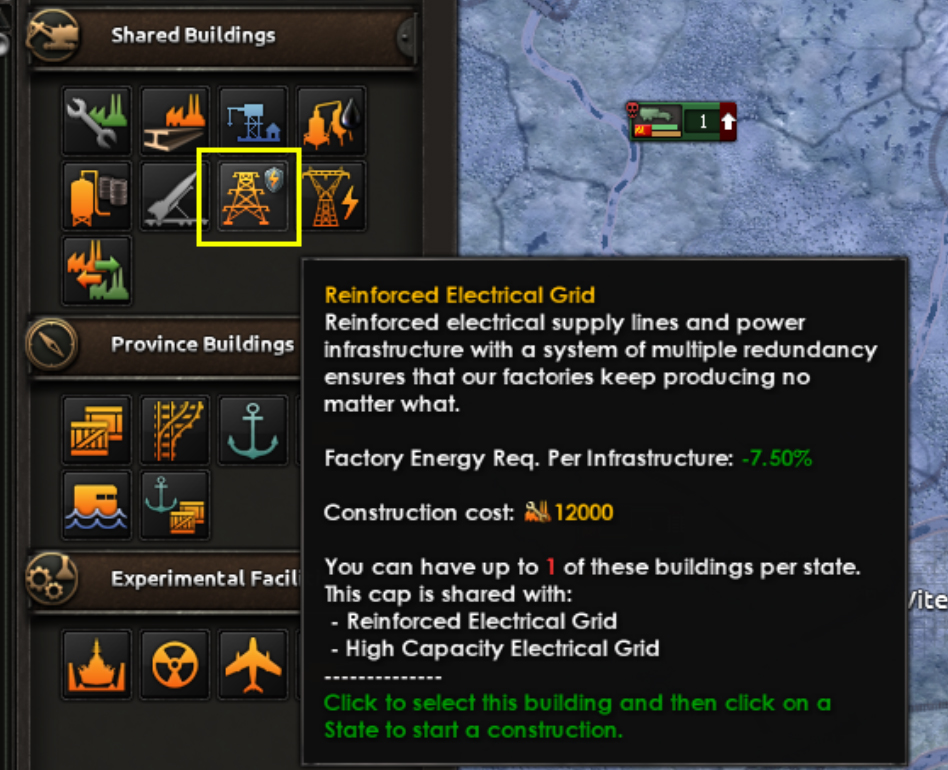
Game description: Reinforced electrical supply lines and power infrastructure with a system of multiple redundancy ensures that our factories keep producing no matter what.
The Reinforced Electrical Grid reduces the amount of factory energy required per infrastructure in that province by 7.5%.
High Capacity Electrical Grid
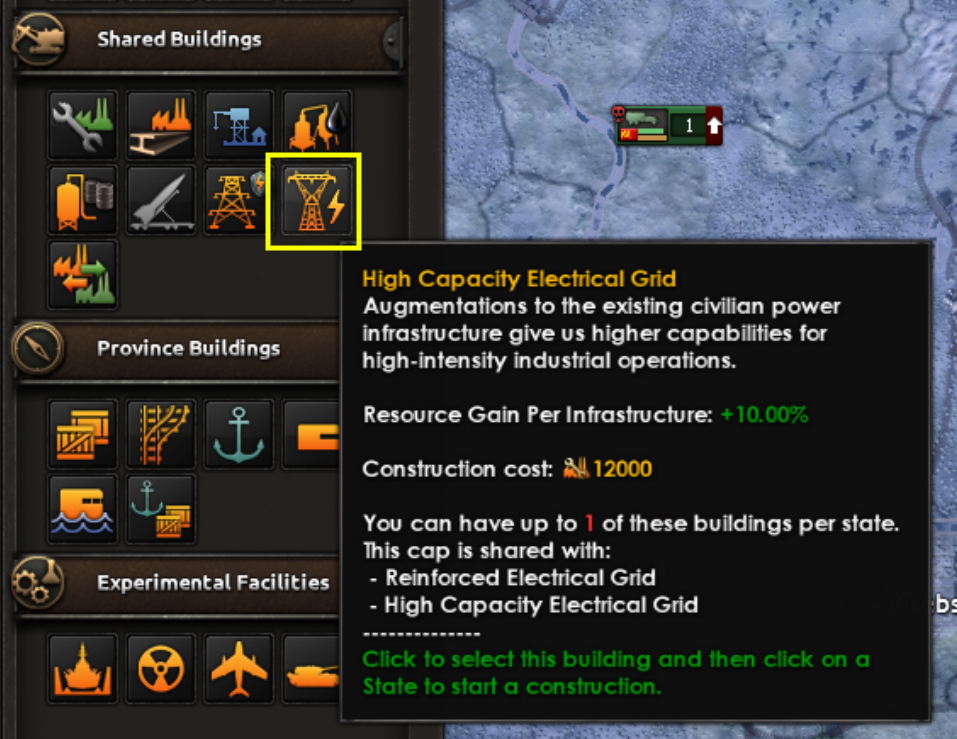
Game description: Augmentations to the existing civilian power infrastructure give us higher capabilities for high-intensity industrial operations.
Increases the resource gain per infrastructure in that province by 10%.
Obviously you will want to build the Reinforced Electrical Grid in provinces with a high number of factories and the High Capacity Electrical Grid in provinces with a high amount of resources, preferably coal.
Industrial Tech Tree
As mentioned earlier, the latest update made significant changes to the industrial technology tree. It replaced the two equipment conversion techs with coal-related technology, and moved equipment conversion bonuses into the Machine Tool line.
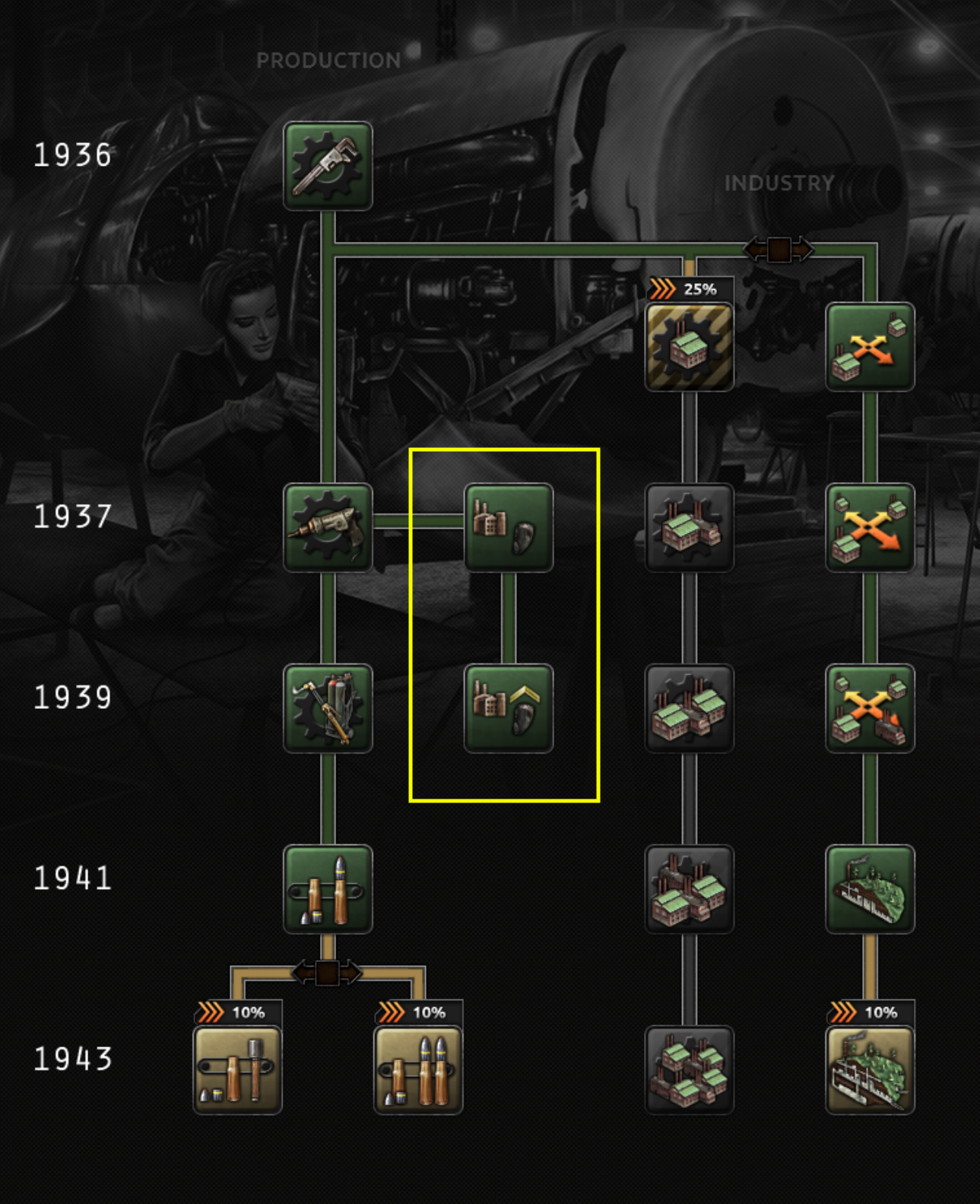
The first, a 1937 tech, Pulverized Coal-Firing Boilers, adds a bonus of 15% to the amount of energy gained per coal.
The second, a 1939 tech, High-Efficiency Turbines, adds another bonus of 15% to the amount of energy gained per coal.
So the player now has multiple ways, by constructing buildings or researching technology, to increase energy efficiency and either boost your coal production or reduce the energy demands of industry.
Also, in the latest update, Commercial Nuclear Reactors now grant -50% state energy consumption factor, improved from -25%. So that makes nuclear technology even more attractive (if you actually end up using it).
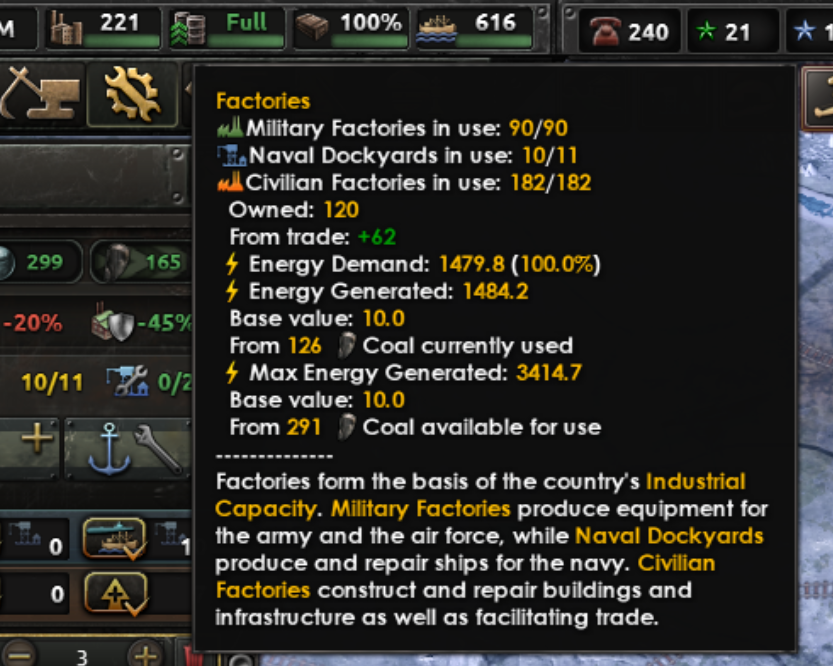
There are a few changes I’d like to see to this feature, though over all it’s a positive addition. So far as I’ve found, the only way to see how much energy you are producing and how much you need is to hover over the factories icon at the top left (see screen shot below). I would like to see this be more like oil or supply, where it is explicitly shown.
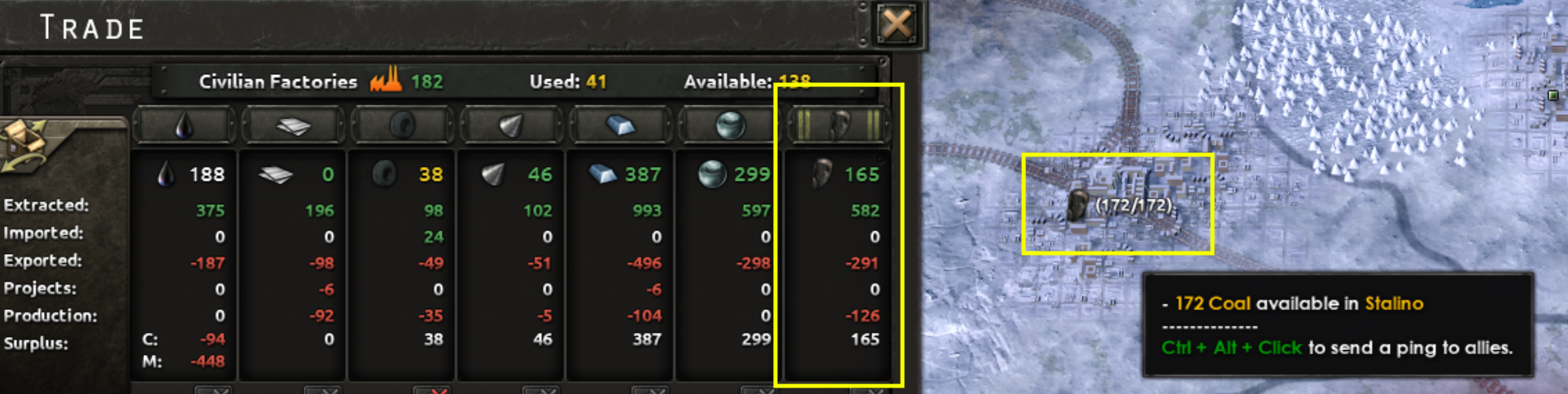
This new resource adds an interesting strategic dimension, either as a goal to seize coal-rich provinces to feed your own industry or deny it to the enemy. Currently, most of the Soviet Union’s coal is located in Stalino. Capturing that province will severely cripple their industry, or force them to trade a large amount of civs for coal. In my current Soviet game, I’d have to trade 21 civilian factories to make up for the loss of Stalino.
Currently, Germany is able to prospect for new coal resources quite extensively but the Soviet Union can only do that once. I’d like to see an expanded ability to add new coal deposits to the map.
A feature I dislike is how your economy laws affect energy consumption. A Civilian Economy sees factories demanding 30% less energy, with the demand increasing as you move toward Total Mobilization. I don’t really understand why factories should need more energy under a War Economy than a Civilian Economy. At this point in time, a factory producing cars would operate 24 hours a day. I don’t see any reason a factory producing leather belts would use less energy than a factory producing ammunition pouches. Moving onto a War Economy is supposed to benefit your military production, not hamper it.
But otherwise, I appreciate the added detail and depth this new resource brings to the game. I’m sure there are more updates coming down the pike and I’m looking forward to seeing how Paradox fixes balance issues and continues to integrate it into the game.

 M.A. Kleen
What are your thoughts?