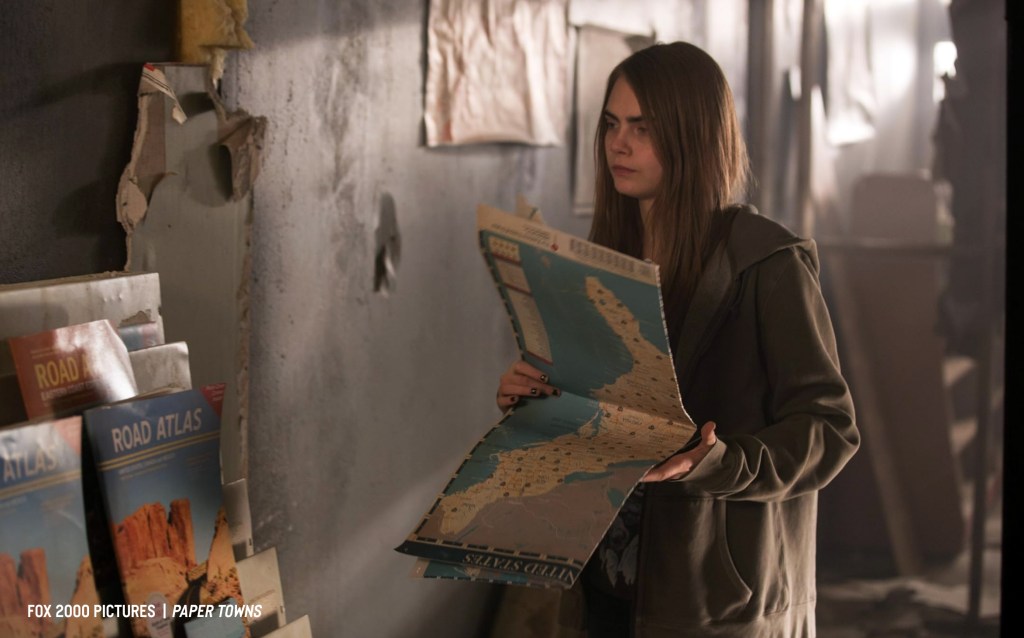
In July 2015, Paper Towns hit theaters. A decade later, it still hasn’t faded. Directed by Jake Schreier and adapted from John Green’s novel of the same name, this quiet, curious film continues to ask questions that don’t have clean answers. That’s part of its magic. Paper Towns wasn’t built to be a blockbuster. It was built to linger, and ten years on, it still does.
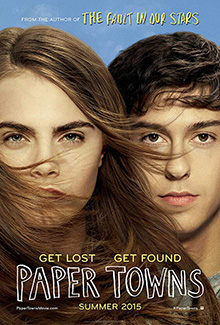
The story follows Quentin “Q” Jacobsen (Nat Wolff), a risk-averse teen who’s always played it safe. Living in a suburban maze of sameness in Orlando, Florida, Quentin’s world is turned upside down by Margo Roth Spiegelman (Cara Delevingne), the enigmatic girl next door. They were close as kids, bonded by a traumatic discovery: a man’s body in a park. But that moment sets them on diverging paths. Quentin turns inward. Margo seeks meaning in mystery.
Years later, Margo reappears in Quentin’s life for one wild night of revenge on those who wronged her. Then she vanishes, leaving behind cryptic clues. Quentin embarks on a road trip with friends to find her, chasing what he believes is a romantic destiny. What he finds instead is a deeper truth about Margo, and himself.
Based on John Green’s 2008 novel, Paper Towns premiered in the U.S. on July 24, 2015. Following the massive success of The Fault in Our Stars, expectations were high. The film didn’t hit the same emotional gut-punch or box office numbers, but it did moderately well—grossing over $85 million worldwide on a $12 million budget.
What Paper Towns lacks in spectacle, it makes up for in atmosphere. It’s quiet, grounded, and infused with the melancholy of a suburban summer coming to an end.
Why I Still Love This Movie
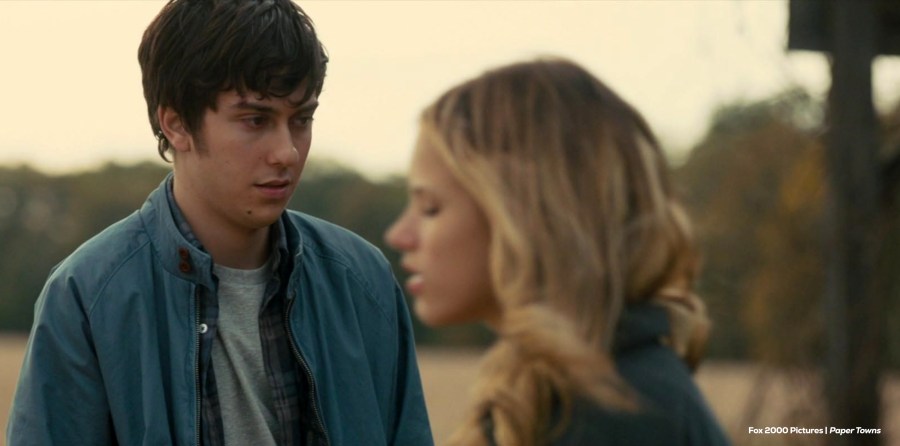
Some coming-of-age films aim for grandeur. Paper Towns goes smaller. It suggests that the real existential crises don’t always come in sweeping moments, but in silent questions. What if the world isn’t as real as we think? What if the people we idolize are just projections? What if we’re the projections?
There’s a scene where Margo looks out over Orlando and calls it a “paper town,” hollow and fake. That line hits because it’s not really about Orlando, it’s about every place that feels like a placeholder for your real life.
The film dares to dismantle its own setup. You expect Quentin’s search to end with a romantic reunion. But Paper Towns isn’t interested in clichés. Quentin finds Margo, but she doesn’t need rescuing. She doesn’t want to be found. He was chasing an idea, not a person. The film stares down that awkward, disappointing truth and lets it sting.
Geography matters here. The story spins on maps, abandoned buildings, and the myth of Agloe, a fictitious town created as a copyright trap that somehow became real. It’s a perfect metaphor. Sometimes, what we invent to protect ourselves ends up guiding us somewhere new.
The characters go on literal and metaphorical journeys. They sneak into empty buildings, drive across states, and confront their own illusions. Margo doesn’t just disappear, she disappears into the myth of herself. And the journey to find her becomes a lesson in letting go.
In 2015, Paper Towns felt like an indie-spirited answer to glossy teen romances. Today, it feels prophetic. It anticipated a cultural shift where people—especially young people—started rejecting labels, questioning narratives, and resisting the urge to package life into clean, linear stories.
Its themes still resonate. The feeling of being stuck in a life too small for you. The pull toward the unknown. The fear that the people you admire are just as lost as you are. These aren’t teenage problems. They’re human ones.
Ten years later, Paper Towns is still relevant because it never pretended to have the answers. It knew that coming of age isn’t about becoming someone. It’s about realizing you’ve always been someone, even when you felt invisible.
It’s about the quiet rebellion of asking, What else is out there? and accepting that the search itself might be the point.
So here’s to ten years of Paper Towns. A film about getting lost, seeing through illusions, and learning to be okay with what’s real. Even if it’s not what you expected.

 M.A. Kleen
What are your thoughts?