That’s the unfounded and outrageous implication in Adam McKay’s new film, Vice.
Edit: this article has been updated to reflect paragraphs in Lynn Cheney’s autobiography.
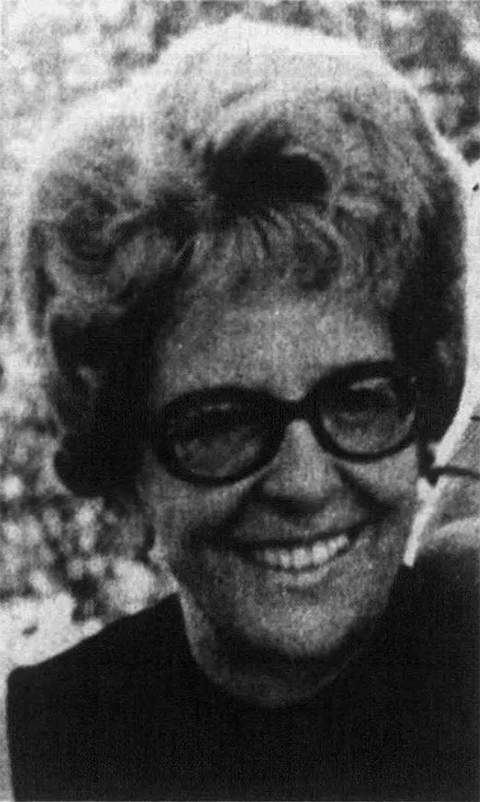
I watched Adam McKay’s unusual biopic of Vice President Dick Cheney a few days ago, and one scene in particular stood out. For all its focus on Cheney’s political machinations, Vice briefly touches on a personal tragedy for Cheney’s wife, Lynne, whose mother drowned at the age of 54. It is the second time Lynne’s parents are mentioned, the other being a brief interaction in the opening scene in which Lynne’s mother is portrayed as a doting and abused housewife.
Early in the film, Lynne Cheney (competently played by Amy Adams) receives a phone call with terrible news. Her mother, Edna, has drowned. Lynne openly wonders why she would be in the lake, knowing she can’t swim. Lynne, her husband Dick (Christian Bale), then Assistant Director of the Cost of Living Council for President Richard Nixon, and their two young daughters fly home to Wyoming to attend the funeral.
At the cemetery, Lynne’s father, Wayne Edwin Vincent (played by Shea Whigham), acts suspiciously and tries to ingratiate himself with his daughter. Dick Cheney interposes and warns him to never try to make contact with them again. It’s almost explicitly stated that Edna’s death wasn’t an accident, and the film wonders why it was never investigated. Then it just moves on as though this isn’t a least bit controversial depiction of events. “Is there more evidence for this than is presented in the movie, which is none?” National Review‘s Kyle Smith asks.
In real life, Edna Vincent drowned on the evening of May 24, 1973. According to the Casper Star Tribune, she was walking her dogs around Yesness Pond when she slipped and fell in. Being unable to swim, she drowned. Sheriff’s deputies found her after her husband reported her missing. Why was her death never investigated? According to Natrona County Sheriff Bill Estes and Coroner Tom Bustard, the drowning was accidental and there was “nothing to indicate foul play.”
According to her obituary, Edna Vincent worked for the Casper Police Department for 15 years and later the sheriff’s department, and was a member of the Wyoming Peace Officers’ Association. If there was any hint her death was suspicious, don’t you think her friends and colleagues in law enforcement would have investigated it?
In the Epilogue to her autobiography, Blue Skies, No Fences: A Memoir of Childhood and Family (2009), in a line she probably regrets writing, Lynn Cheney herself raised doubts about her mother’s death. “…although the official conclusion was that her death was an accident, for years I wondered if she had somehow been the victim of foul play,” she speculated. However, she went on to describe the most likely scenario:
“But the more likely explanation is the medicine she was taking for her blood pressure, which she had complained made her dizzy, and a couple drinks she had around dinnertime. I can imagine one of the dogs leaping from the car when she opened the door and her giving chase—and fainting, falling into the pond. The dogs would have raced around frantically, even returning to the car and shaking her purse, so that a few days later, I would find her checkbook on the floor of the backseat.”
Blue Skies, No Fences: A Memoir of Childhood and Family (pg.283)
Contrary to the filmmaker’s portrayal of her father as creepy and indifferent at the funeral, Lynne said he was “devastated” and ultimately drank himself to death from grief two years later. She was with him at the hospital when he died. Despite her parents’ frequent arguments, she said they gave her “the gift of unconditional love.” If this doesn’t directly refute the filmmaker’s version, it certainly complicates it.
Other than humiliating Lynne Cheney and slandering her family, what purpose does this scene—and all its malicious implications—actually serve? I believe the intent was to portray Dick Cheney as a stern father figure and an intimidating man willing to protect his family (and, by extension, the country) from anyone, even his own father-in-law. But surely the filmmakers could have found another way to convey that idea without needlessly pushing a conspiracy theory, especially one unrelated to the film’s main character.
Creative license has its place in adapting history for the screen, but filmmakers often push it too far. Suggesting that Lynne Cheney’s father murdered her mother, or was somehow involved in her death, despite zero evidence, is outrageous. It’s especially egregious when there’s no compelling reason to inject such a baseless conspiracy theory into the film.
Donate
Enjoy what you read? Please consider making a one-time donation to support my research.
Enjoy what you read? Please consider making a monthly donation to support my research.
Enjoy what you read? Please consider making a yearly donation to support my research.
Choose an amount
Or enter a custom amount
Your contribution is appreciated.
Your contribution is appreciated.
Your contribution is appreciated.
DonateDonate monthlyDonate yearly


 M.A. Kleen
What are your thoughts?