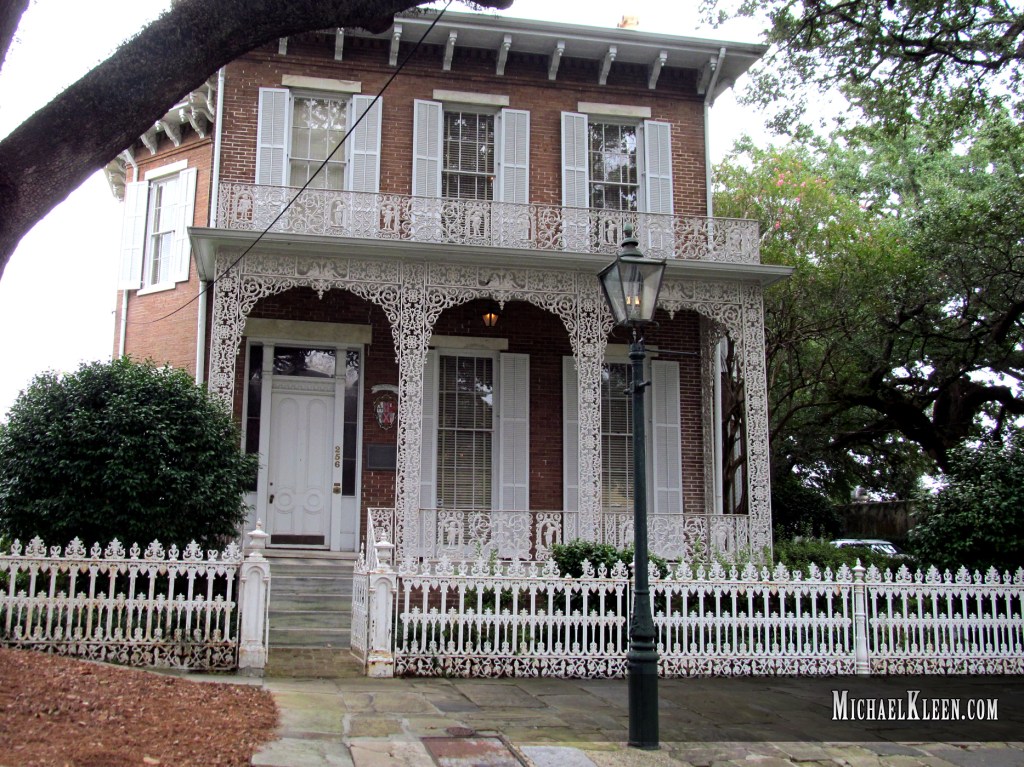
Behind the elegant brick walls of Mobile’s historic Richards DAR House lies a long history of tragedy, mystery, and unexplained encounters. Visitors and paranormal investigators alike have reported shadowy figures, phantom footsteps, and marbles that mysteriously move overnight in one of Alabama’s most fascinating historic homes.
- Built in 1860 for steamboat captain Charles G. Richards, the Richards DAR House is one of Mobile’s best-preserved Italianate mansions.
- The historic sidewalk outside the home was made from ballast stones discarded by European cargo ships arriving in Mobile Bay during the nineteenth century.
- Charles and Caroline Richards had twelve children, but four died young, contributing to the home’s long-standing reputation for lingering spirits and unexplained activity.
- Visitors and staff have reported hearing footsteps, slamming doors, children laughing beneath the stairwell, and seeing apparitions dressed in 1860s clothing.
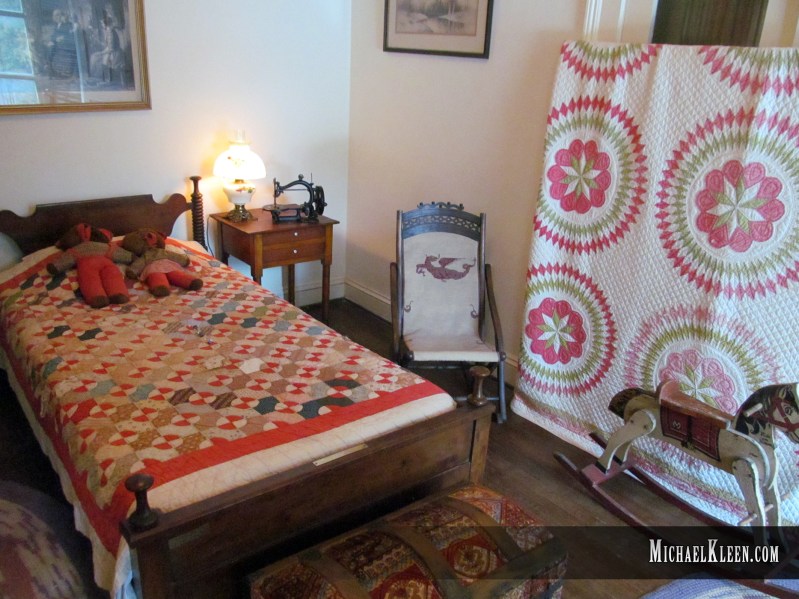
- In one upstairs bedroom, marbles placed on a child’s bed are said to mysteriously change positions overnight, even after investigators carefully arranged them.
Built in 1860 in the ornate Italianate style for steamboat captain Charles G. Richards and his wife, Caroline Elizabeth Steele, the Richards DAR House stands at 256 N. Joachim Street in Mobile’s historic De Tonti Square district. Over the years, the picturesque brick mansion has developed a reputation for unexplained activity and lingering spirits.
Given the home’s deep historical roots, that reputation feels almost inevitable. Even the sidewalk outside carries echoes of another age. It was laid with discarded ballast stones brought from Europe aboard wooden cargo ships. Before loading cotton and other goods for the return voyage, crews dumped the heavy stones along the Mobile waterfront, leaving behind remnants of countless forgotten journeys.
The Richards DAR House is a beautiful antebellum home, complete with a marble and granite veranda surrounded by a cast iron railing featuring ornate figures representing the four seasons. The Ideal Cement Company purchased the house in 1946, ending nearly a century of ownership by the Richards family. ICC converted the home into an office, but took pains to preserve the original architecture and woodwork as much as possible. The City of Mobile took ownership in 1973.
Most of the ghost stories surrounding the house center on the Richards family themselves. Charles and Caroline had twelve children, but tragedy visited the household repeatedly. Four of the children died young, including two newborns, a five-year-old, and a ten-year-old. Caroline died in 1867 shortly after giving birth to their twelfth child, leaving a lingering sadness woven into the home’s history.
One upstairs bedroom, originally built as a guest room during the years the Ideal Cement Company owned the property, has since been decorated as a child’s room. Staff and visitors have reported a number of strange occurrences there. Marbles carefully arranged on the bed are said to appear in different patterns by morning. When I toured the house earlier this summer and asked about them, our guide admitted, with visible frustration, that “someone” kept moving them. After a pause, she added with a nervous smile, “Maybe it was our ghost.”
Several years ago, photographer Dennis Holt captured what appeared to be a shadowy figure standing near the curtains in an upstairs bedroom. The image was later published in Mobile Bay Monthly. According to the magazine, Holt was a two-time Emmy Award-winning photographer and board member of the Gulf Coast Professional Photographers Association. He and several other experts examined the photograph but could find no clear explanation for the figure lingering in the corner of the room.
Mary McDonald, then president of the Richards DAR House Governing Board, told the magazine, “People say doors slam and open. They’ve heard footsteps and the voices of children playing under the stairwell. One employee saw the reflection of a man, in 1860s period dress, sitting on the couch behind her.” In 2013, investigators from the Alabama chapter of Delta Paranormal Project explored the home and claimed to capture the sound of a woman screaming. They also reported that the marbles placed on the child’s bed had shifted overnight from where investigators had carefully left them.
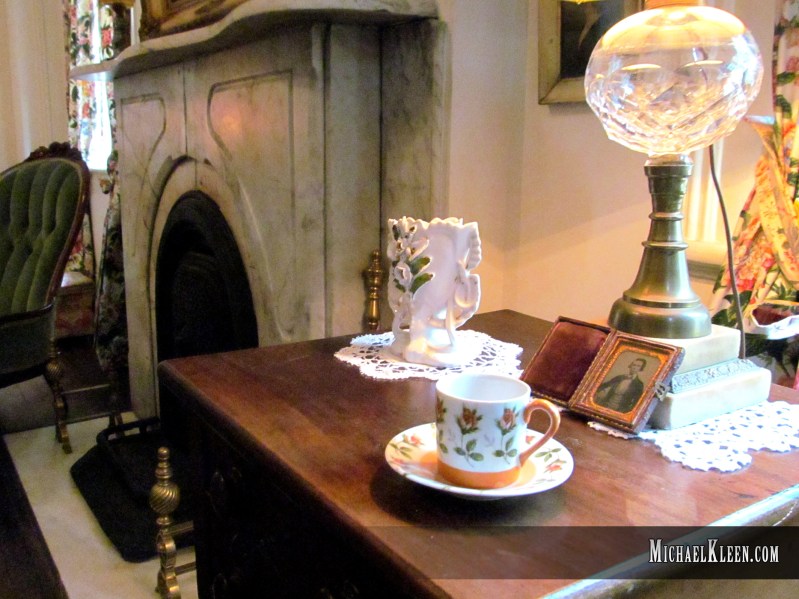
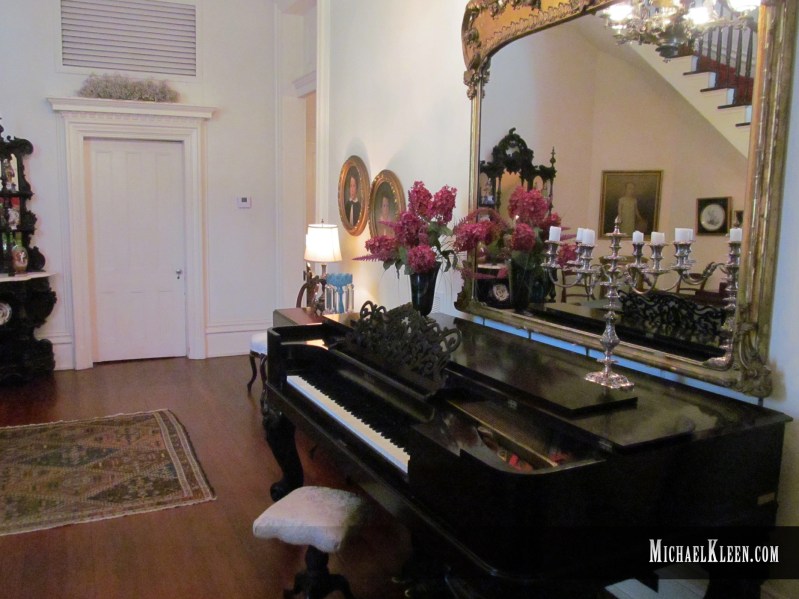
Today, the Richards DAR House is maintained by the Daughters of the American Revolution. The women who lead the tours are knowledgeable and point out many of the home’s most interesting artifacts, including delicate wall displays made from human hair. Tea and cookies are served at the end, inviting visitors to sit for a moment and take in this remarkable piece of Mobile history. Just don’t forget to ask about the ghosts.
Donate
Enjoy what you read? Please consider making a one-time donation to support my research.
Enjoy what you read? Please consider making a monthly donation to support my research.
Enjoy what you read? Please consider making a yearly donation to support my research.
Choose an amount
Or enter a custom amount
Your contribution is appreciated.
Your contribution is appreciated.
Your contribution is appreciated.


What are your thoughts?